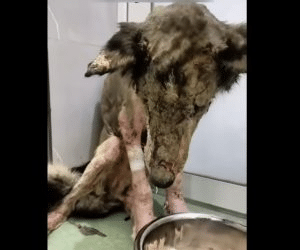
When rescuers first met Shua, a husky with dulled eyes and a body worn down by time, it was hard to believe how much he had endured. He did not cry out. He did not resist. He simply lay there, quiet and fragile, as though he had learned long ago that fear was safer than hope.
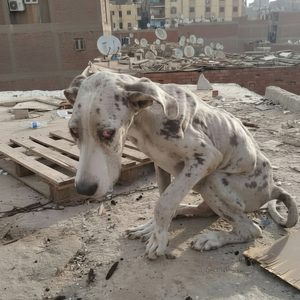
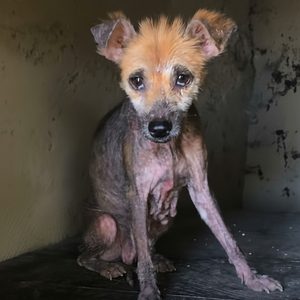
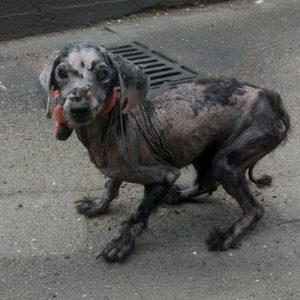
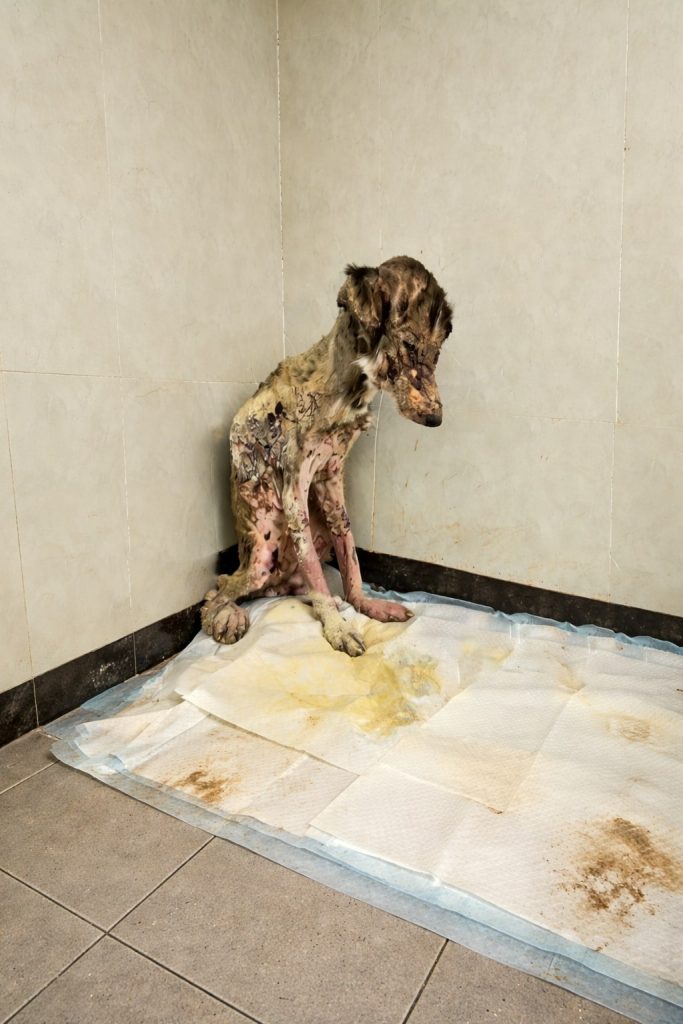
Shua’s condition told a story of prolonged neglect. He was severely dehydrated and weak, his body struggling to support itself. Large areas of his fur were gone, leaving behind inflamed, sensitive skin that reacted painfully to even the slightest touch. What made it more heartbreaking was that Shua was already indoors—yet even there, he did not feel safe. His body remained tense, his movements cautious, as if walls and shelter offered no real protection.
A Quiet Dog Who Had Learned to Be Afraid
At the time of rescue, Shua barely moved. His breathing was shallow, his strength almost gone. His eyes lacked the brightness typical of his breed, clouded instead by exhaustion and uncertainty. And yet, beneath that fragile exterior, something remained.
He responded softly to calm voices. He did not pull away when touched gently. That quiet acceptance spoke volumes. Shua had not given up. Somewhere inside, he was still holding on.
The rescue team understood immediately that his recovery would require more than medicine. It would require patience.
Video: He Was Afraid Even Inside His Own Home—Until Kindness Gave Him a Second Chance
Gentle Care for a Fragile Body
Medical stabilization began carefully and slowly. Fluids were administered with caution. Warmth was restored. His damaged skin required special attention, as aggressive treatment could cause further harm. Gentle cleansing routines were introduced, followed by medicated care designed to soothe inflammation rather than shock his system.
Every step was deliberate. Every decision was guided by one priority: reduce stress and help Shua feel safe.
For a dog who had likely learned to associate touch with discomfort, kindness had to move at his pace.
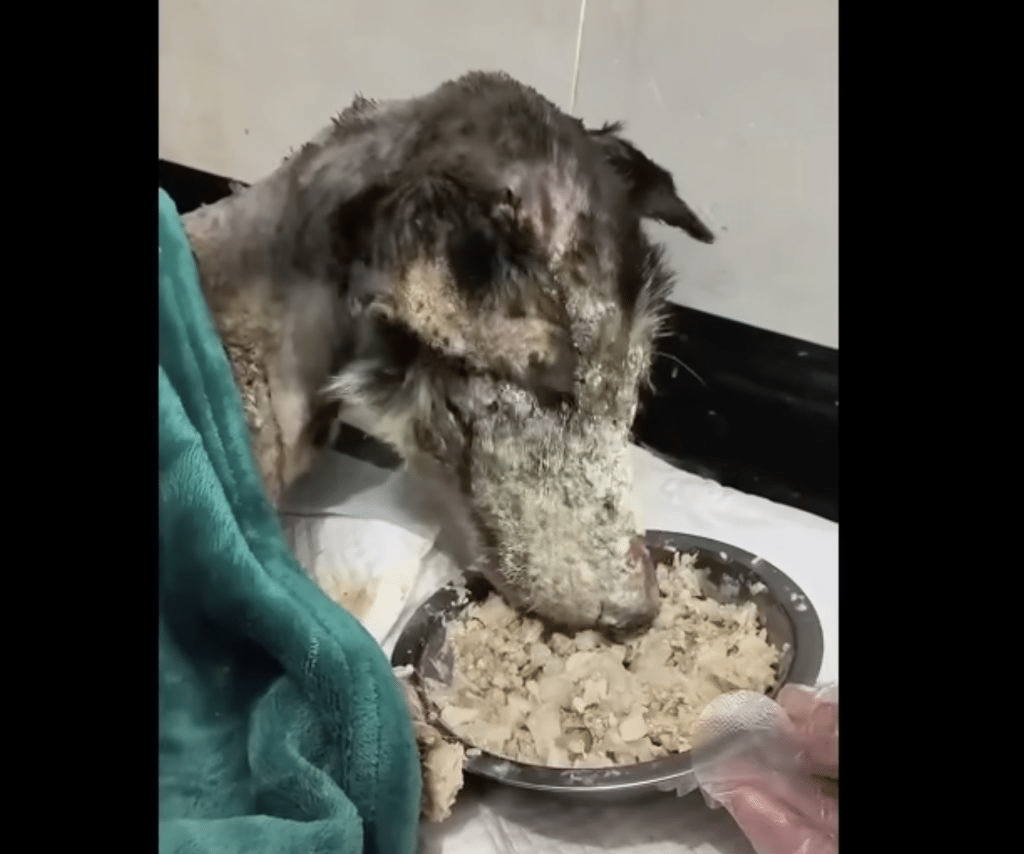
In the days that followed, subtle changes began to appear. Shua started eating—not hurriedly, but with intention. He drank water willingly. These simple acts carried deep meaning. They showed that his body was responding, and that his will to live was returning.
Once his condition stabilized, Shua was transferred to a recovery center prepared for long-term healing. There, everything changed in quiet but important ways.
A Space Where Trust Was Never Forced
Soft bedding protected his sensitive skin. Light protective clothing helped reduce irritation. Most importantly, the people around him understood patience. Caregivers approached calmly, spoke gently, and allowed Shua to decide when interaction felt safe.
No one rushed him. No one demanded progress.
Trust was built the only way it ever truly is—through consistency.
An Unexpected Friendship
One of the most meaningful moments in Shua’s recovery came through companionship. At the center, he bonded with a much smaller dog who was also healing from a difficult past. Their connection was immediate and unspoken.
They rested together. They followed one another quietly. In each other’s presence, fear seemed to soften.
For Shua, who had spent so long withdrawn, this friendship offered emotional stability that no treatment alone could provide.
Signs of Healing, Inside and Out
Weeks passed, and the changes became more visible. Shua’s skin slowly healed, and soft patches of new fur began to grow. Each new strand felt symbolic—a sign that his body was repairing itself.
His posture improved. His steps became steadier. He explored his surroundings with cautious curiosity rather than fear.
Emotionally, the transformation was just as powerful. Gentle tail wags replaced hesitation. He relaxed in the presence of caregivers. He learned that hands could bring comfort, not pain.
The dog who once trembled indoors was beginning to feel safe again.
From Survival to Something More
As Shua’s story spread, people around the world followed his progress. Many saw themselves—or animals they had once helped—in his journey. Messages of encouragement arrived daily, reinforcing a simple truth: healing is possible, even after long periods of suffering.
Months after his rescue, Shua was almost unrecognizable. His coat continued to fill in. His movements were calm and steady. Watching him rest peacefully beside his canine companion, it was difficult to imagine the fear that once shaped his every moment.
What makes Shua’s story truly powerful is not just his physical recovery, but the choice he made to trust again. Despite everything he had endured, he allowed himself to believe in kindness.
Today, Shua is no longer merely surviving. He is learning how to live without fear, supported by routine, patience, and care. His journey is still unfolding, but the path ahead is filled with possibility.
Shua’s life is a reminder that healing does not need spectacle. Sometimes, it happens quietly—through steady hands, gentle voices, and the simple decision not to look away.
His story began in fear, but it continues in hope. And that hope now belongs not only to Shua, but to everyone who believes that every life deserves a second chance.