Stewart’s story does not unfold with noise or urgency. It moves quietly, shaped by patience, consistency, and the kind of compassion that allows healing to happen at its own pace. His journey is not about sudden miracles, but about what becomes possible when fear is met with understanding.
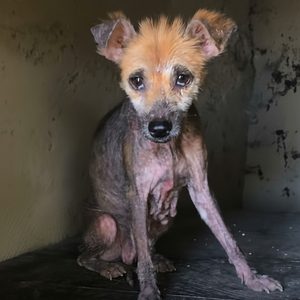
When Stewart was first found, his world was painfully limited. A heavy chain tied him to a single tree, defining the borders of his life. A thick leather collar pressed constantly against his neck, worn down by time and neglect. There was no shelter from the weather, no comfort, no sense of safety. His body was thin, his coat dull, and every unfamiliar sound sent tension through him.
Fear was not a reaction for Stewart.
It was his normal state of being.
A Dog Who Learned to Disappear
Those who came to help noticed it immediately. Stewart moved carefully, keeping his body low, as if trying to take up as little space as possible. He did not bark. He did not growl. When people approached, he froze, unsure whether the next moment would bring relief or punishment.
Silence had become his protection. Trust, to Stewart, felt dangerous.
Video: From Fear to Freedom—Stewart’s Journey of Healing, Trust, and a Second Chance
When Rescue Didn’t Feel Safe Yet
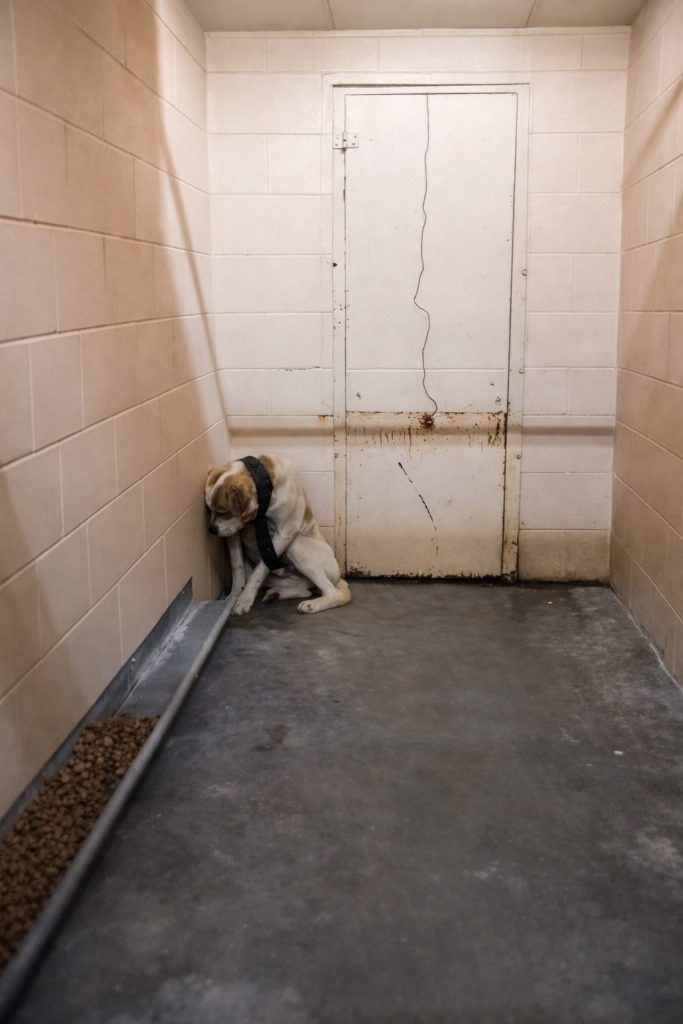
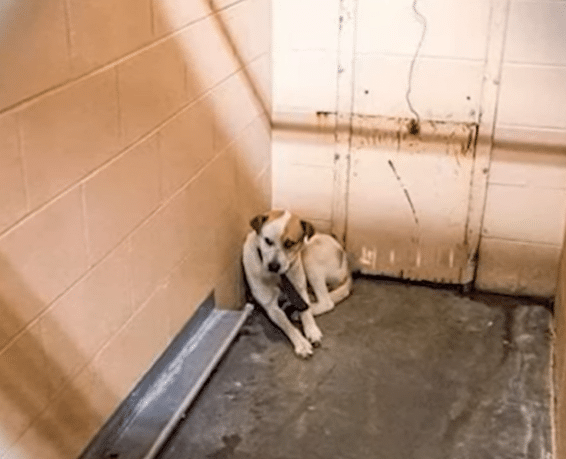
Being brought to the rescue center did not instantly change that. New sounds, new smells, and unfamiliar movement overwhelmed him. Stewart curled into corners, avoided eye contact, and sometimes refused to eat. Reaching hands made his body tense.
To someone unfamiliar with trauma, it might have looked like stubbornness. But the truth was simpler and harder: Stewart was not difficult. He was terrified. His body had been in survival mode for far too long.
Choosing Patience Over Pressure
Instead of forcing progress, the rescue team chose patience. They sat quietly nearby. They spoke softly. They allowed Stewart to decide when—and if—he was ready. Days passed with only the smallest signs of change, and still they waited.
Healing, they knew, could not be rushed.
The Moment the Weight Lifted
During a routine veterinary visit, something quietly profound happened. As the veterinarian carefully removed the heavy collar from Stewart’s neck, his body responded immediately.
His muscles softened.
His breathing slowed.
It was as if a weight—both physical and emotional—had finally been released. In that simple act, Stewart experienced a kind of freedom he had never known.
Learning to Rest Without Fear
Without the collar, Stewart began to change. He stretched out fully for the first time instead of curling inward. His posture shifted. He slept more deeply. The constant alertness that once defined him began to fade, replaced by moments of calm curiosity.
Progress remained slow, but it was steady.
Trust, Built in Small Moments
His eyes softened. He started watching people instead of hiding from them. One afternoon, a small, hesitant tail wag appeared. Soon after, he showed interest in toys—approaching cautiously at first, then engaging with growing confidence.
Each step forward was quiet.
Each one mattered.

Becoming Himself Again
As weeks passed, Stewart began seeking affection in gentle ways. He leaned against familiar legs. He followed caregivers from room to room. He learned that hands could offer comfort instead of harm.
Proper meals helped him gain weight. His coat grew healthier. His movements became relaxed and confident. But the most important change was internal.
For the first time, Stewart learned how to rest without fear.
When Consistency Becomes Healing
Stewart’s transformation did not come from a single moment. It was built through daily kindness, repeated reassurance, and the choice to show up again and again—even when progress was nearly invisible.
Today, Stewart is no longer defined by the chain that once held him. He is affectionate, playful, and open with his trust. He greets familiar faces with joy instead of fear and offers love freely.
His story is a quiet reminder: trauma does not erase worth. And sometimes, healing begins with one simple act—removing what binds, and allowing freedom to return.