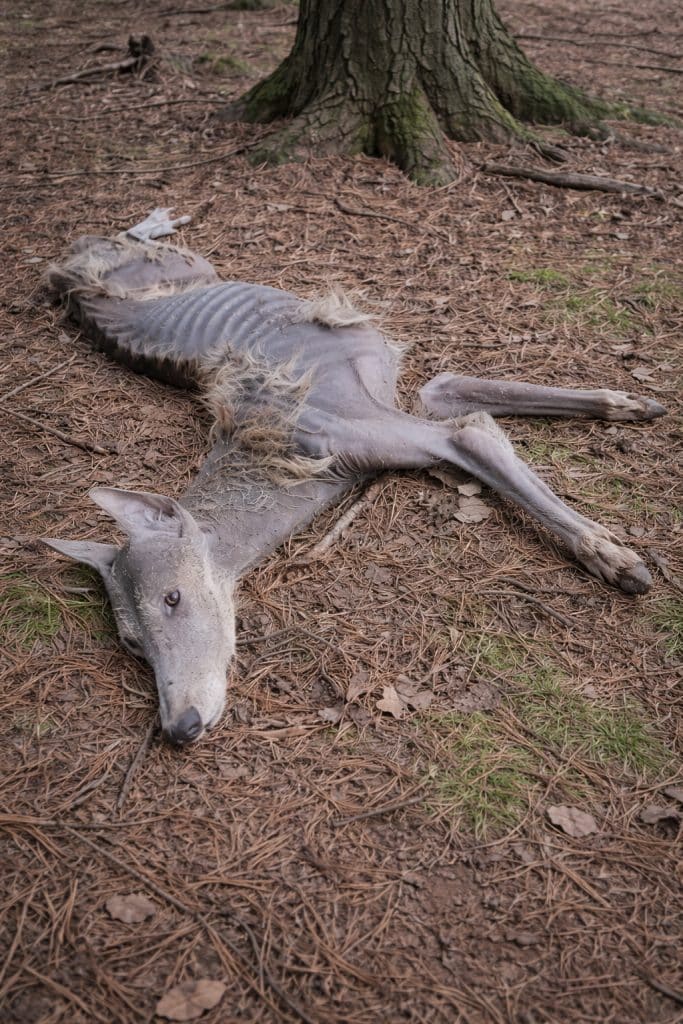
The man wasn’t looking for anything unusual that day. He was simply walking through the forest when something on the ground caught his eye. At first, it barely looked alive.
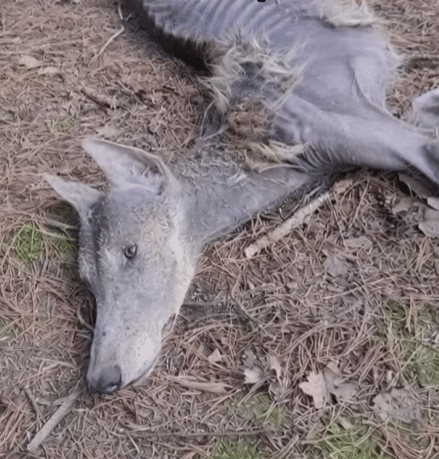
Lying motionless among the trees was a wolf—so thin that its body seemed to disappear beneath its skin. Bones pressed sharply beneath dull fur. There was no attempt to flee, no sign of strength left to summon fear.
The wolf was starving. Exhausted. On the verge of death.
In that moment, there was no question of what to do. Leaving was not an option.
A Desperate Attempt to Save a Life
The man carefully lifted the wolf, wrapping its frail body in a warm blanket. He tried offering food, but the animal was far too weak to swallow. Every breath seemed to require effort.
He drove quickly to the nearest wildlife rescue center, hoping trained hands could take over. But when he arrived, the gates were closed. There was no one there. No help waiting.
Turning back wasn’t a choice.
So he took the wolf home.
Video: At the Edge of Death — How One Man Saved a Starving Wolf
Care Where No Care Was Expected
At his house, the man prepared a simple meal—rice and chicken, cooked fresh and warm. He sat patiently, offering small pieces again and again. For a long time, the wolf did not respond.
Then, finally, it took a bite.
It was a small moment, almost easy to miss. But it changed everything.
From that point on, care became routine. Meals were steady. Rest was uninterrupted. The wolf was kept warm and safe, far from hunger and danger. Slowly, strength began to return.
The First Signs of Recovery
Days passed, and the change became visible. The wolf began to lift its head. Then it stood—unsteady, uncertain, but determined. Those first steps were shaky, yet meaningful. They marked the return of life.
With proper nutrition and quiet care, the wolf’s body responded. Muscles strengthened. Energy returned. Its coat, once thin and lifeless, grew thick and healthy again. Soon, the wolf was not just walking, but running.
It no longer looked like an animal waiting to disappear.
Returning to the Wild
After a month of care, the man faced a difficult but necessary decision. The wolf was healthy again—strong enough to survive on its own. Keeping it would mean denying it the life it belonged to.
So he took the wolf back to the forest.
There were no dramatic gestures. No forced goodbyes. The wolf stepped into the trees and disappeared, returning to the world it came from.
The man believed that was the end of their story.
An Unexpected Return
Some time later, something familiar appeared at his window.
The wolf had come back.
It stood quietly outside, looking through the glass, calm and observant. Not aggressive. Not fearful. Just present—like an old friend stopping by.
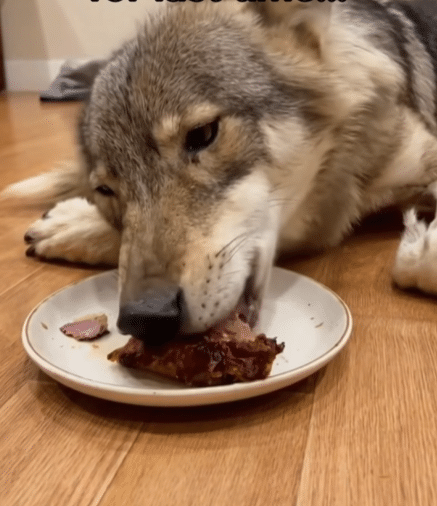
In the final moments of the video, the scene is almost unreal. The wolf sits calmly beside the man at the table, sharing a simple meal together. No barriers. No tension. Only trust.
What This Story Reminds Us Of
This is not a story about taming wildlife or blurring boundaries. It is a story about compassion meeting desperation—and leaving a mark that neither side forgets.
The man did not expect gratitude. He only acted when a life needed help.
And somehow, that kindness was remembered.
Sometimes, survival is not just about food or shelter. Sometimes, it begins when someone chooses not to walk away.