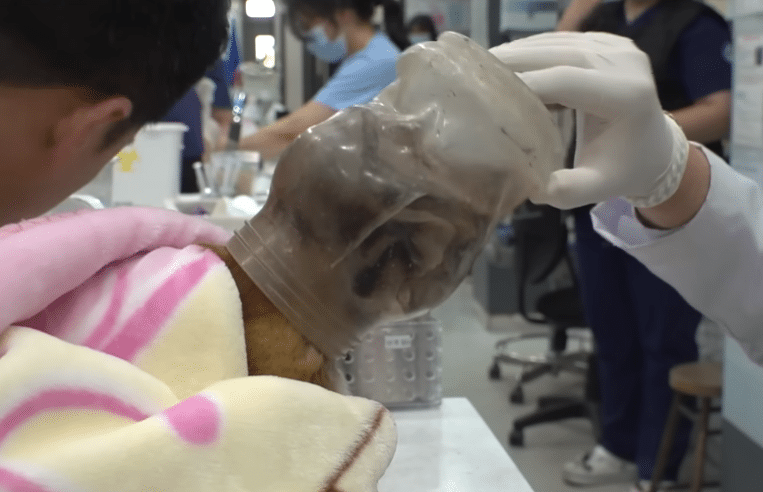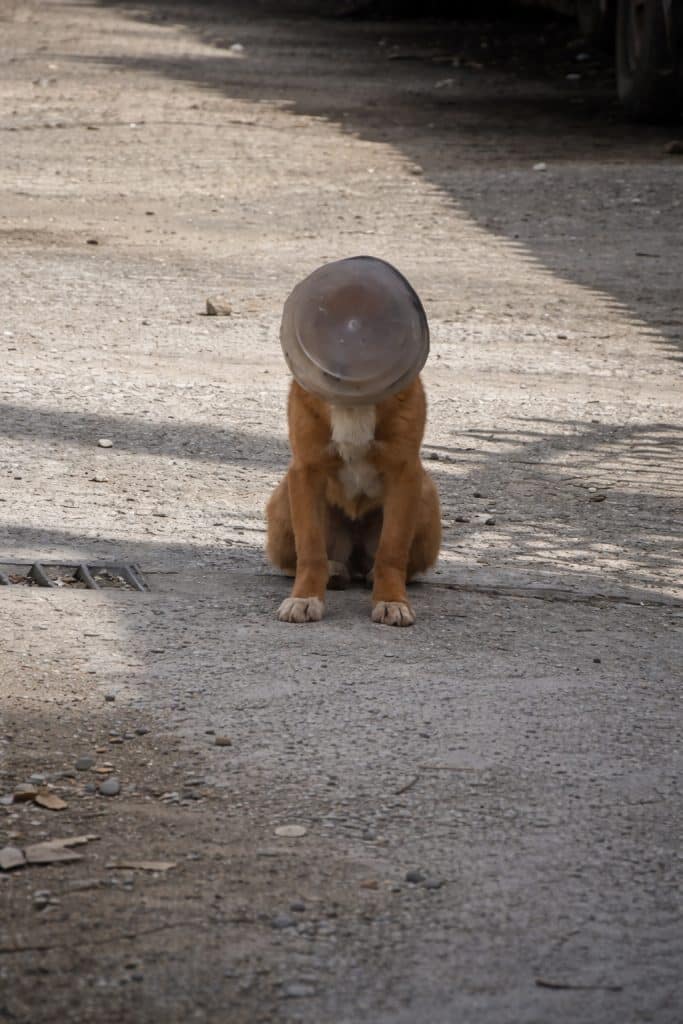
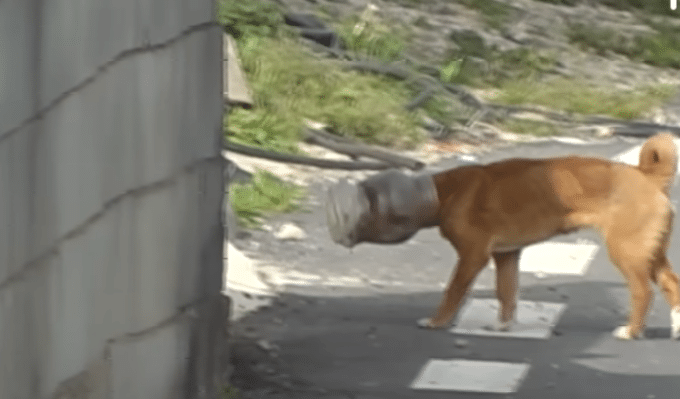
In a small village in South Korea, a lone stray dog moved cautiously through familiar paths, avoiding people and searching for scraps. At first glance, nothing seemed unusual—until villagers looked closer. A large plastic container was tightly stuck over the dog’s head, rigid and long enough to completely block his mouth. He could not eat. He could not drink. And for weeks, no one realized how long he had been surviving like this.
As days passed, his condition worsened. His body grew thinner, his movements slower, and his fear more intense. According to residents, the container had likely been trapping him for nearly three weeks. By then, exhaustion and dehydration had taken hold, leaving him weak but still desperately alert, running whenever anyone came too close.
A rescue that required more than speed
Despite extreme hunger, the dog would not allow help. He ran fast, fueled by fear and survival instinct. Villagers tried to approach him, but each attempt failed. It became clear that professional assistance was needed.
Rescuers from the Korean Animal Welfare Association arrived and began carefully planning the operation. Temporary fencing was set up around areas the dog was known to frequent. Rain poured down steadily as the team worked, moving slowly to avoid causing panic. After hours of careful positioning and patience, they finally guided him into a small wooden enclosure.
From there, he was transported immediately to a veterinary clinic.
Video: The Dog Who Survived Weeks Trapped in a Plastic Container—Daram’s Rescue Story
The moment everything changed
At the clinic, veterinarians worked gently and methodically. Cutting away the hard plastic container required extreme care to avoid injuring his neck. When it was finally removed, the reality of his condition became clear. He was severely dehydrated, and his kidney levels were dangerously high from prolonged lack of water. Doctors noted that surviving so long under those conditions was nothing short of remarkable.
Then came a moment no one in the room would forget.
For the first time in weeks, the dog—now named Daram—was able to drink water freely. He ate slowly but eagerly, savoring nourishment his body had been denied for far too long. It was not just physical relief. It was the beginning of trust returning.
A home, but not yet a sense of safety
When the immediate danger had passed, an unexpected offer changed Daram’s future. The kind man from the village—the same person who had first noticed something was wrong and refused to ignore it—decided to adopt him.
But safety did not arrive instantly.
In his new home, Daram remained withdrawn. He hid inside his crate, hesitant to step out, unsure whether this new place was truly different from everything he had known before. Fear lingered in his posture and movements, even though his body was healing.
Understanding this, the new owner sought professional guidance. An animal behavior specialist suggested a gentle trust-building approach, often called the “Hansel and Gretel” method—using small trails of food to encourage Daram to explore on his own terms, without pressure or force.
Trust, one step at a time
Progress was slow, but meaningful. Daram began venturing just beyond the crate. Then a little farther. Eventually, he stepped fully into the room. His tail moved tentatively at first, then more confidently. When his new owner reached out, Daram did not retreat.
He accepted touch.
That simple moment—so ordinary for most dogs—marked the true turning point of his recovery. Fear loosened its grip, replaced by curiosity, comfort, and the first signs of joy.
A life reclaimed
Today, Daram no longer carries the weight of those painful weeks. He rests peacefully in his owner’s arms, safe and loved. The stray who once ran in terror now welcomes affection. The dog who nearly lost his life to silence and neglect has found stability, patience, and belonging.
Daram’s story is a quiet reminder that rescue is not only about removing danger. It is about staying present long enough for fear to fade. With time, compassion, and understanding, even the most frightened hearts can learn to trust again.
And sometimes, that is the greatest rescue of all.