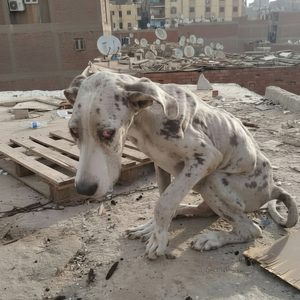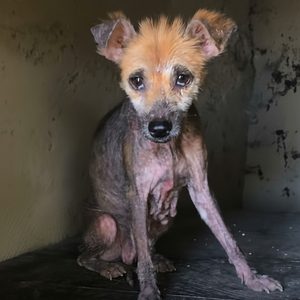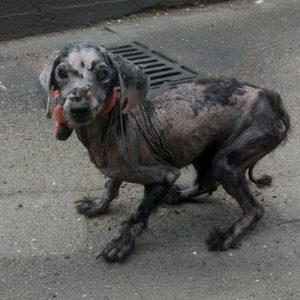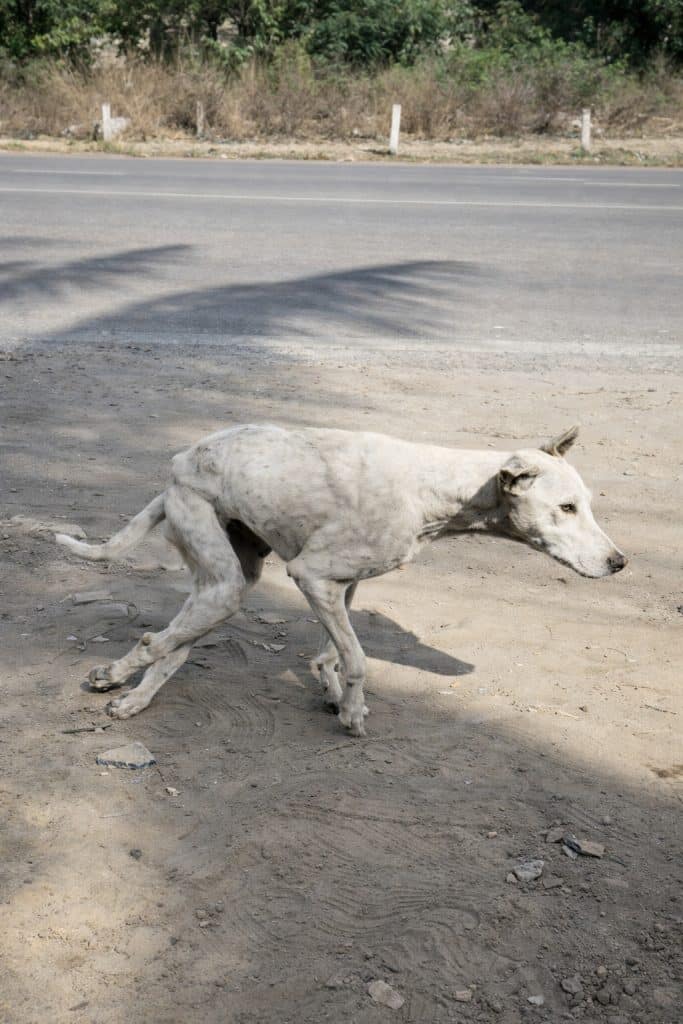
When they first saw him, he was moving in a way no dog should have to.
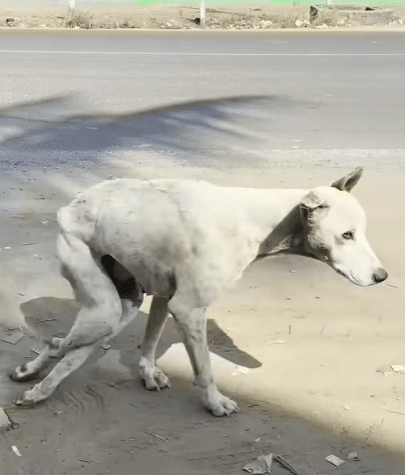
A white dog with small black patches dragged the lower half of his body across the pavement, his front legs doing all the work. His back legs no longer supported him. An accident, according to local residents, had changed his life in an instant.
But the injury was only part of his story.
For months, he had survived alone on the streets.
Every meal had to be earned through effort.
Every safe resting place had to be found before nightfall.
Every approaching stranger could mean danger.
Over time, survival reshaped him.
The gentle dog he once may have been was replaced by fear.
Fear that showed itself in growls.
In sharp barking.
In bared teeth meant to keep the world at a distance.
It wasn’t aggression.
It was protection.
When Survival Turns Into Defense
Video: The Paralyzed Street Dog Who Growled at Everyone — Until He Felt Safe Again
By the time local residents contacted Relief and Rehabilitation of Stray Animals (RRSA), the dog had developed a reputation for being “dangerous.”
But rescuers understood something important.
Pain changes behavior.
Loneliness changes trust.
And fear, when left unattended, hardens into defense.
When the team arrived, they saw what others had described: a dog ready to lunge, ready to bark, ready to push the world away before it could hurt him again.
He had learned that distance was safety.
Approaching him required strategy—not force, but caution.
A Rescue Focused on Safety and Compassion
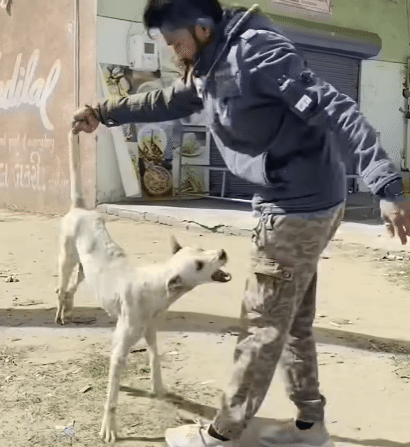
To protect both the dog and themselves, the team used a humane control pole with a soft loop. From a safe distance, they gently secured him, speaking in calm tones throughout the process.
He struggled at first.
Not out of cruelty.
But confusion.
Every previous human encounter had likely brought uncertainty. He didn’t know this time would be different.
Once safely secured, he was lifted carefully into the rescue vehicle. The door closed softly behind him.
For the first time in months, he was no longer exposed to traffic, hunger, or cold pavement.
He was on his way somewhere safe.
The First Night in Safety
At the RRSA shelter, a quiet space had been prepared in advance.
Soft bedding replaced rough concrete.
Warmth replaced open air.
A private enclosure gave him room to settle without feeling cornered.
He remained alert at first.
Watching.
Waiting.
Every movement from caregivers made him tense. But something had changed: no one shouted. No one chased. No one threatened.
Meals appeared at regular times. Water was always within reach.
And slowly, his body began to rest.
Not fully.
Not yet.
But enough to loosen the grip of constant survival.
Healing Begins Beyond the Body
Medical examinations confirmed paralysis in his back legs. The team assessed his condition carefully, focusing on comfort, hygiene, and long-term care.
But the deeper work wasn’t medical.
It was emotional.
Caregivers sat near his enclosure daily, not forcing contact, simply allowing their presence to become familiar. They spoke his name softly. They moved slowly.
Days passed.
Then, one morning, something shifted.
Instead of growling, he watched quietly.
Instead of retreating, he remained still.
The sharp edge in his eyes began to soften.
Small Signs of Trust
Trust didn’t arrive all at once.
It showed up in fragments.
A shorter bark.
A relaxed posture.
A moment where he accepted food from a closer distance.
Eventually, he allowed a gentle touch on his head.
He flinched—but didn’t snap.
For a dog who had relied on fear as armor, that moment meant everything.
The team celebrated quietly. They understood that rebuilding trust is not about speed. It is about consistency.
A New Chapter Under Protection
Today, he remains at RRSA, safe from the dangers that once surrounded him.
He has a warm resting place.
He receives proper care.
He no longer drags himself across unforgiving streets in search of scraps.
His back legs may never function again.
But his spirit is no longer trapped in survival mode.
He is learning that not every approaching hand brings harm.
That safety can be steady.
That protection can be permanent.
A Story About More Than Paralysis
His journey reminds us that physical injuries are only part of what animals endure on the streets.
Fear can grow when there is no comfort.
Aggression can form when there is no safety.
And behavior we misunderstand often hides a history we never saw.
This once “dangerous” dog was never dangerous at all.
He was simply trying to survive.
Now, in a place where patience replaces pressure and kindness replaces chaos, he is discovering something new:
He does not have to fight anymore.
He only has to heal.
And that, sometimes, is the bravest step of all.