The rescue call came with little detail — only that a hunting dog had been badly injured.
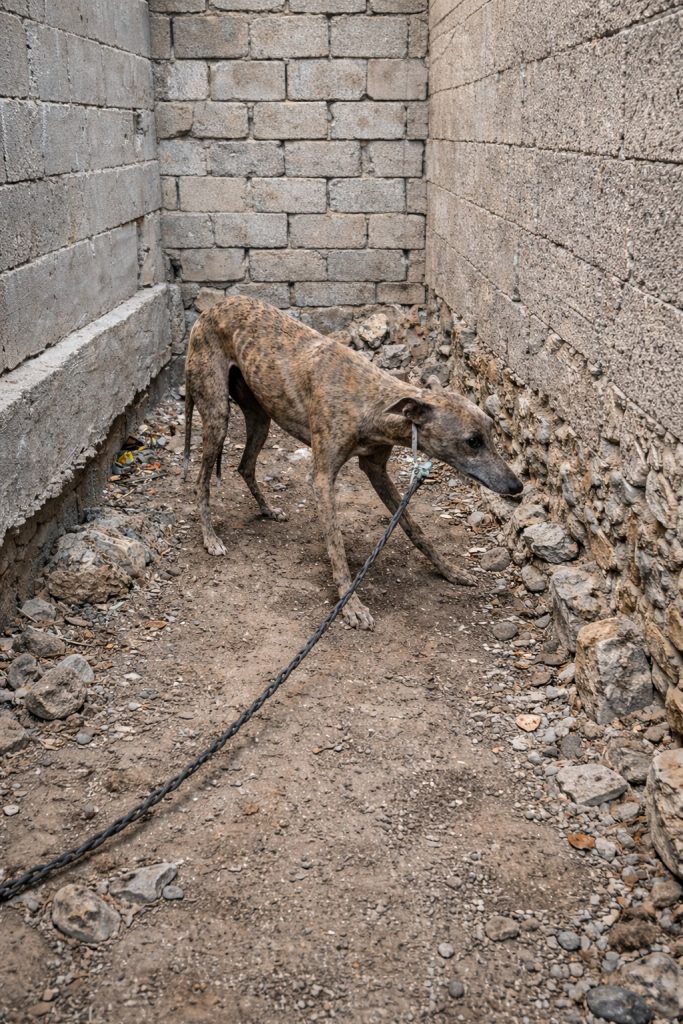
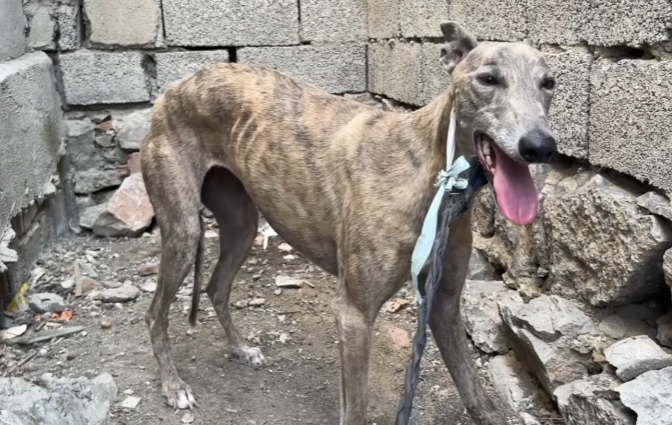
When the team arrived, they found him chained against a filthy wall, surrounded by trash and debris. His body was painfully thin. His fur dull. His eyes lowered.
He trembled at the sound of footsteps.
He did not bark.
He did not growl.
He simply shook.
The owner claimed the dog had bitten someone and killed a neighbor’s chicken. Instead of training or restraint, punishment followed. In anger, the man struck him repeatedly — breaking his front leg.
What had once been a working hunting dog was now, in the owner’s eyes, useless.
And therefore disposable.
When a Life Becomes a Bargain
The man announced his intention to sell the dog to a slaughterhouse.
He initially demanded a high price, insisting the dog had once been well-trained and valuable. The rescuers objected immediately. The dog was emaciated. His leg was visibly infected. His condition required urgent medical attention.
A tense negotiation followed.
In the end, the rescuers paid a reduced amount to secure his freedom.
Not because he had a price.
But because it was the only way to remove him from harm.
That moment did not feel like a purchase.
It felt like an intervention.
The footage captures the turning point — a frightened dog, unsure of the hands reaching toward him, yet slowly choosing to follow them.
Video: Chained and Beaten for “Failing” as a Hunting Dog — The Moment He Realized He Was Safe
Medical Reality: Worse Than It Looked
At the veterinary clinic, a thorough examination revealed the full extent of his injuries.
His left front leg was fractured near the joint. The break was old. Infection had set in. Pus and blood had accumulated around the wound. Swelling and inflammation made immediate surgery too risky.
The priority became stabilization.
Antibiotics to control infection.
Careful cleaning of the wound.
Immobilization and bandaging.
Pain management.
Only after the infection could be brought under control would surgical repair be considered.
His body had endured trauma.
But the deeper wounds were not only physical.
Fear That Ran Deeper Than Bone
Every time someone approached too quickly, he flinched.
Every unexpected touch caused his body to stiffen.
This was not aggression.
It was trauma.
Long-term mistreatment had taught him that hands could harm.
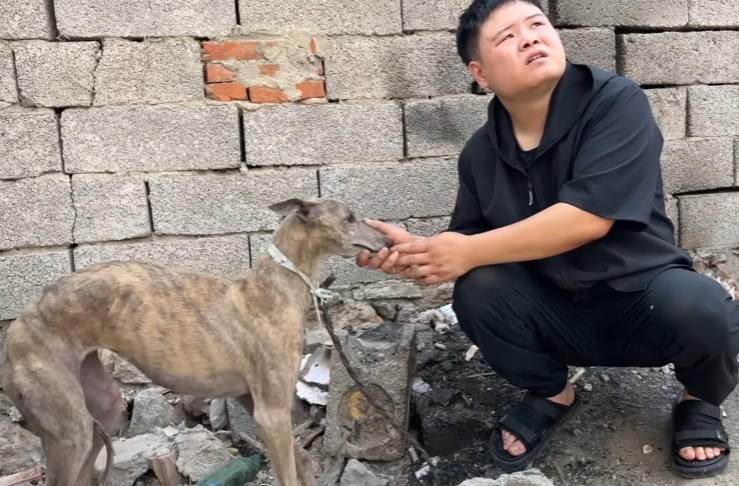
Yet something shifted when the rescuer knelt beside him. No raised voice. No force. Just steady presence.
Gradually, he allowed himself to be guided.
He chose to walk forward.
Not because he fully trusted — but because he sensed something different.
For the first time in a long while, someone was acting in his interest.
More Than a Rescue
Dogs used for hunting are often valued for performance, not companionship. When injury or age limits their ability to work, abandonment is tragically common.
This dog’s story reflects that harsh reality.
But it also reflects something else.
Intervention.
Responsibility.
Compassion.
He is now under medical care, receiving the treatment necessary to heal both his leg and his spirit. Recovery will take time. Trust will take even longer.
But he is no longer chained to a wall.
He is no longer measured by usefulness.
He is being treated as what he has always been.
A living being with the capacity to feel pain — and to feel kindness.
A Reminder We Cannot Ignore
Animals are not tools.
They are not disposable.
They are not defined by productivity.
They experience fear. Loyalty. Confusion. Relief.
This dog once trembled in a corner, convinced that every approaching step meant danger.
Today, he stands at the beginning of something new.
Because someone decided that his life was worth more than the role he once played.
And sometimes, that decision changes everything.