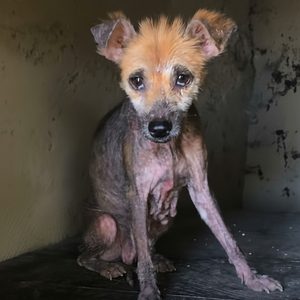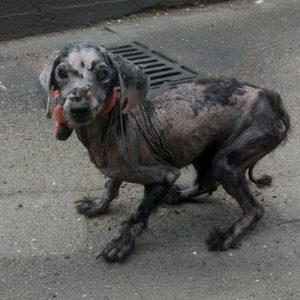
At first, rescuers could hear him before they even saw him.
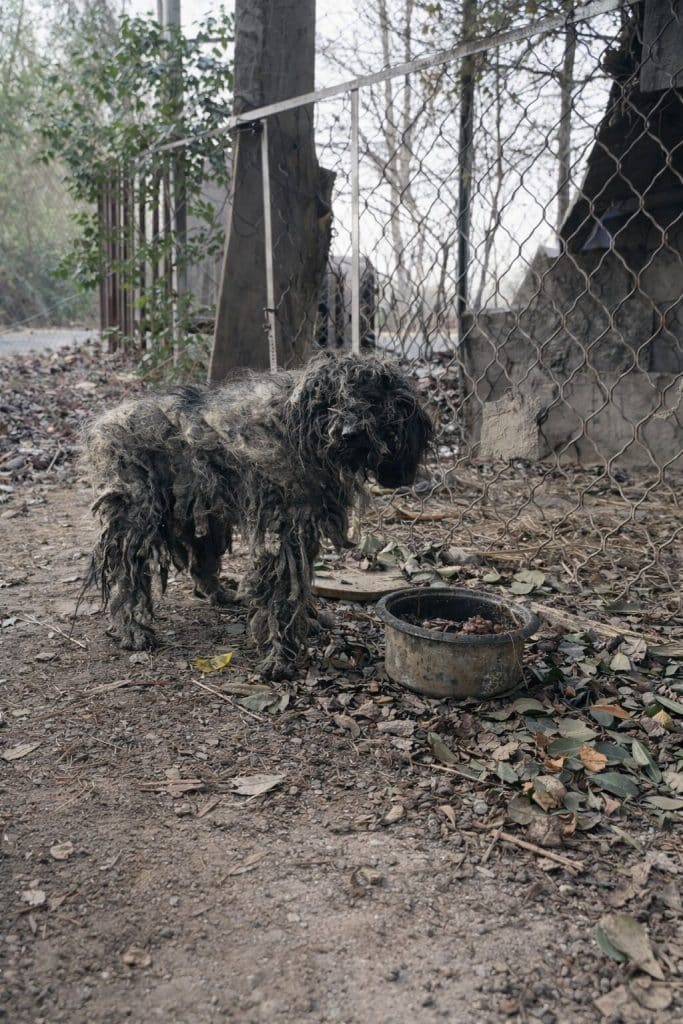
A low, constant growl echoed from the corner of a filthy yard where a dog had been chained for a very long time. Anyone who tried to approach was met with warning snarls and tense movements.
It looked like anger.
But when the team looked closer, they understood something deeper.
It was fear.
A Life Lived in Confinement
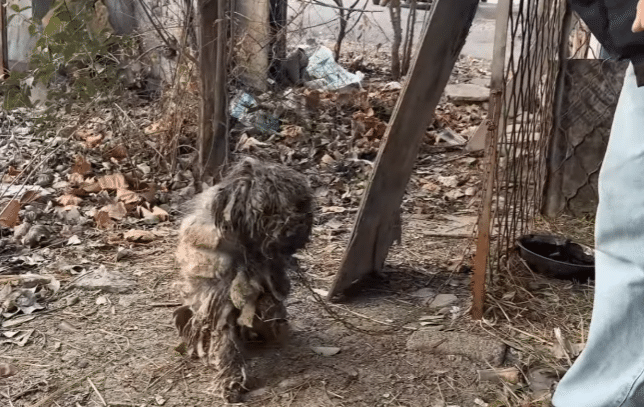
The dog had been kept chained in a dirty, neglected space where little seemed to change from day to day.
Years of confinement had shaped his behavior. He had learned that people approaching him often meant discomfort or punishment. So he protected himself the only way he knew how — by pushing everyone away.
His appearance told the story clearly.
His coat had grown into thick, tangled mats that resembled stiff clumps of fabric. The fur had hardened into layers that restricted his movement and pulled against his skin.
Each step looked uncomfortable.
And beneath that heavy coat were signs of older injuries that had never been properly treated.
Video: From Fear and Heavy Matted Fur to a Joyful New Beginning
A Rescue That Could Not Be Rushed
The rescue team knew that forcing the situation would only make things worse.
So they waited.
Instead of trying to grab him, they spoke softly and moved slowly. Food was placed nearby, giving the dog space to approach when he felt safe enough.
Minutes turned into hours.
Gradually, the tension in his posture softened just enough for the rescuers to guide him away from the place where he had been chained.
It was not dramatic.
But it was the first moment of freedom he had experienced in a long time.
Removing the Weight He Had Carried for Years
At the rescue center, the team began addressing the condition of his coat.
The matting was so thick and hardened that electric clippers could not pass through it. Instead, rescuers carefully used scissors, trimming away small sections one piece at a time.
It took patience.
Slowly, the heavy layers fell away.
Underneath, the dog appeared much smaller than anyone expected. His body was thin, his skin sensitive after being hidden beneath that dense tangle of fur for so long.
After the trimming, he was given a gentle bath and examined by veterinarians who treated several skin irritations and injuries on his legs.
For the first time, his body could move freely again.
Learning That Not Every Hand Causes Harm
The physical changes happened quickly.
The emotional ones took longer.
In the early days, the dog remained cautious. His tail stayed low, and he watched people carefully from a distance. Loud sounds made him flinch, and unfamiliar movements caused him to step back.
But kindness was offered consistently.
Regular meals arrived each day.
Soft voices replaced harsh ones.
Gentle touches came slowly and respectfully.
Then one afternoon, something small but powerful happened.
His tail moved.
Not much — just a brief wag.
But it was the first sign that his trust was beginning to return.
A Name That Reflected His Journey
The rescue team eventually gave him a new name: Trọng Sinh, meaning “reborn.”
And in many ways, the name was perfect.
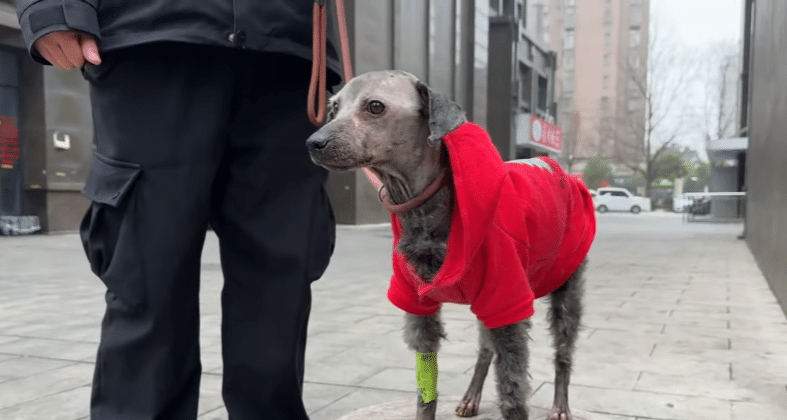
Over the next few months, his coat grew back soft and healthy. His body gained strength, and his personality began to emerge from beneath the layers of fear.
The dog who once growled at every approach now ran across open grass fields with excitement.
He played with other dogs.
He approached caregivers for affection.
He explored the world around him with curiosity rather than caution.
A Reminder About Patience
Trọng Sinh’s story shows that recovery is not only physical.
Animals who have endured long periods of fear or neglect often need time to relearn what safety feels like. But with patience and compassion, those changes can happen.
The dog who once pushed everyone away simply needed someone willing to stay.
Today, Trọng Sinh moves through life with energy and confidence.
And the place where he once stood chained and afraid is now only a distant memory — replaced by open fields, friendly companions, and the quiet comfort of a life finally filled with care.