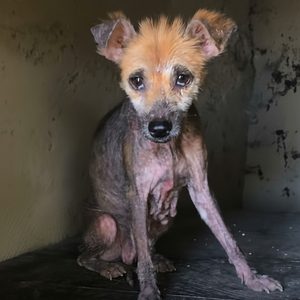
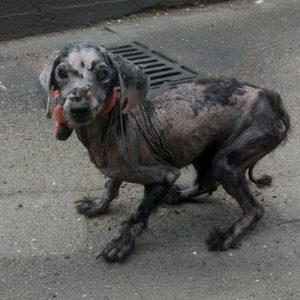
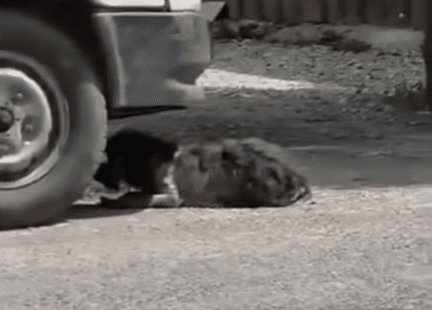
She appeared at the edge of the road like a shadow that refused to disappear. Thin, exhausted, and pacing in small, restless circles, the mother dog moved as if guided by instinct alone. Dust clung to her coat, and her paws left faint marks in the dirt, tracing the same desperate path again and again. But it was her eyes that stopped everyone who noticed her—wide, searching, and filled with a grief so raw it needed no explanation. She wasn’t wandering without purpose. She was looking for her babies.
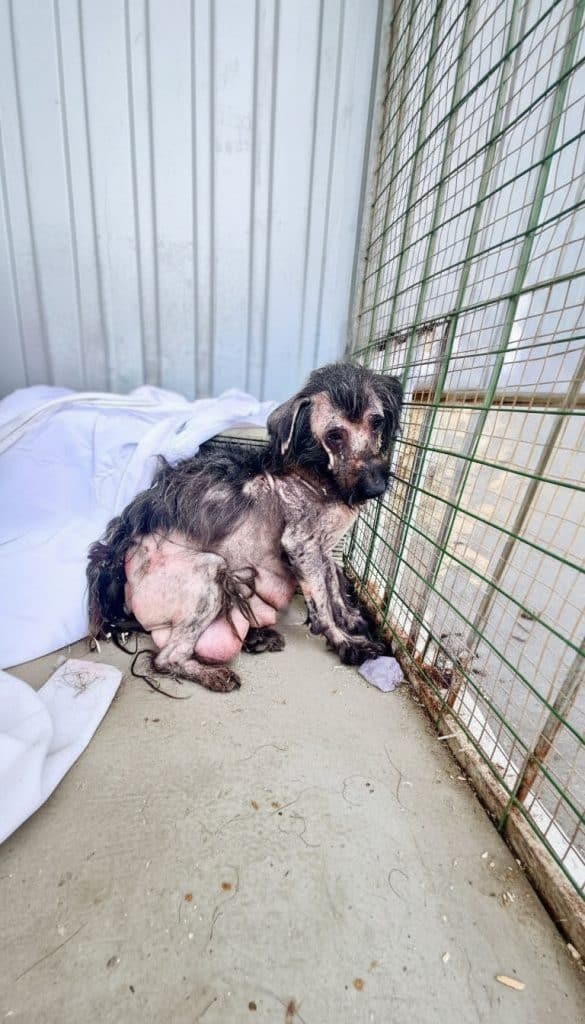
They were gone.
Taken before they had a chance to open their eyes or feel the steady comfort of her warmth, the puppies had vanished without a trace. And she had been left behind with nothing but confusion and loss. Every shaky breath, every soft whimper, carried the weight of a bond that had been broken too soon. It was a kind of sorrow that crosses species, a pain that any parent could recognize.
When we first drew near, she retreated, fear battling instinct. Her body was weak, ribs visible beneath her fur, yet she refused to stop searching. Even as exhaustion slowed her steps, the pull of motherhood pushed her forward. Walking away would have been easy. Pretending not to see her would have been simpler still. But compassion rarely allows for convenience. So instead of leaving, we joined her.
We searched the roadside together. We checked nearby fields, ditches, and quiet corners, calling softly as if hope itself might answer back. The world remained silent. No cries, no movement, no miracle. Eventually, the truth settled in: her puppies were gone for good. Nothing we did could change that reality.
What we could offer was safety.
With patience and gentle voices, we guided her into the car. She curled onto a blanket, but her eyes stayed fixed on the passing landscape, as if she might spot her babies at any second. We brought her to the shelter not to erase her pain, but to make sure she didn’t have to carry it alone.
Video From Loss to Love: Two Rescue Stories That Prove Compassion Can Rewrite Any Fate
Those first days were heartbreaking. She ate slowly, only after encouragement, and slept lightly, often waking with a start as if she had heard a familiar sound. Her physical health improved quickly under careful veterinary care, but grief doesn’t follow a schedule. She wandered her kennel, sniffing corners, pausing as though memory might suddenly turn into reality. Even surrounded by kind hands and quiet companionship, her gaze often drifted somewhere far away.
Healing began in small, nearly invisible steps. One afternoon, she rested her head in a volunteer’s lap. Her breathing softened. Another day, she accepted a toy, then a treat, then a gentle game. Slowly, trust returned. Not all at once, but enough to let light in where sorrow had lived.
Over time, her spirit resurfaced. She found comfort in warm beds, calm voices, and steady routines. The loss never vanished, but it no longer defined her every moment. She remained gentle, open-hearted, and surprisingly resilient—a quiet strength that left a lasting impression on everyone she met.
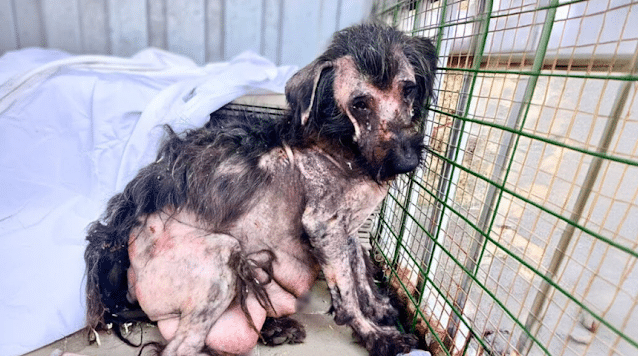
When a family learned her story, something clicked. They didn’t see a broken dog. They saw courage, survival, and a heart still capable of deep love. When they met her, she approached carefully, then leaned into their touch as if she understood. Within minutes, the decision was made. She had found her place.
Watching her leave was bittersweet. She walked out with her head higher, her steps steadier, and her tail wagging softly. It wasn’t an ending that erased the past, but one that honored it while embracing something new. In her new home, she is cherished—not for what she lost, but for who she is. Her life now is filled with warmth, routine, and love that asks for nothing in return.
Her journey reminds us that even after profound loss, happiness can grow again when compassion is allowed to take root.
That same truth echoed thousands of miles away on the streets of Bali.
Amid the island’s beauty—its beaches, rice terraces, and vibrant culture—countless stray dogs struggle quietly to survive. For many, they are part of the scenery, noticed briefly and then forgotten. But one day, for a man named Rico, a single encounter changed everything.
The dog was a husky, a breed ill-suited for tropical heat. Its once-thick coat was thin and dirty, its body underweight, its strength fading. Yet its bright blue eyes told a different story. They held exhaustion, yes—but also a spark that hadn’t gone out.
Rico saw it immediately. This wasn’t a lost cause. This was a life waiting for help.
Earning the husky’s trust took time. Rico moved slowly, spoke gently, and let patience lead. Eventually, the dog allowed him close. It was malnourished, dehydrated, and suffering from neglect, but it was still fighting. Rico made the choice without hesitation and carried the dog home.
Care followed. Veterinary visits addressed infections and weakness. A careful feeding plan restored strength. Grooming sessions untangled months of neglect, one gentle step at a time. With every meal and every calm interaction, the husky changed.
But the most powerful transformation happened inside.
At first, the dog remained reserved, cautious around people. Slowly, consistency replaced fear. It began to seek out affection, to rest close, to wag its tail freely. Trust returned. Joy followed.
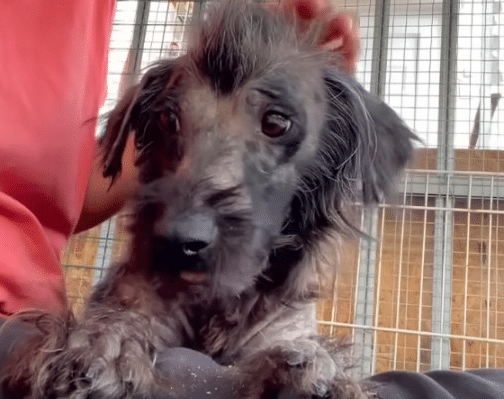
As Rico shared the journey, the contrast became impossible to ignore. The husky’s coat grew thick and healthy. Its posture straightened. Its eyes, once dulled by hardship, now shone with confidence and peace. What people saw wasn’t just a physical change—it was proof of what kindness can restore.
Today, the husky walks proudly beside Rico, no longer a forgotten figure on the street but a cherished companion. Rico didn’t act for recognition. He acted because he saw value where others saw inconvenience.
Both stories—one of a grieving mother, the other of a neglected stray—share the same quiet truth. Rescue doesn’t always begin with grand plans. It often starts with a single moment of empathy. And when someone chooses to care, lives don’t just improve.
They transform.