Gazelle’s life unfolded quietly, far from comfort and far from care. There were no dramatic turning points for most of his years, only long days that blended into one another, marked by the weight of a short chain and the limits it placed on his world. From the time he was young, Gazelle lived tethered to a single spot, unable to explore, stretch freely, or feel the simple joy of movement. His surroundings offered little protection from the elements and even less kindness. Yet day after day, he endured.
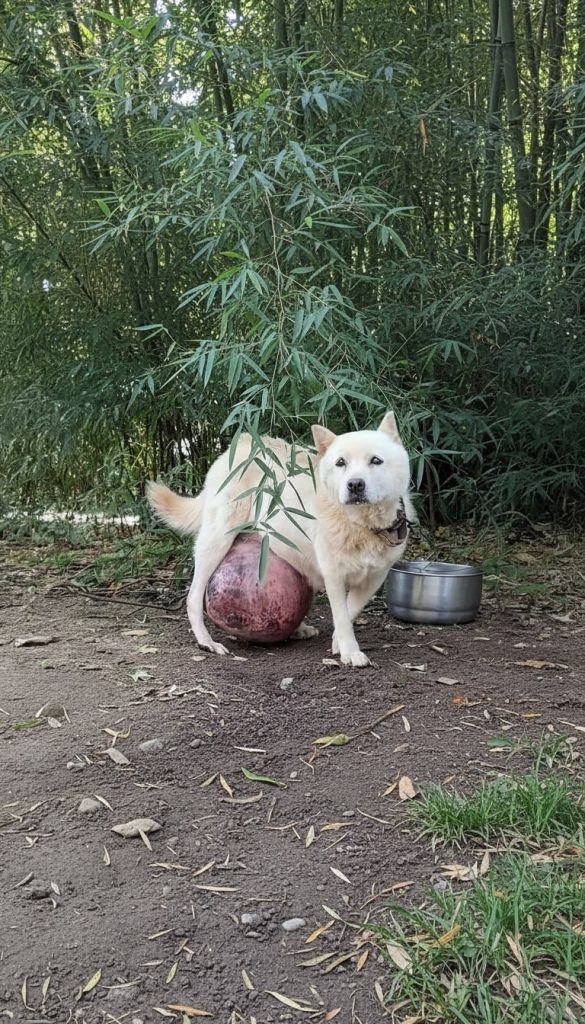
For over a decade, Gazelle’s existence was defined by that chain. It circled a small patch of worn earth, scattered with debris and silence. Seasons changed, but his situation did not. In the heat, he had little shade. In colder months, there was no real shelter. His meals were inconsistent, and medical care was nonexistent. Still, Gazelle survived, guided by instinct and an unspoken will to keep going.
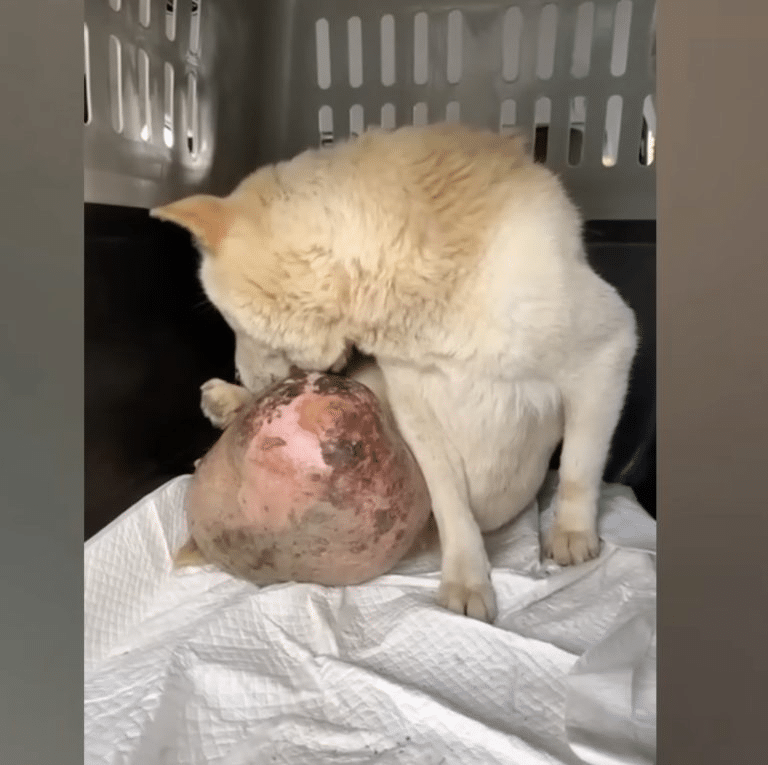
As the years passed, another burden slowly grew. A large mass began forming on his lower abdomen. At first, it may have seemed like a minor issue, something that could be ignored. But it didn’t stop growing. Over time, it became impossible to overlook. The weight of it altered the way Gazelle moved, turning simple steps into an effort. Standing, walking, even resting became uncomfortable. Yet no one came to help.
Despite the constant discomfort, Gazelle remained alert, protective of the small space he knew as home. It was all he had ever known. When strangers eventually appeared near the area, he reacted the only way he understood—by barking and holding his ground. It wasn’t aggression born from cruelty, but fear shaped by years of isolation. Gazelle had never learned that people could bring relief instead of harm.
When rescuers finally reached him, they immediately understood the depth of his suffering. The chain was far too short, his living conditions deeply inadequate, and the mass on his body clearly serious. Gaining his trust would take time, and the situation was tense. There were concerns that the person responsible for his condition might return at any moment. Still, the rescuers remained focused. Gazelle needed help, and leaving him behind was not an option.
Video Twelve Years in Chains, One Second Chance: How Gazelle Found Relief, Trust, and a New Beginning
They moved slowly, speaking softly, careful not to overwhelm him. Each small step forward was a test of trust. Gazelle watched closely, unsure of what would come next. Then, something shifted. The tension in his posture eased just enough to allow them closer. In that fragile moment, he accepted help for the first time. With patience and care, they placed him into a crate and transported him to a veterinary clinic without delay.
At the hospital, examinations confirmed what everyone feared. The mass required immediate surgical attention. Waiting any longer would only worsen his condition. While veterinarians prepared for surgery, rescue workers documented everything Gazelle had endured. Authorities were notified, and action was taken to ensure accountability for his prolonged neglect.
The surgery was complex, demanding focus and precision. Hours passed slowly as the medical team worked carefully, determined to give Gazelle the best possible outcome. Those waiting outside held their breath, knowing how much rested on this single procedure. For Gazelle, it meant more than physical relief—it meant a chance at a life he had never truly experienced.
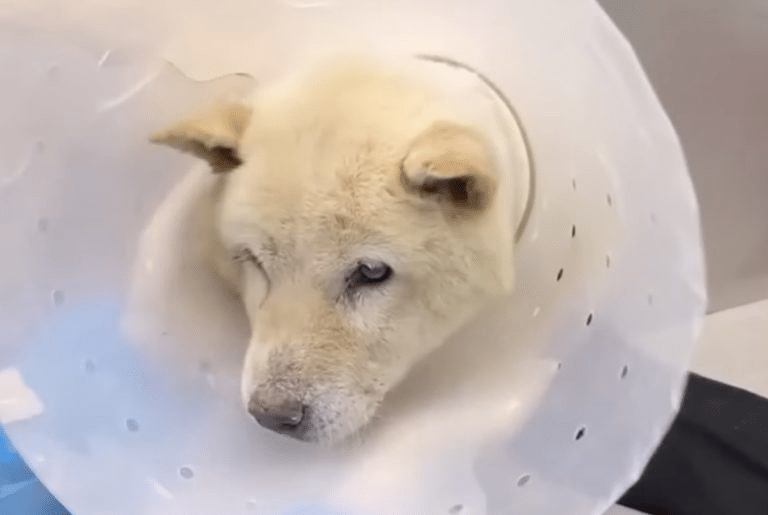
When the surgery was complete, the news brought quiet joy. The mass had been successfully removed. As Gazelle began to wake, the change was already visible. His breathing was steadier, his body no longer strained by the weight he had carried for so long. Though weak, he seemed calmer, as if sensing that something fundamental had shifted.
Recovery would take time, but the hardest part was over. Gazelle was no longer alone. He was surrounded by people who saw him not as a problem to be ignored, but as a life worth protecting. Gentle hands replaced rough restraint. Soft voices replaced years of silence. Each day brought small improvements, moments of rest without discomfort, steps taken with less effort.
Gazelle’s story is not defined by the years he lost, but by what followed. It is a reminder that resilience can survive even the most limiting circumstances, and that compassion has the power to restore dignity. His journey shows what can happen when someone chooses to act instead of turning away.
Today, Gazelle’s future looks different from his past. Free from chains and freed from pain, he is finally learning what it means to feel safe. His life now moves forward with care, patience, and hope—proof that even after years of hardship, healing is possible when kindness arrives.