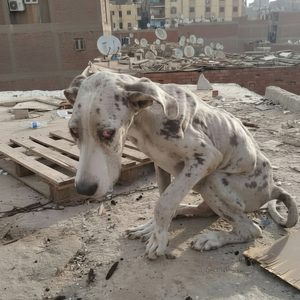
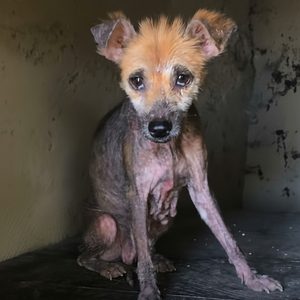
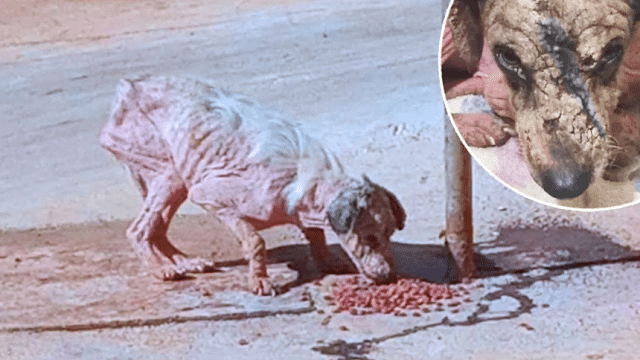
The day María was found, the heat was relentless. Temperatures hovered around 42°C, the kind of scorching weather that drains the life from everything it touches. In the middle of that unforgiving sun, a photograph appeared—one that immediately stopped us in our tracks. A small dog lay motionless in the grass, her body curled inward as if trying to disappear from the world around her.
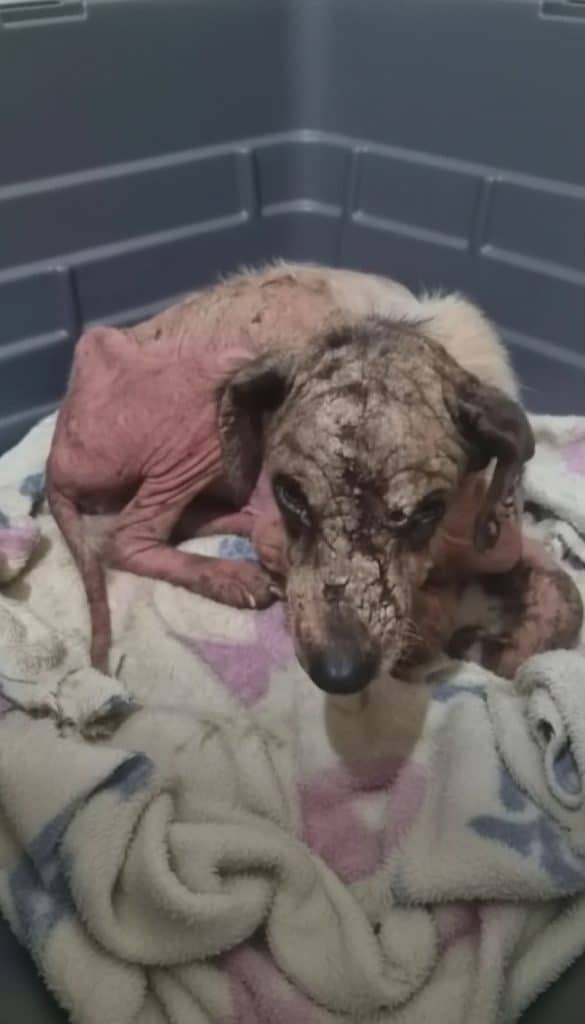
Her coat, once soft and full, had been stripped away by severe mange. Her skin was exposed, irritated, and painfully inflamed. Every breath seemed to take effort. When I finally reached her and gently placed my hand on her side, María let out a cry—not loud, but aching. It was the sound of exhaustion meeting kindness for the first time in a very long while.
That cry stayed with me. It carried fear, confusion, and the deep weariness of an animal that had endured far more than she should have. María wasn’t always alone. She had once belonged to a family, once known what it meant to be sheltered and cared for. But when her health began to decline, when her coat thinned and her condition worsened, she was quietly cast aside.
Left outdoors without shade or water, María faced the blazing sun with no protection. The heat bore down on her fragile body day after day. Hunger gnawed at her. Thirst weakened her further. Still, she waited—because dogs often do—hoping someone would return.
Instead, it was strangers who came.
We moved quickly, knowing time was not on her side. At the veterinary clinic, the full picture of her condition emerged. María was severely underweight, dangerously dehydrated, and suffering from a serious skin infection that had gone untreated for far too long. Her immune system was exhausted, her body fighting multiple battles at once.
Treatment began immediately, but it was gentle and patient. Her skin was too sensitive for anything harsh, so each bath was done slowly, carefully, with soothing solutions meant to ease her pain rather than shock her system. Even then, the heat outside pressed against the walls, reminding us how close she had come to not making it at all.
Video Left in 42°C Heat, María’s Tears Marked the First Moment She Felt Safe Again
The first days were the hardest. María barely moved, barely lifted her head. She flinched at sudden sounds and avoided eye contact, unsure whether the hands reaching toward her meant comfort or harm. Trust did not come easily—and no one expected it to.
But we stayed.
Day after day, we sat beside her. We spoke softly. We offered food and water without forcing her. Slowly, almost imperceptibly, things began to change. She started eating a little more. She slept more deeply. Her breathing grew steadier.
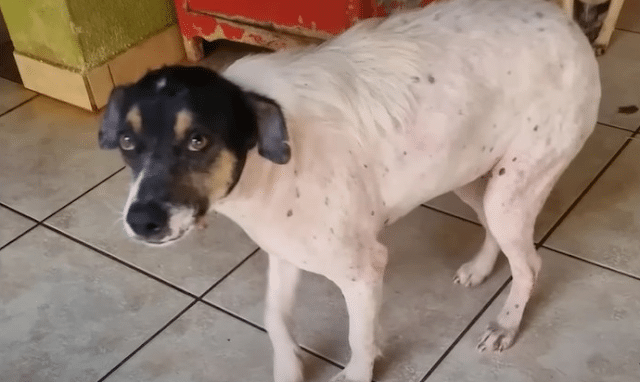
Weeks passed, marked by small victories. New skin began to heal beneath the damaged layers. The redness faded. Thin patches of fur started to return. With each improvement, María’s eyes softened just a bit more. The fear that once clouded them began to lift.
Her personality, hidden beneath pain and neglect, gradually emerged. María wasn’t loud or demanding. She was gentle, observant, and quietly affectionate. She watched everything with careful curiosity, as if learning how the world worked all over again.
At one point, we tracked down the person who had abandoned her. The encounter confirmed what we already knew—María had been failed when she needed help the most. But dwelling on that moment didn’t serve her future. What mattered was where she was now, and who she was becoming.
As her strength returned, so did her joy. María discovered the simple pleasure of walking without pain. Then came short runs. Then play. For the first time, she wagged her tail without hesitation. She began interacting with other dogs, forming quiet bonds and finding comfort in companionship.
The dog who once lay helpless in the grass now greeted each morning with curiosity. The sun, which had once been her enemy, became something she could enjoy again—during calm walks and peaceful afternoons resting in the shade.
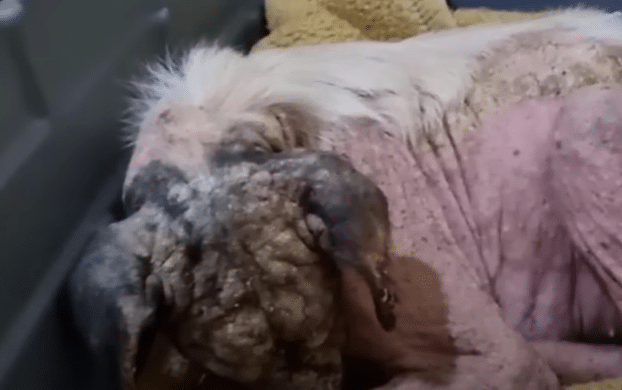
It soon became clear that María wasn’t just recovering physically. Emotionally, she was healing too. She learned that hands could be gentle. That food would come regularly. That she didn’t have to brace herself for the worst.
There was a moment—quiet and unremarkable to anyone else—when we realized she was already home. She followed us without fear. She rested near our feet. She trusted.
María’s journey didn’t end with survival. It continued with connection, safety, and belonging. Her story is not about suffering alone, but about what happens when compassion interrupts neglect.
She reminded us that kindness doesn’t need to be loud to be powerful. Sometimes, it’s as simple as staying, listening, and choosing not to look away. And often, the most loyal hearts belong to those who had every reason to give up—but instead chose to believe again.