The sound was barely noticeable at first—just a weak, broken bark echoing from somewhere behind a row of old buildings. Most people would have kept walking. In a busy neighborhood, noises like that blend into the background. But something about it made me stop.
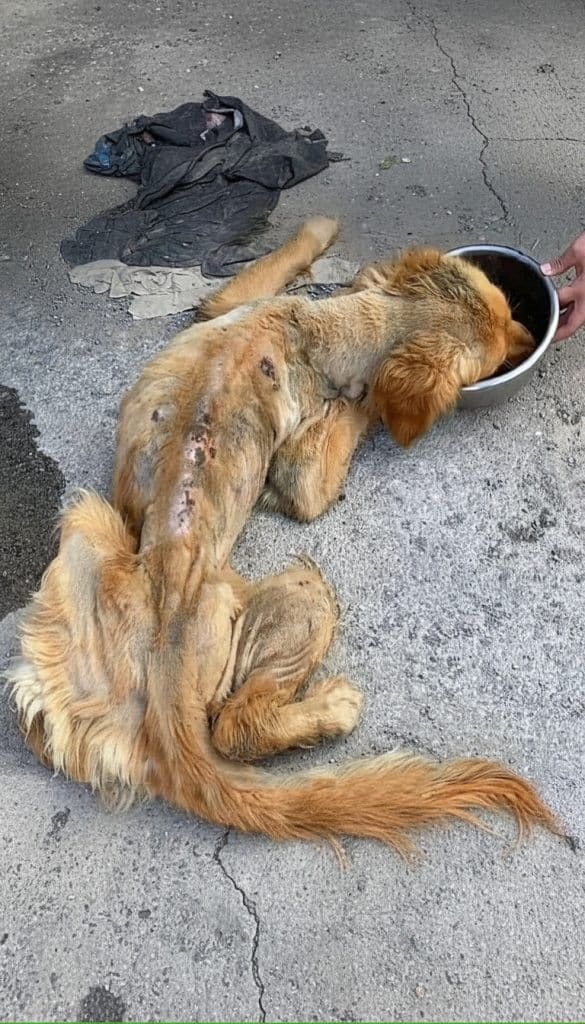
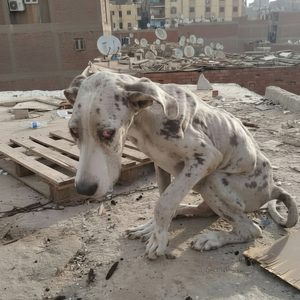
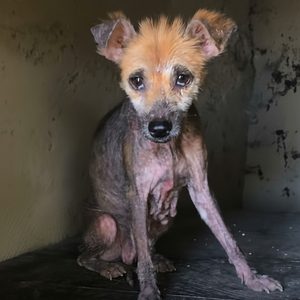
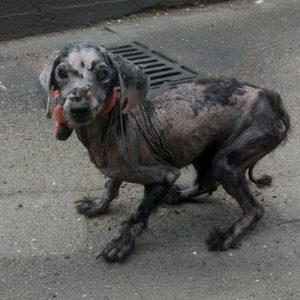
I followed the sound down a narrow alley where sunlight barely reached the ground. There, curled against the cold pavement, was a small stray dog. She was painfully thin, her body covered in patches where fur should have been. Her skin looked irritated and sore, and every shallow breath she took seemed to cost her effort. When she tried to stand, her legs trembled and gave out beneath her.
It was clear she hadn’t eaten properly in days, maybe longer. Her ribs showed through her skin, and her eyes—though dull with exhaustion—still carried a quiet awareness of the world around her. She wasn’t aggressive or afraid. She was simply tired. Tired in a way that comes from being overlooked for too long.
I approached slowly, not wanting to scare her. When I set a small container of water near her mouth, she tried to lift her head but didn’t have the strength to drink. That moment hit me harder than I expected. Hunger and thirst are things most of us solve without thinking. For her, they had become overwhelming obstacles.
I knew I couldn’t leave her there.
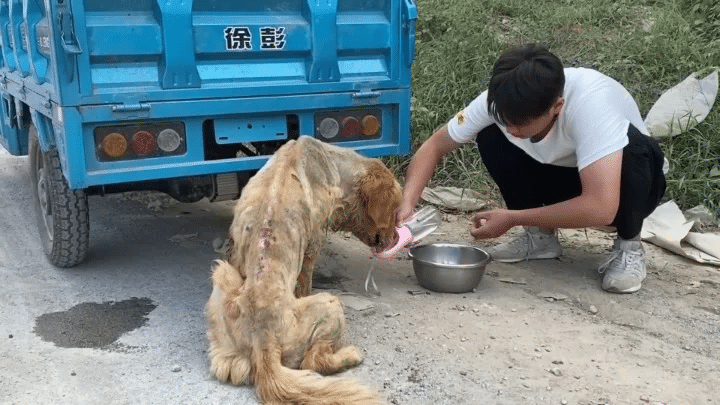
I pedaled home as fast as I could on my old tricycle, grabbed what food and water I had, and returned to the alley. When I got back, I wasn’t alone. My friend Dayao, who shares the same soft spot for animals, had already found her. Without a word, we both understood what needed to be done.
As soon as the food was placed in front of her, the dog began eating with urgency. Not greed—just survival. It was obvious she’d been wandering for days, maybe weeks, searching for scraps, pushing her weak body further than it could handle. Watching her eat brought relief, but it also brought sadness. No animal should have to fight that hard just to stay alive.
Video Rescue Mission: A Stray Dog’s Quiet Journey From Despair to Hope
Even after eating, she couldn’t stand properly. Her legs shook, and she moved with slow, uncertain steps. The skin condition covering her body looked painful, likely something that had gone untreated for a long time. Whether she had once belonged to someone or had always lived on the streets, it no longer mattered. What mattered was that she needed real help—medical care, warmth, and time to heal.
Dayao and I talked it over, and the decision was easy. We would take her to a shelter where professionals could give her the care she needed. Lifting her gently, we could feel how light she was, as if life itself had been slowly draining from her. She didn’t resist. In fact, she leaned into the touch, as though she understood that this time, something was different.
The journey wasn’t simple. It took time and effort to get her safely to the shelter, and the road felt longer than usual. Still, every step forward felt meaningful. Each bump and turn carried the promise that her story might change from this point on.
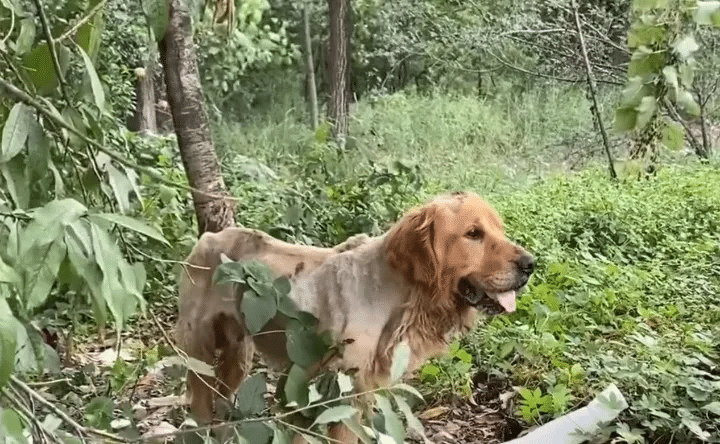
At the shelter, the staff moved quickly. They examined her carefully, offering reassurance that she would finally receive treatment, food, and a clean place to rest. As they carried her inside, she turned her head slightly, her eyes meeting mine for just a moment. There was no excitement, no sudden burst of energy—just a quiet calm. As if she finally felt safe enough to stop struggling.
Walking away, I felt a mix of emotions. Relief, sadness, hope. Encounters like this stay with you. They remind you how thin the line can be between suffering and safety, and how often that line depends on whether someone chooses to stop and care.
It’s easy to think that one person can’t make a difference, especially in a world where so many animals are in need. But that day proved otherwise. A simple decision—to follow a sound, to bring food, to ask for help—changed the course of one life.
This experience stayed with me long after. It reinforced a belief I’ve always held: kindness doesn’t have to be loud or dramatic to matter. Sometimes, it’s as simple as noticing what others overlook and acting when it would be easier to walk away.
Every living being deserves compassion, no matter how small, weak, or forgotten they may seem. And while we can’t save them all, each act of care creates a ripple that reaches further than we realize. On that quiet day in an alley, hope returned to a dog who had almost lost it—and in doing so, it reminded me of the power we all carry to make the world a little gentler.