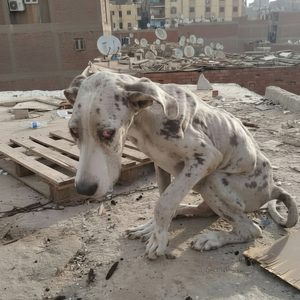
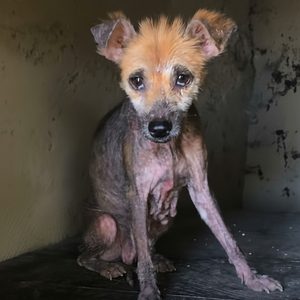
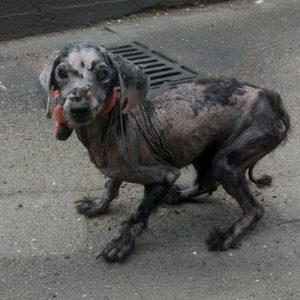
When people think about neglected animals, they often picture dogs wandering busy streets or searching through trash cans for their next meal. What many don’t see are the quieter forms of suffering—the kind that happens out of sight, far from traffic and neighbors, where a life can fade without anyone noticing. This is the story of one such dog, later named Magma, and the slow, patient journey that carried him from isolation into safety.
Magma’s life nearly slipped away before he ever had a name.
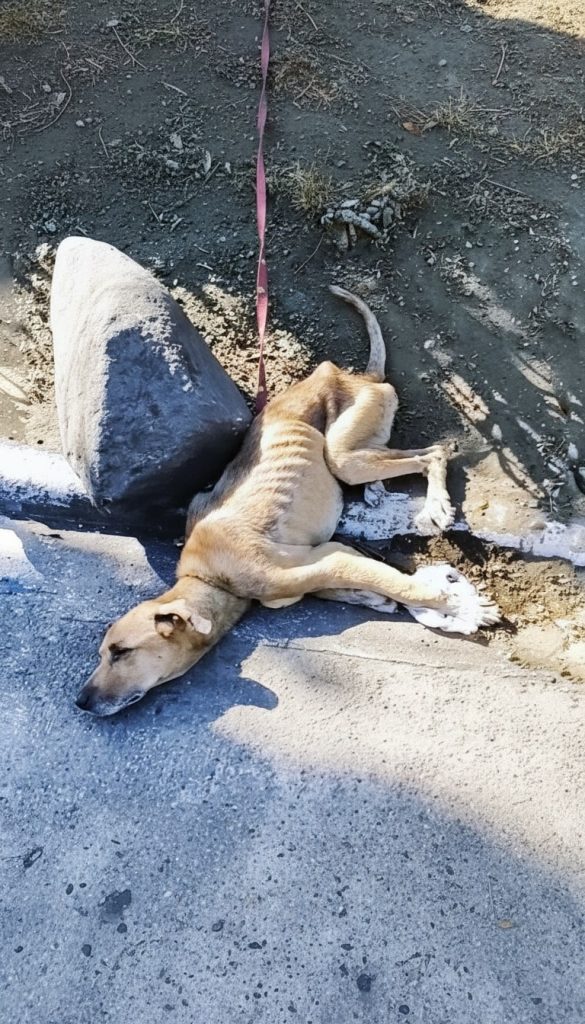
A call came in to local volunteers about a dog chained in a remote area, exposed to the elements with no shelter in sight. When rescuers arrived, the scene was deeply troubling. There was no shade, no clean water, and no sign that anyone had checked on him in a long time. The heavy chain limited his movement, leaving him unable to seek comfort or relief from the heat.
Magma was barely standing.
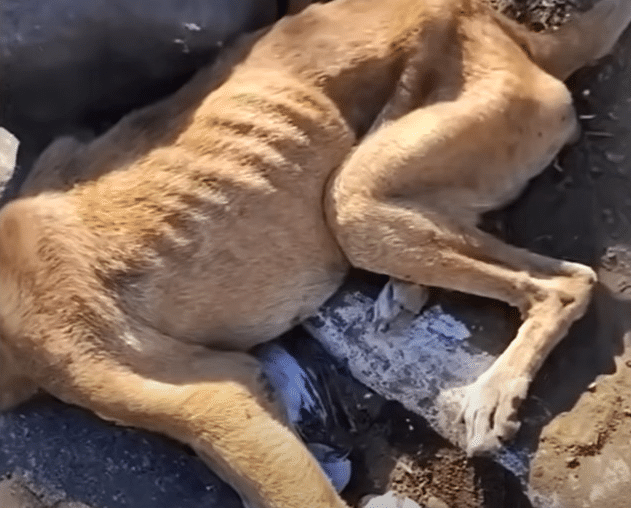
His body was painfully thin, with his ribs clearly visible beneath his dull, tangled coat. Dehydration had drained his energy, and exhaustion weighed heavily on him. Yet what struck the rescuers most wasn’t just his physical condition—it was his expression. His eyes didn’t show anger or panic. Instead, they reflected a quiet emptiness, as though he had already accepted that help wasn’t coming.
That moment changed everything.
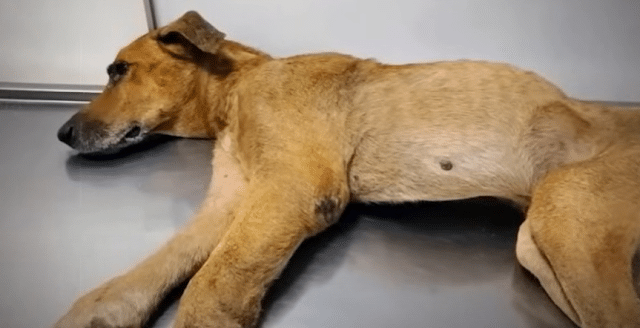
The team carefully freed him from the chain and rushed him to a veterinary clinic. Every minute felt urgent. At the clinic, a thorough examination revealed just how serious his condition was. Magma was severely malnourished and dangerously dehydrated. He also had an untreated injury in one of his legs, likely caused by long-term strain and lack of care. His weakened body had been surviving, but barely.
Recovery would take time.
In the early days, Magma didn’t understand that he was safe. He pulled away from gentle hands and turned his head from food. For a dog who had spent so long restrained and ignored, trust didn’t come naturally. The veterinary staff and volunteers knew that pushing him would only deepen his fear. They chose patience instead.
Video Chained, Starving, and Forgotten: How One Dog Learned to Trust Again
To stabilize him, they began feeding him small amounts of nourishment using a syringe. It was slow, careful work that required calm voices and steady hands. Each feeding was an act of reassurance as much as survival. Gradually, his body began to respond. His strength returned in small but meaningful steps. His eyes grew more alert, and the emptiness slowly gave way to awareness.
Physical healing was only part of the process.
Emotionally, Magma remained cautious. Sudden movements made him flinch. He kept his distance, watching people closely. This wasn’t aggression—it was self-protection. His experiences had taught him that closeness could lead to harm, and he wasn’t ready to let go of that lesson just yet.
The volunteers respected his boundaries.
They spent time sitting nearby, speaking softly, allowing him to observe without pressure. No one forced affection or expected quick progress. Healing, they understood, doesn’t follow a schedule. It unfolds in its own time, built on consistency and respect.
As the weeks passed, subtle changes began to appear. Magma started eating on his own. His body filled out slightly, and his coat regained a bit of its natural shine. He showed curiosity about his surroundings, lifting his head when people entered the room. He was still careful, but no longer completely withdrawn.
Then came a moment no one expected.
One quiet day, Magma wagged his tail.
It was a small movement, easy to miss. But for those who had stood by him through his darkest days, it meant everything. That gentle wag was a sign that something had shifted inside him. It meant he was beginning to believe that kindness could be real.
From there, progress continued.
Magma slowly allowed gentle touch. He began interacting with other dogs, learning how to share space and even discovering moments of play. Each positive experience built on the last, reinforcing the idea that safety could be consistent and care could be trusted.
Months of steady support transformed him.
His leg injury healed with treatment and rest. His body grew stronger, and his confidence slowly returned. Most importantly, his spirit began to heal. He learned how to rest without fear and enjoy simple comforts like soft bedding and peaceful walks.
Eventually, the day came when Magma was ready for a new chapter.
A family stepped forward who understood his past and respected his need for patience. They didn’t see a dog defined by neglect. They saw resilience. They welcomed him into their home, offering stability, understanding, and unconditional care.
In that environment, Magma continued to flourish.
Today, his life looks nothing like it once did. He enjoys regular meals, calm routines, and the comfort of belonging. He explores his surroundings with confidence and rests peacefully, no longer bound by chains or memories of isolation. The dog who once stood quietly in the heat, unseen and forgotten, now lives as a cherished family member.
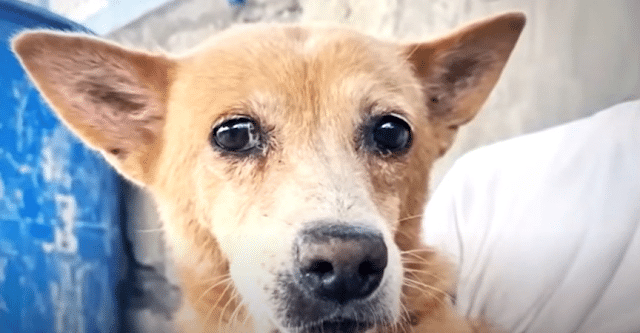
Magma’s journey is a reminder that animals remember pain—but they also respond deeply to compassion. Trust, once broken, can be rebuilt with time and patience. Not every rescue happens quickly, and not every transformation is dramatic. But every life saved matters.
His second chance proves that when someone chooses to act instead of looking away, hope can return—even to those who have waited the longest to be seen.