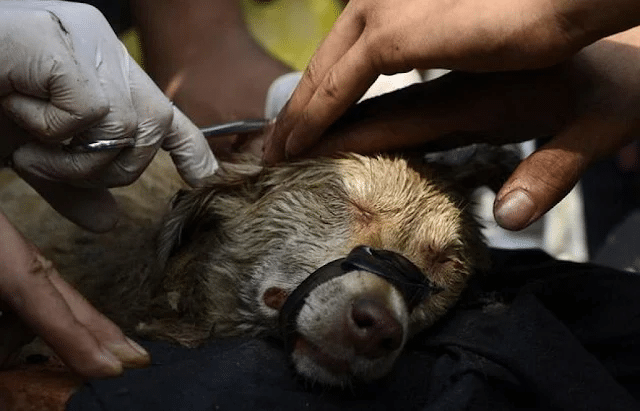
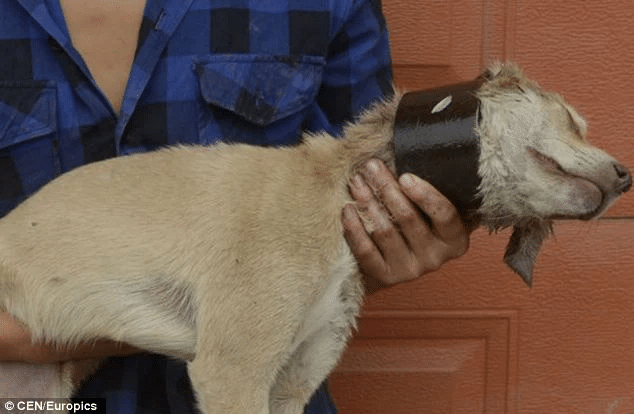
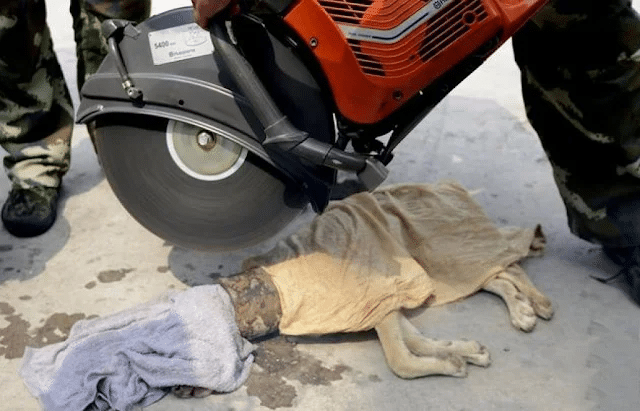
In a quiet neighborhood, a troubling scene unfolded when local rescue teams were called to help a dog in visible distress. The animal had been struggling for some time with a collar that had become painfully tight, cutting into its neck and restricting movement. At first, rescuers tried standard methods to remove it, but the material proved stubborn and unyielding. Only after bringing in specialized tools were they finally able to free the dog and prevent further injury.
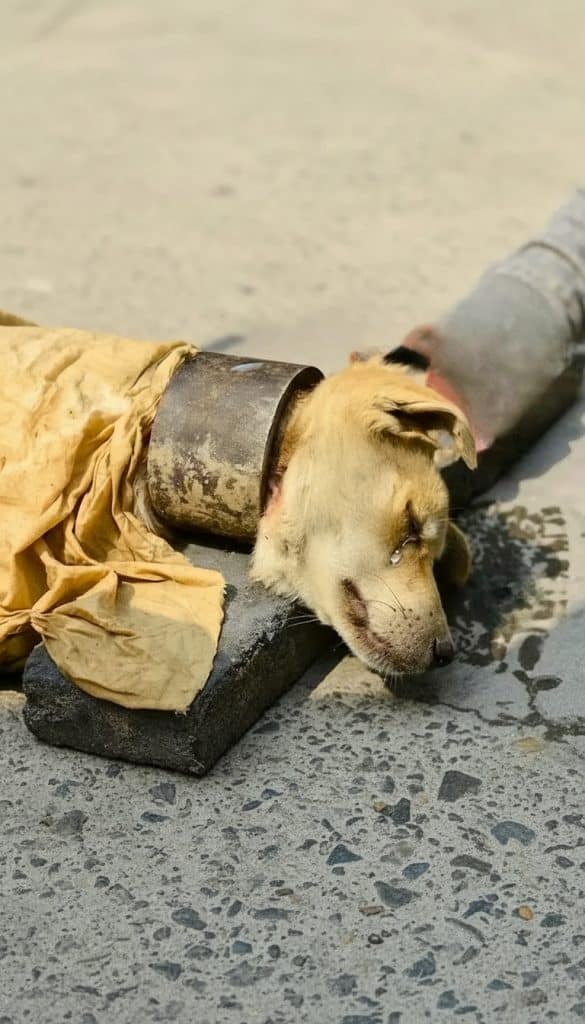
Once the collar was removed, the dog was rushed to a veterinary clinic for immediate care. Medical professionals carefully cleaned the affected area, treated the wounds, and monitored the animal’s condition to ensure there were no lasting complications. Thanks to prompt intervention, the dog began to show signs of relief and recovery. At the same time, authorities launched an investigation to determine how the situation occurred and who may be responsible, signaling growing attention to cases involving animal harm.
This single rescue, while deeply moving on its own, reflects a much larger and more complex discussion taking place across China today. Questions surrounding animal welfare, responsibility, and traditional practices have become increasingly visible in public discourse. While compassion for animals is widely shared, legal protections remain limited, and cultural views continue to vary significantly by region.
At present, China does not have comprehensive national legislation specifically addressing animal cruelty. This legal gap often leaves rescue groups and local officials navigating difficult situations without clear guidelines. Despite this, grassroots organizations and volunteers have become more active, stepping in where laws fall short. Their work, often supported by donations and community efforts, has saved countless animals from neglect and suffering.
One of the most debated topics within this broader conversation is the consumption of dog meat. In certain regions, particularly during colder months, dog meat has historically been viewed as a traditional food believed by some to provide warmth or health benefits. For many families, these practices have been passed down through generations and are seen as part of local heritage rather than cruelty.
Video Dog Rescue Highlights China’s Growing Debate Over Animal Cruelty and Dog Meat Consumption
However, attitudes are shifting, especially among younger generations and urban residents. Critics argue that dogs, long recognized as loyal companions and household pets, deserve protection rather than exploitation. Concerns are also frequently raised about the conditions under which dogs are transported and handled, with advocates calling for more humane standards and stronger oversight.
Earlier this year, a major incident brought these concerns into sharp focus. In southwestern China, volunteers working alongside police discovered a transport operation involving more than 1,500 dogs confined in extremely small cages. The animals were severely underfed, dehydrated, and visibly exhausted after enduring a journey that spanned nearly an entire day. The rescue came just in time, but many of the dogs were in such fragile condition that survival was uncertain.
Those that did make it through the ordeal were taken to a nearby farm where emergency care could be provided. Volunteers worked tirelessly to offer food, clean water, and basic medical treatment. Veterinarians assessed each animal, prioritizing the most vulnerable. Despite these efforts, recovery proved challenging for many, highlighting the long-term effects of neglect and poor transport conditions.
Stories like this have fueled public debate across social media and news outlets, prompting discussions not only about animal welfare but also about modernization, ethics, and international perception. As China continues to grow economically and socially, many citizens are questioning how traditional practices align with contemporary values and global standards.
Historically, dogs have held a complex place in Chinese society. Archaeological evidence shows that dogs were domesticated in ancient times, well before many foundational philosophies emerged. Over centuries, they served various roles, from guardians and hunting companions to household pets. At the same time, the consumption of dog meat persisted in certain areas, shaped by local customs rather than national identity.
Today, that history is being reevaluated. Pet ownership has surged in cities, with dogs increasingly viewed as family members. Pet-related industries, including veterinary care, training, insurance, and specialized nutrition, have expanded rapidly, reflecting changing lifestyles and priorities. These developments have also created new economic opportunities while reinforcing the idea of responsible animal care.
The rise of animal welfare organizations has further influenced public awareness. Through education campaigns, rescue operations, and partnerships with local authorities, these groups aim to promote humane treatment without dismissing cultural complexity. Their message often focuses on empathy, responsibility, and gradual reform rather than confrontation.
The rescued dog with the tight collar may never know the broader impact of its story, but its experience has become part of a larger narrative. Each rescue highlights both the challenges and the progress being made. While legal reforms may take time, public attitudes continue to evolve, driven by compassion, education, and shared stories of survival.
As conversations around animal welfare grow louder, they reflect a society in transition—one balancing respect for tradition with a desire for greater compassion. The path forward may not be simple, but each act of rescue and care brings the discussion one step closer to meaningful change.