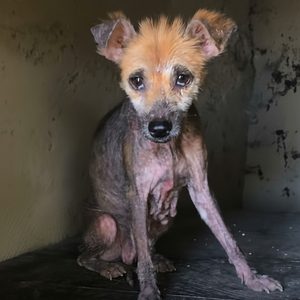
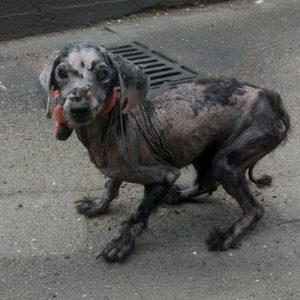
In a quiet stretch of open land where few people ever stopped to look, a dog lay curled against the ground, conserving what little strength he had left. Later named Sinclair, he was barely more than a silhouette against the field—thin, weary, and carrying the unmistakable signs of a long life without protection or care. There was no collar, no shelter nearby, and no indication that anyone was searching for him. It was clear that survival, not comfort, had been his daily focus for a very long time.
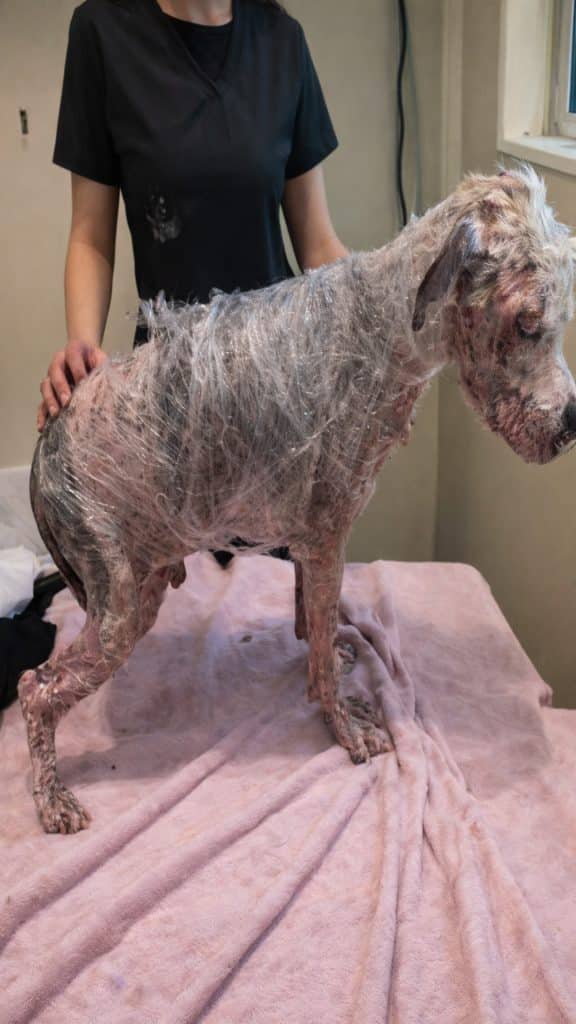
Sinclair’s body told a difficult story. His skin was irritated and inflamed, marked by areas that looked painful and fragile. Patches of fur were missing, replaced by raw, sensitive skin that suggested prolonged exposure to the elements. Several untreated wounds showed just how vulnerable he had been, enduring injury without relief or medical attention. He moved carefully, as if every step required calculation, and rested often, conserving energy whenever possible.
When help finally arrived, it marked the end of isolation but not the end of struggle. Bringing Sinclair to safety revealed just how serious his condition truly was. This was not a case of minor neglect that could be quickly resolved. His health issues had developed over time, layered one upon another, demanding thoughtful, consistent care rather than quick fixes.
Veterinary evaluations confirmed the extent of what his body had endured. Chronic skin disease had left him uncomfortable and prone to infection. Open wounds showed delayed healing, a sign that his immune system had been compromised for some time. Malnutrition had stripped him of muscle and stamina, leaving him weak and easily fatigued. Even standing for extended periods seemed to require effort.
Yet beneath the exhaustion, there was something quietly hopeful in his expression. His eyes followed movement with awareness, and when spoken to gently, he showed subtle signs of recognition. It suggested that despite everything, he still had the capacity to respond to kindness.
Video From Abandoned to a Peaceful Home: Casper’s Quiet Journey of Revival
Once placed under the care of Pearl’s Place, the approach was cautious and deliberate. The immediate goal was not transformation, but stabilization. Sinclair needed warmth, consistent meals, and a calm environment where his body could begin to recover without stress. His caregivers focused on creating predictability—regular feeding times, gentle handling, and a space where he could rest undisturbed.
His treatment plan required patience. Medicated baths helped soothe his irritated skin, while topical treatments addressed infections that had gone untreated for far too long. A carefully balanced diet supported internal healing, allowing his body to slowly absorb the nutrients it had been missing. Progress was measured in small victories. Finishing a meal without hesitation, standing a little longer, or showing interest in his surroundings were all signs that recovery had begun.
The first days were quiet. Sinclair spent much of his time sleeping, letting his exhausted system adjust to safety and nourishment. Caregivers observed him closely, celebrating even the smallest improvements. Over time, his appetite increased, signaling that his body was finally responding to regular care. With nourishment came subtle changes—his posture improved, his movements became steadier, and he began to show curiosity about the world beyond his resting space.
Short walks and brief outdoor moments were introduced carefully. These experiences offered both physical rehabilitation and mental stimulation. At first, he moved cautiously, unsure of what to expect. But with each outing, his confidence grew. He began to lift his head higher, take in new scents, and engage with his environment in ways he hadn’t before.
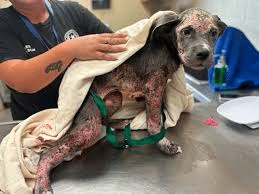
Healing wasn’t limited to the physical. Trust had to be rebuilt slowly. Sinclair’s caregivers allowed him to set the pace, never forcing interaction. Gentle voices, calm movements, and respectful distance helped him understand that people no longer represented danger. Over time, tentative tail wags appeared. Moments of relaxed curiosity replaced guarded stillness. These changes marked a turning point—proof that emotional healing was taking root.
Weeks into his recovery, the transformation became undeniable. Inflamed skin settled, wounds closed, and new fur began to grow where there had once been bare patches. His eyes, once dulled by discomfort, grew brighter and more expressive. With improved health came glimpses of personality—brief playful gestures, moments of affection, and an emerging sense of ease.
Veterinary follow-ups confirmed steady progress. His condition, once severe, was now manageable. Each appointment brought encouraging news, reinforcing that patience and consistent care were making a lasting difference. By the time Sinclair was cleared for adoption, he looked like a different dog. His coat was fuller, his weight stabilized, and his demeanor reflected calm assurance rather than survival-driven caution.
Still, one essential piece remained. What Sinclair needed most was permanence—a home where the stability he had found could continue. When an adoptive family stepped forward, they didn’t focus on his past hardships. They saw resilience, gentleness, and the quiet strength it had taken for him to endure.
With adoption came a new name: Casper. It symbolized a fresh beginning grounded in safety and belonging. The transition to home life was smooth, built upon the foundation of trust and routine established during his recovery. Casper settled in with quiet confidence, embracing daily rhythms, seeking affection, and enjoying the comfort of consistency.

The marks of his past did not disappear, but they no longer defined him. Instead, they stood as reminders of resilience and the impact of sustained compassion. Today, Casper lives a life filled with simple joys—resting without fear, sharing companionship, and engaging in play that once seemed out of reach.
His journey from abandonment to belonging reflects a broader truth about rescue and recovery. Healing rarely happens overnight. It requires time, resources, and unwavering commitment. Sinclair’s transformation into Casper was shaped not by a single act, but by weeks of patience, medical care, and emotional understanding.
From a forgotten field to a forever home, his story quietly affirms the power of kindness. It shows that even the most fragile beginnings can lead to lasting renewal when care is given consistently and with heart.