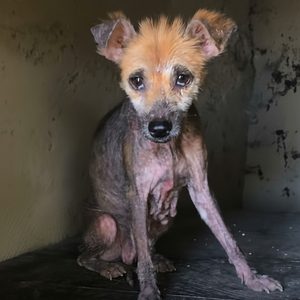
Stewart’s story doesn’t announce itself loudly. It doesn’t rely on shock or dramatic moments to make an impression. Instead, it unfolds quietly, settling into the heart through patience, consistency, and the kind of compassion that changes lives over time. His journey is a reminder that healing is not always instant—but it is always possible when fear is met with understanding and love is offered without conditions.
When Stewart was first found, his world was painfully small. A heavy chain anchored him to a single tree, limiting his movement and defining the boundaries of his existence. A thick leather collar pressed against his neck, worn and unforgiving, serving as a constant reminder that freedom was not meant for him. His body was thin from neglect, his coat dulled by dirt and exposure. There was no shelter from the weather, no comfort, and no sense of safety. Every sound made him flinch. Every moment carried tension. Fear wasn’t something Stewart felt occasionally—it was the air he breathed.
Those who came to help could see immediately that Stewart had learned to survive by staying small. His posture was low, his movements careful, as if any sudden action might bring punishment. He didn’t bark or lash out when people approached. Instead, he froze, unsure whether the next moment would bring relief or more pain. His silence spoke volumes. Trust, for Stewart, had long ago become something dangerous.
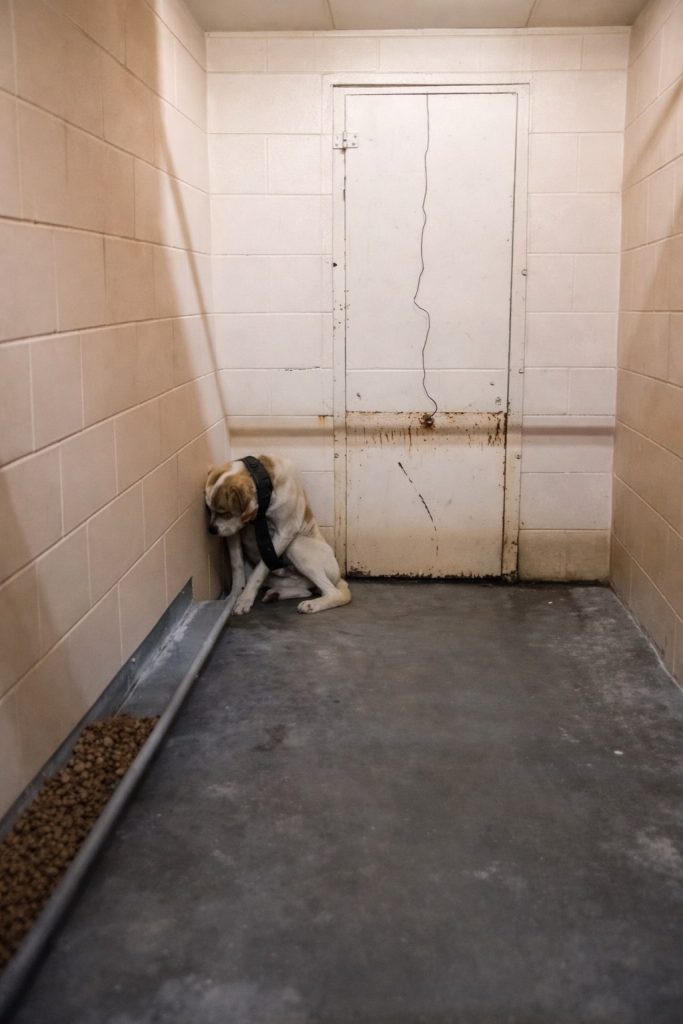
The transition to the rescue center did not bring immediate relief. Surrounded by unfamiliar sounds and scents, Stewart retreated even further into himself. He curled tightly into corners, avoided eye contact, and often refused food. Hands reaching toward him made his body tense. To an untrained eye, it might have looked like resistance. But those caring for him understood the truth: Stewart wasn’t difficult. He was overwhelmed. His body and mind had been locked in survival mode for far too long.
Video From Fear to Freedom: Stewart’s Journey of Healing, Trust, and a Second Chance
Rather than force progress, the rescue team chose patience. They gave Stewart space. They sat quietly nearby without expectations. Their voices stayed soft, their movements slow and predictable. They allowed him to set the pace, even when days passed with only the smallest signs of change. Healing, they knew, could not be rushed without causing more harm.
A defining moment came during a routine veterinary visit. As the veterinarian carefully removed the heavy collar from Stewart’s neck, something remarkable happened. His body relaxed almost instantly. Muscles that had been tense for who knows how long finally loosened. His breathing slowed. It was as if a weight—both physical and emotional—had been lifted. In that simple act, Stewart experienced a freedom he had never known.
From that day forward, change began to take root. Without the collar, Stewart seemed lighter in every sense. He stretched out fully for the first time instead of curling inward to protect himself. His posture shifted. He rested more deeply. The constant alertness that once defined him began to fade, replaced by moments of calm curiosity.
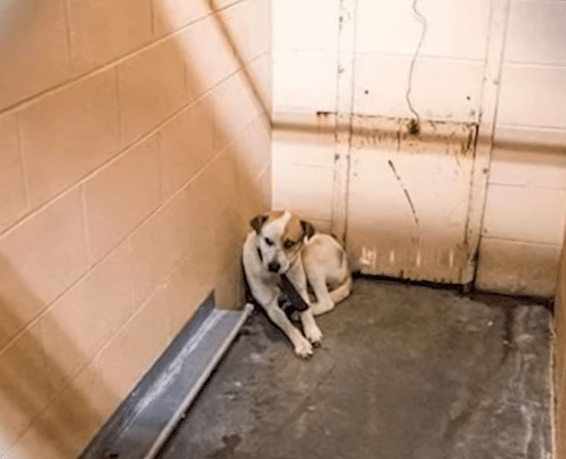
Progress came slowly but steadily. His eyes softened. He started watching the people around him instead of hiding from them. One afternoon, a small, hesitant tail wag appeared, catching everyone by surprise. Soon after, he showed interest in toys, first approaching them cautiously, then engaging with growing confidence. Each small step marked a victory that couldn’t be measured in speed, only in trust.
As weeks passed, Stewart began seeking affection in gentle ways. He leaned against caregivers’ legs. He followed familiar footsteps from room to room. He learned that hands could bring comfort instead of harm. With each positive interaction, his understanding of the world shifted. This place was different. These people were safe.
Physically, Stewart grew stronger. Proper meals helped him gain weight. His coat became healthier and cleaner. His movements turned confident and relaxed. But the most profound changes were internal. He no longer lived in constant vigilance. He learned how to rest without fear, how to enjoy the present moment without bracing for what might come next.

Stewart’s journey shows that healing is built through consistency. There was no single moment that erased his past. No dramatic gesture that instantly transformed him. Instead, it was the daily commitment to kindness, the repeated reassurance, and the willingness to show up again and again—even when progress seemed invisible.
Today, Stewart is no longer defined by the chain that once held him. He is affectionate, playful, and open with his trust. He greets familiar faces with joy instead of fear and offers love freely. His story is a powerful reminder that trauma does not erase worth, and that patience can restore what fear once took away. Sometimes, the greatest transformations begin with one simple act—removing what binds, and allowing healing to begin.