The Florida Everglades is a place of raw beauty and quiet danger. Endless stretches of wetlands, thick brush, shifting water levels, and unpredictable wildlife make it a challenging environment even for experienced outdoorsmen. For a domesticated dog, it is a place no one should ever be left behind. And yet, that is exactly where a gentle dog named Powder was abandoned—alone, confused, and completely unprepared to survive.
Powder did not know why he was there. One moment, he had people. Familiar voices. The comfort of human presence. Then, without warning, those same people disappeared, leaving him in a vast and unfamiliar landscape. The ground was damp, the air heavy with humidity, and the sounds around him were foreign and unsettling. There was no shelter to retreat to, no food bowl to wait beside, and no clear path back to the life he knew.
As the days passed, the reality of his situation began to take its toll. Powder did not have the instincts needed to survive in the wild. He didn’t know which water was safe or where to find food. Hunger weakened him quickly, and the constant moisture irritated his skin, opening the door for infections to develop. Each day became harder than the last, and the energy he once had slowly drained away.
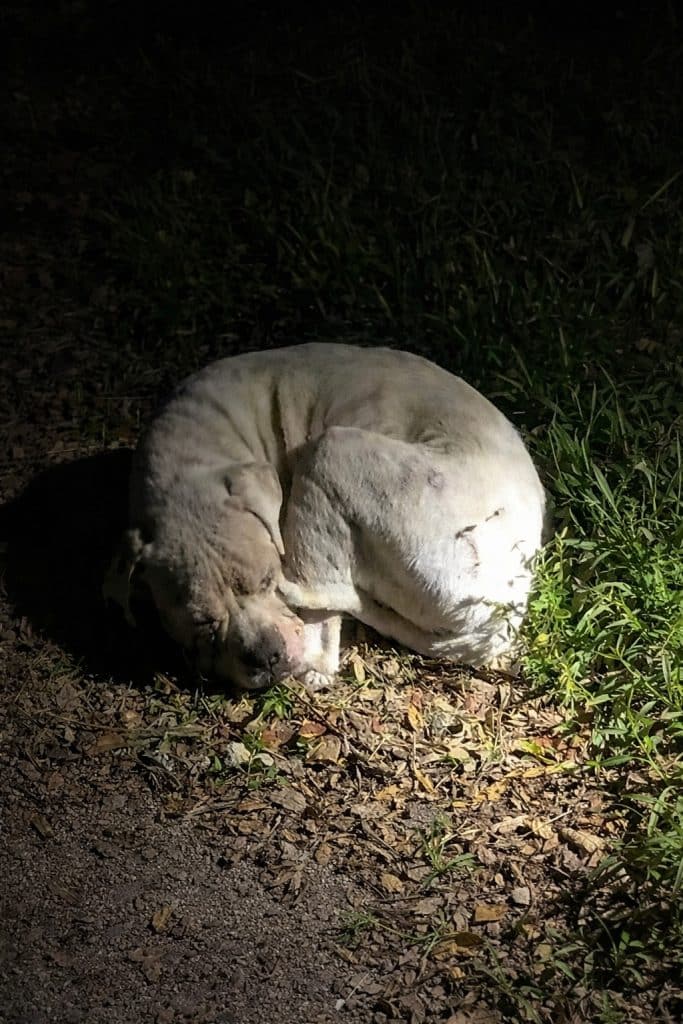
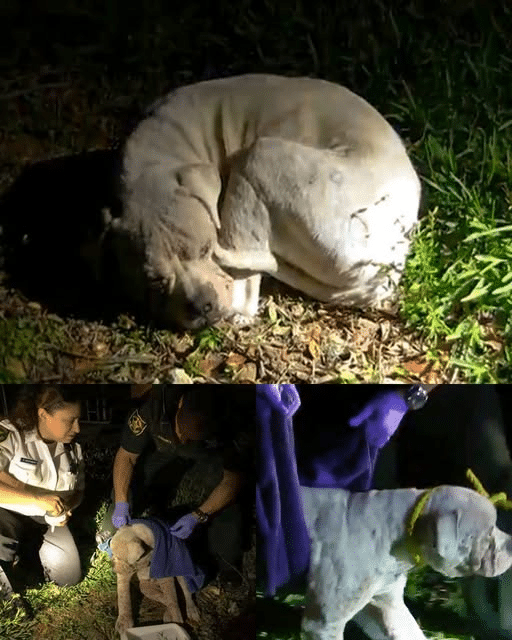
Eventually, Powder stopped trying to wander. Exhaustion overcame fear. He curled himself into a small, tight shape beneath the brush, conserving what little strength remained. It wasn’t a moment of giving up, but rather the body’s quiet response to overwhelming hardship. In that lonely corner of the Everglades, Powder waited in silence, his body struggling to hold on.
Then, unexpectedly, help arrived.
On a cold February day, a couple passing through the area noticed something unusual tucked into the vegetation. At first, it looked like nothing more than debris. But as they drew closer, they realized it was a dog—motionless, fragile, and barely responsive. Powder did not lift his head. He did not bark or attempt to run. His eyes told a story of deep fatigue and confusion, the kind that comes from prolonged fear and neglect.
Video Left Behind in the Everglades: How One Abandoned Dog Named Powder Found a Second Chance at Life
The couple knew they couldn’t walk away.
They spent hours making calls, reaching out to anyone who might be able to help. Their persistence paid off when deputies from the Broward Sheriff’s Office arrived. The moment they saw Powder, they understood the urgency. He was unable to stand on his own, his body trembling and his breathing shallow. Time was not on his side.
Unsure if he even had the strength to respond, the deputies gently offered him food and water. Slowly, Powder surprised everyone. He lifted his head just enough to take a few careful bites. He drank. That small effort spoke volumes. It was a sign that, despite everything he had endured, Powder still wanted to live.
Carefully, he was lifted into the patrol vehicle, wrapped in warmth and reassurance. For the first time since being abandoned, Powder was moving away from danger and toward safety.
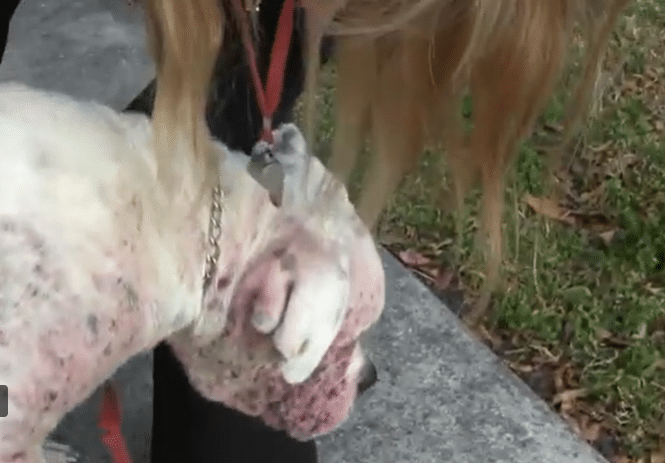
Once stabilized, arrangements were made for him to be transferred into rescue care. At the veterinary clinic, the full scope of his condition became clear. Powder was battling multiple infections, both internal and external. His skin was inflamed from prolonged exposure, and his immune system was severely weakened. Even more painful was the condition affecting his eyes—both were swollen due to entropion, a disorder where the eyelids turn inward, causing constant irritation and discomfort.
The medical team confirmed what everyone feared: had Powder remained in the Everglades much longer, he would not have survived.
Treatment began immediately. Medications were administered to address infection, reduce inflammation, and support his recovery. Every detail of his care mattered. Meals were given slowly and carefully. His reactions were closely monitored. Though he was finally safe, his body needed time to recover from weeks of neglect and exposure.
As the days went by, subtle changes began to appear.
Powder rested without fear. He slept deeply, no longer alert to every unfamiliar sound. The swelling in his eyes gradually decreased, and the constant tension in his body began to ease. Caregivers spoke softly to him, offering calm reassurance through gentle touch and steady presence. Powder didn’t retreat from the kindness. Instead, he leaned into it, as though realizing he was no longer alone.
Once his infections were under control, plans were made for the eye surgery he desperately needed. It was another important step toward comfort and healing—something Powder had been denied for far too long. While surgery always carries uncertainty, it also carried hope. Hope for a life without constant pain. Hope for a future built on care rather than survival.
Today, Powder is no longer a forgotten figure hidden in the swamp.
He is safe. He is receiving the care he deserves. He is surrounded by people who see him not as a problem, but as a life worth protecting. Though the experience he endured may leave lasting emotional marks, his future is no longer defined by abandonment or fear.
Powder’s story is a sobering reminder of how vulnerable animals are when left behind—but it is also a powerful example of what compassion can accomplish. A couple who refused to look away. Deputies who took action. Rescuers who committed to his recovery. Each played a role in changing the course of his life.
From the unforgiving wetlands of the Everglades to the safety of loving hands, Powder’s journey proves that even in the darkest situations, hope can still be found. Healing may take time, and trust may return slowly, but second chances are real.
And for Powder, that second chance means something beautifully simple—a future where he will never be left behind again.