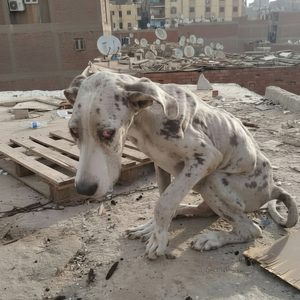
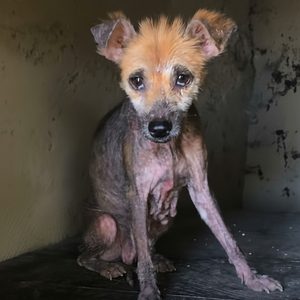
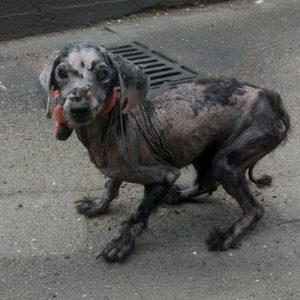
From the outside, Charlie’s life once looked almost invisible. He was there, breathing, moving slowly through each day, yet barely noticed by the world around him. When rescuers finally encountered him, the reality of what he had endured was impossible to ignore. His body told a story of long-term neglect—thin to the point of fragility, with patchy fur and an injured leg that made even simple movements uncomfortable. Still, what struck everyone most was not how he looked, but how quietly he endured it all. Charlie did not cry for help. He did not lash out. He simply existed, waiting in silence while the person responsible for his care failed him again and again.
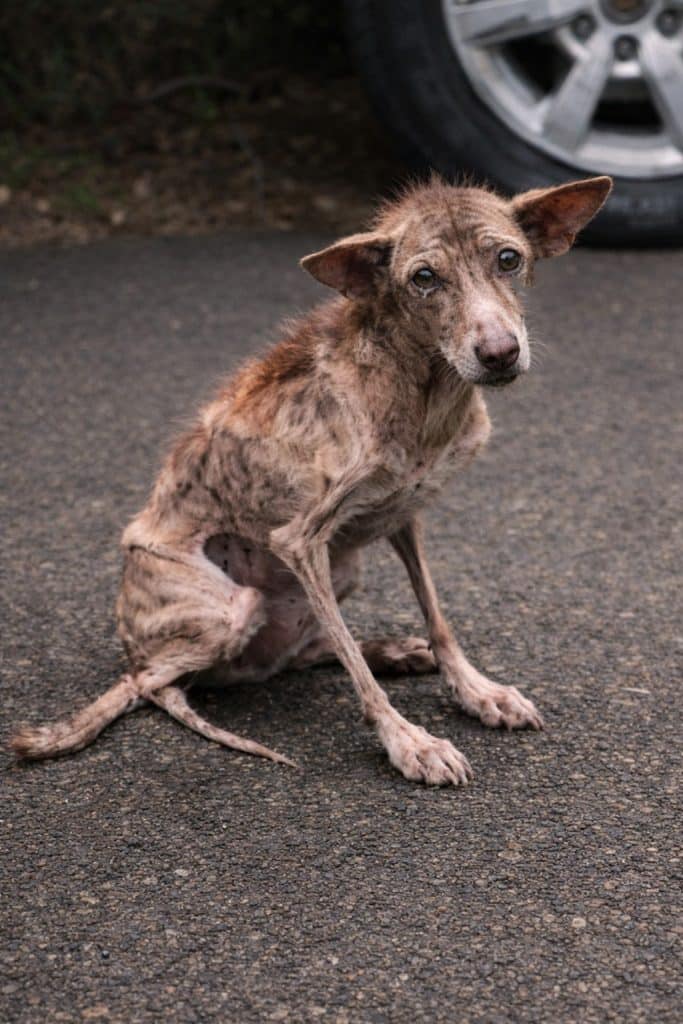
For weeks, neighbors watched his condition decline. Each passing day brought more concern as Charlie’s energy faded and his presence became quieter still. He moved less, rested more, and seemed to retreat inward. The situation reached a point where doing nothing was no longer an option. A rescue team was contacted, and once they understood the severity of his condition, they knew immediate action was necessary. Waiting any longer could have cost Charlie his life.
Late one evening, the rescuers arrived. They approached with caution, knowing that animals who have experienced prolonged neglect often carry deep fear and uncertainty. Charlie, however, did not resist. He didn’t pull away or show aggression. Instead, he allowed himself to be lifted gently, as if he no longer had the strength to question whether help was real. Wrapped in warmth, he was transported directly to a veterinary clinic where a team was ready to give him the care he desperately needed.
That night became the true beginning of Charlie’s transformation.
At the clinic, the goal was simple: stabilize him, keep him comfortable, and allow his body the chance to rest. His condition required patience. Treatments were introduced slowly, respecting how fragile he had become. Nourishment was carefully managed, and his injuries were addressed step by step. While his physical state was serious, the veterinary team noticed something quietly hopeful—Charlie still had a will to live. He responded to gentle handling, rested deeply, and accepted care without fear.
The days that followed were marked by small but meaningful progress. Charlie slept more peacefully than he had in a long time. He learned to eat again, his body gradually adjusting to consistent nourishment. Each day brought subtle changes: a steadier gaze, a calmer posture, a slightly stronger step. The spark in his eyes began to return, and those caring for him celebrated every small sign of improvement.
Video From Silent Suffering to a Life of Love: Charlie’s Journey Toward Healing and Hope
Healing, however, wasn’t limited to his body. Emotionally, Charlie had been carrying the weight of long-term neglect. Trust did not come quickly, and no one expected it to. The people around him allowed him to set the pace. There was no pressure for affection, no demands for interaction. They spoke softly, moved carefully, and gave him space when he needed it. Over time, Charlie began to understand that he was safe.
Weeks passed, and the changes became more visible. His injured leg responded well to treatment, allowing him to move with greater ease. Soft fur slowly grew back, covering the bare patches that once exposed how poorly he had been cared for. With each improvement, Charlie seemed to stand a little taller, his confidence quietly rebuilding alongside his strength.
As his body healed, his spirit followed.
Charlie began to enjoy short, gentle walks, exploring his surroundings at his own pace. The harsh conditions of his past were replaced with warm beds, predictable routines, and a sense of calm he had never known. He learned that human hands could bring comfort rather than pain, and that rest no longer needed to be taken in fear. Slowly, his guarded nature softened.
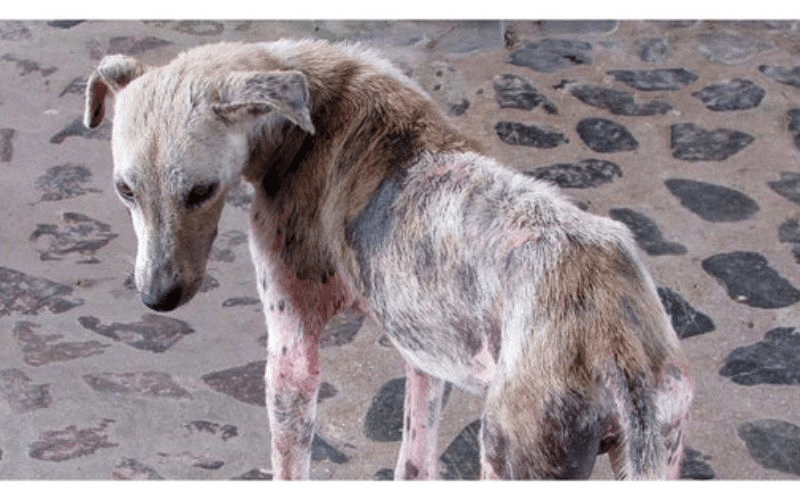
One of the most moving moments in Charlie’s journey was seeing his fear begin to fade. At first, he observed from a distance, watching quietly as people moved around him. Then, almost imperceptibly, he began to lean into affection. His tail wagged more often. He sought out gentle attention. He allowed himself to relax in the presence of others. It was clear he was learning what safety truly felt like.
Despite everything he had endured, Charlie remained remarkably gentle. There was no bitterness in his behavior, no sign of resentment. He greeted each day with quiet optimism, responding warmly to kindness and care. His resilience served as a powerful reminder that neglect does not have to define an animal’s future, and that healing is possible with patience and compassion.
Eventually, the time came for Charlie to take the next step forward.
A family learned about his story and saw beyond his past. They didn’t see a broken dog—they saw a loyal companion with a deep capacity for love. When they met Charlie, the connection was immediate. He approached them calmly, his eyes curious and hopeful. There was no tension in his posture, only openness and trust.
The adoption process moved forward, and Charlie finally left the clinic behind to begin life in a real home.
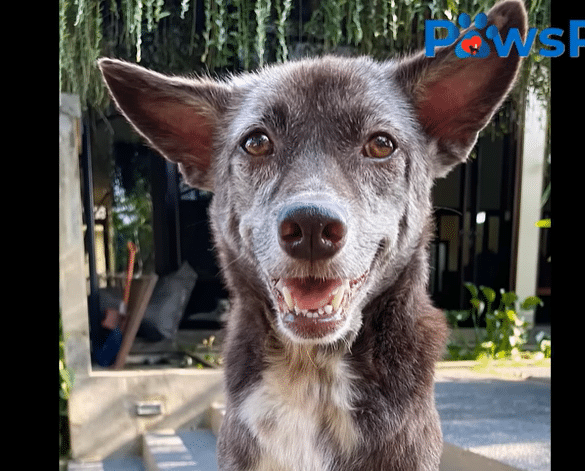
Today, his world is filled with warmth and consistency. He enjoys daily walks, comfortable naps, and the simple pleasure of being part of a family. His days follow gentle routines that offer both structure and freedom—regular meals, soft places to rest, and people who speak his name with affection. He is no longer overlooked or forgotten.
Charlie is cherished.
He is protected.
He is home.
His journey is more than a rescue story. It is a testament to what happens when someone chooses compassion over indifference and action over silence. Charlie’s life proves that even after long periods of neglect, healing is possible. Trust can be rebuilt. Fear can give way to comfort. And a quiet, unseen existence can transform into a life filled with love.
From silent suffering to a joyful present, Charlie now lives the life he always deserved—and every step he takes forward is a reminder of how powerful kindness can be when it’s finally given the chance.