In a quiet neighborhood, far from busy roads and passing crowds, Aisha’s world had grown painfully small.
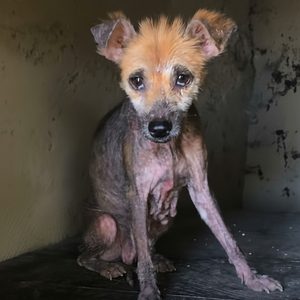
She was found alone in a backyard, tethered to a cold metal fence post. Her body was thin and weak, shaped by weeks of neglect. Her coat, once full and healthy, had dulled and tangled, marked by sores that told a quiet story of hardship. But what hurt most was not immediately visible.
Her puppies were gone.
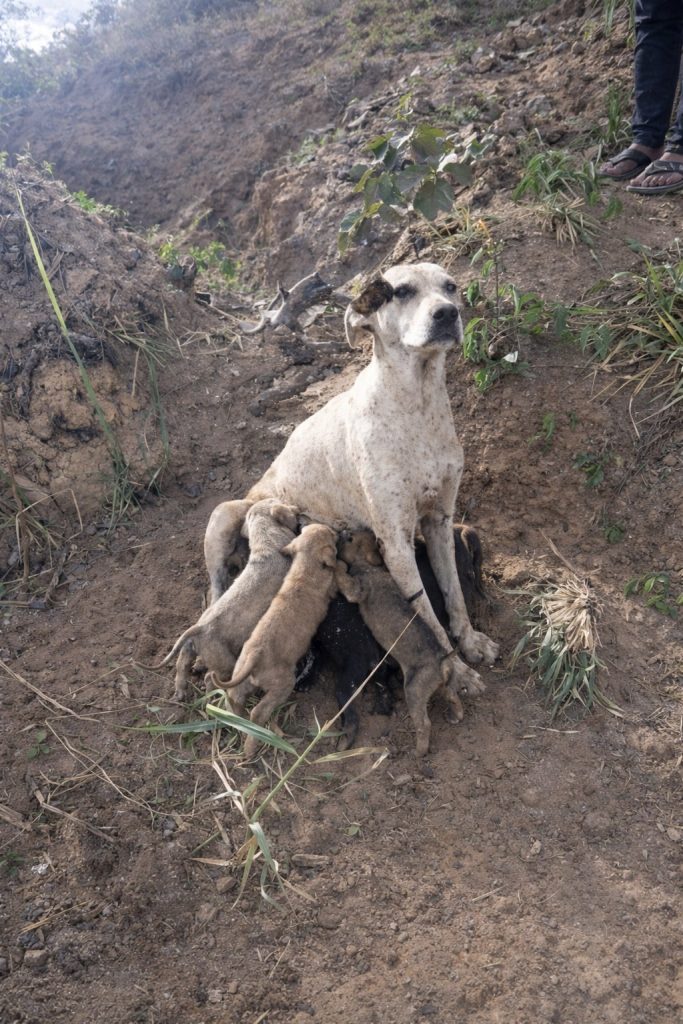
Aisha was barely two years old—a young mother who had given everything she had. After giving birth, her puppies were taken away and sold. When they were gone, so was her purpose in the eyes of the people who kept her. She was left behind, tied to the fence, without food, water, or shelter, exposed to the elements and the silence that follows abandonment.
She had been used—and then discarded.
When rescuers arrived, they found Aisha lying on the cold ground, barely able to lift her head. Dehydration and hunger had drained her strength, and the loneliness she had endured seemed to weigh heavier than her injuries. Yet when gentle hands reached for her, she did not resist.
VIDEO: Aisha’s Incredible Journey—From Abandonment to a Life of Love and Healing
She allowed herself to be lifted.
It was as if some small part of her still believed that help could exist.
At the veterinary clinic, the full extent of Aisha’s condition became clear. She was severely malnourished and weak, with injuries caused by the chain that had held her in place. Head trauma had left her unable to walk, and her emotional state was fragile, shaped by loss and betrayal.
Stabilization came first. Fluids. Careful nourishment. Treatment for her wounds. But everyone understood that physical healing was only part of the journey ahead.
Aisha had lost more than her health.
She had lost her puppies.
She had lost trust.
She had lost safety.
One day, as she rested quietly, a small stuffed toy was placed beside her. It was meant as comfort—nothing more. But Aisha reached out and gently pulled it toward her, holding it close against her chest.
The room fell silent.
In that simple act, her grief became visible. The toy became a substitute for what she had lost, a quiet expression of longing and love. From that moment on, it stayed with her—a small symbol of both sorrow and resilience.
Recovery came slowly.
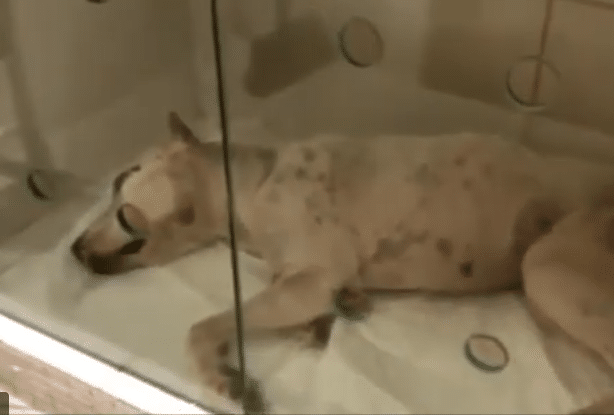
Meals were given in small portions throughout the day. Muscles weakened by long confinement were gently massaged. Caregivers spoke softly, encouraging her through every tiny movement. Progress was measured not in leaps, but in moments.
A lifted head.
A deeper breath.
A longer moment of alertness.
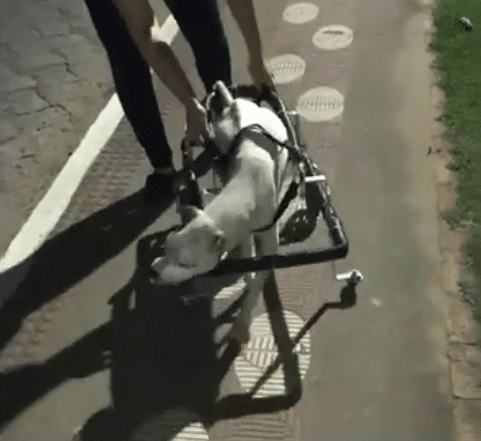
The greatest challenge was mobility. Her muscles had weakened, and no one knew how much function she would regain. With patience and support, a special harness was used to help her stand. At first, she could only manage a few seconds.
Then a little longer.
Then, one day, with steady encouragement, Aisha took her first steps.
The moment was quiet—but unforgettable. Tears were shed. Smiles appeared. Hope grew.
As her body healed, her spirit followed. Curiosity replaced fear. Her tail wagged when familiar voices entered the room. She began to engage gently with other dogs, forming calm, reassuring bonds that reflected how far she had come.
Months later, Aisha was ready for the next chapter.
She moved into a foster home where life felt slower and safer. At first, she was cautious, observing her surroundings carefully. But it didn’t take long for her personality to emerge. She discovered toys. She learned to enjoy gentle affection. She relaxed.
The dog who once lay chained and forgotten now sought connection.
Her transformation was steady and real. Her coat grew shinier. Her strength returned. And her eyes—once heavy with loss—began to shine again.
Then came the moment everyone had hoped for.
A family who had followed Aisha’s journey stepped forward, ready to give her the patience and understanding she deserved. From their first meeting, it was clear she sensed something different. She relaxed in their presence, as if recognizing that this time, she would not be left behind.
Today, Aisha lives in a home filled with warmth and care.
She enjoys walks, playtime, and quiet moments curled beside the people who love her. Her stuffed toy still stays close—not as a reminder of pain, but as a symbol of how far she has come.
Aisha’s story is not just about survival.
It’s about what happens when compassion arrives in time. When patience replaces neglect. When a life once defined by loss is given space to heal.
She was abandoned after giving everything.
And now, she is cherished—for exactly who she is.