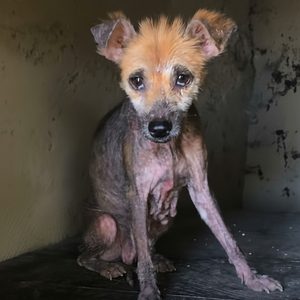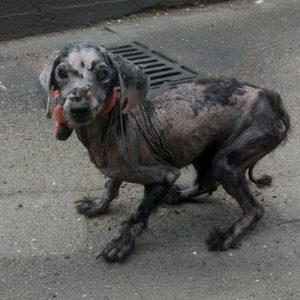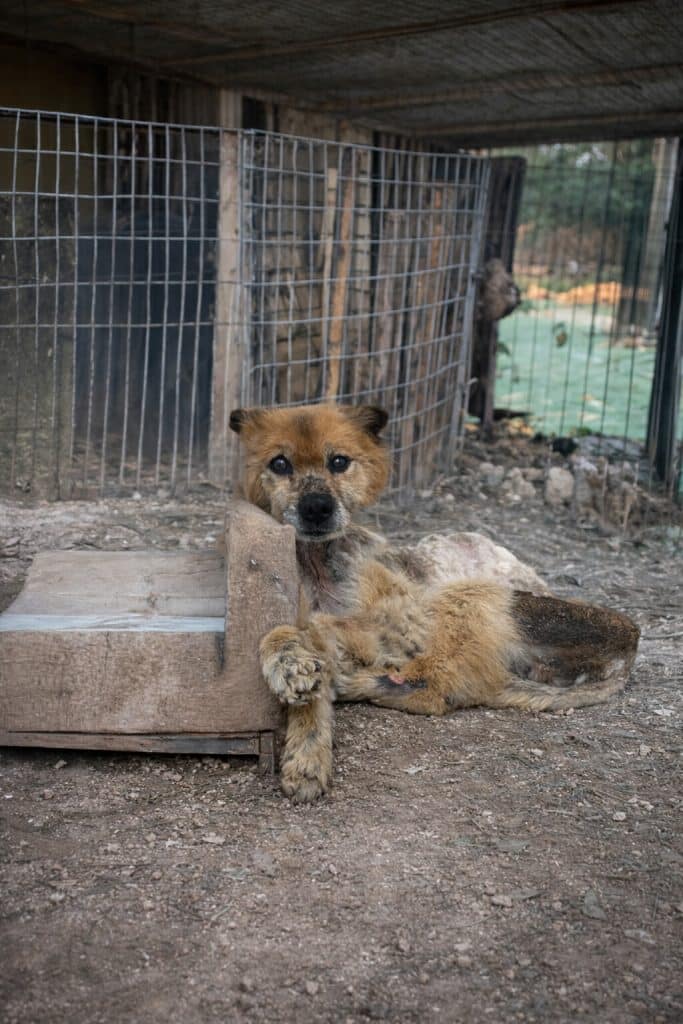
For years, Leon lived in silence and darkness. Completely blind and tethered by a heavy chain, his world never extended beyond the small patch of ground where he spent each day. Sounds and scents were his only connection to life outside, while movement remained cautious and limited. When help finally arrived, it was clear that Leon’s body had endured far more than it ever should have.
He was painfully thin, his frame fragile, with fur that had grown sparse and uneven over time. Every step looked uncertain, as if his body had forgotten what strength felt like. Years of neglect had taken their toll, leaving him severely underweight and weak. Yet even in that condition, Leon remained gentle—quietly enduring a life he never chose.
The moment his chain was removed marked the end of one chapter and the beginning of another. Though Leon could not see, he immediately sensed something had changed. His tail began to move, hesitant at first, then faster. He stepped forward slowly, sniffing the air, turning his head toward unfamiliar sounds. It was freedom—something he had never known, yet somehow understood.
At the rescue center, a full medical examination revealed how serious Leon’s condition truly was. His weight was dangerously low, and his body showed signs of prolonged strain. Further testing uncovered a neurological issue affecting his balance, coordination, and ability to eat independently. The diagnosis explained his confusion and physical limitations, but it also meant that recovery would require patience above all else.
VIDEO: Leon’s Journey Back to the Light – How Love and Persistence Sparked a Remarkable Recovery
Because Leon was so weak, aggressive treatments were not an option. Instead, caregivers chose a gentler path—one built on careful monitoring, medication, and consistency. Progress would be slow, and there were no guarantees. Still, the rescue team committed fully, determined to give Leon every chance possible.
Days turned into weeks as Leon settled into a new routine. Weekly veterinary visits became part of his life, along with daily medication that required time and patience. Some days brought concern, others small signs of improvement. Through it all, Leon remained cooperative, trusting the people who guided him, spoke softly to him, and never rushed him beyond what he could handle.
Perhaps the most profound change came not from medicine, but from kindness. For the first time, Leon experienced touch without fear. During one quiet moment, as a caregiver held him gently, Leon relaxed completely. Tears slipped from his eyes—not from pain, but from an unfamiliar sense of safety. It was a moment that spoke louder than words ever could.
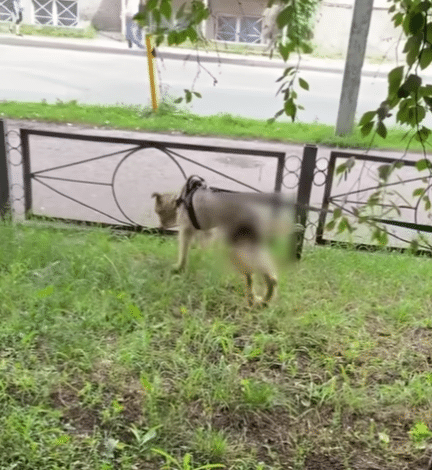
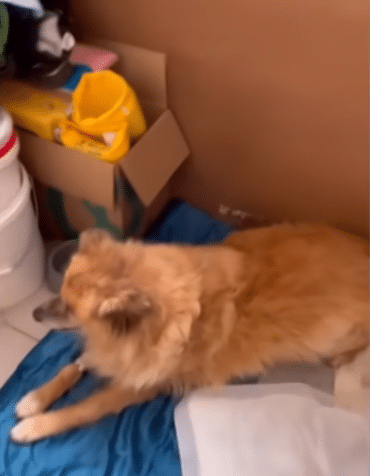
Slowly, Leon began to change. His appetite improved. His energy returned. Weight came back little by little, and his coat grew thicker and brighter. His movements became steadier, and the confusion that once defined his days started to fade. Each small improvement felt like a victory.
After three months of consistent care, Leon’s transformation was undeniable. Follow-up examinations showed encouraging progress. His balance improved, the head tilt disappeared, and he moved with new confidence. He learned to navigate stairs, explore unfamiliar spaces, and even run—something no one had dared to hope for in the beginning.
Today, Leon’s life is filled with warmth and possibility. His golden coat shines in the sunlight, his body strong and healthy. He enjoys quiet walks, gentle companionship, and moments of simple joy. The chains that once defined his existence are gone, replaced by trust and freedom.
Leon’s journey is not a story of miracles, but of patience. It shows what can happen when compassion replaces indifference and persistence takes the place of despair. Leon did not need to be saved overnight—he needed time, care, and people who believed his life was worth fighting for.
And in return, Leon offers something powerful: a quiet reminder that even after years in the dark, healing is still possible.