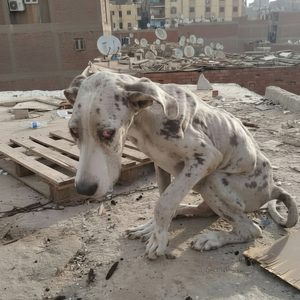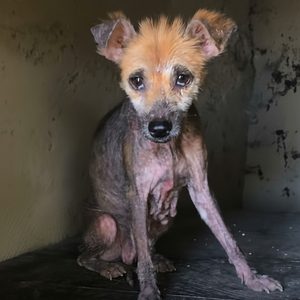
Spencer’s life began without comfort or protection. As a young Doberman, his first year was shaped by hunger, cold pavement, and constant uncertainty. He wandered the streets alone, thin and exhausted, surviving one day at a time by instinct alone. There was no safe place to rest, no familiar voice to guide him—only the ongoing challenge of staying alive.
Over time, desperation forced Spencer to eat whatever he could find. Scraps, bones, anything that might quiet the ache in his stomach. His world was shaped by danger—traffic rushing past, changing weather, and the constant risk that tomorrow might not come. Still, he kept going, driven by a quiet will to survive.
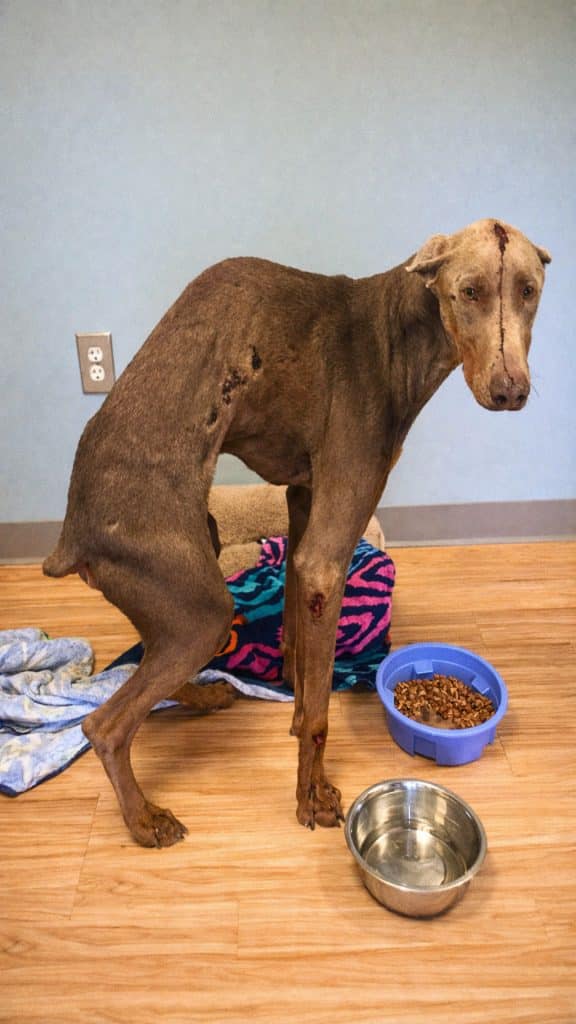
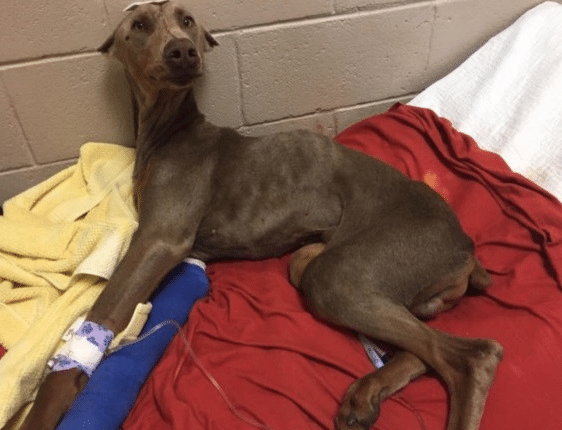
That fragile balance ended on a busy freeway in South Carolina. Spencer was struck by a car and left injured at the roadside, unable to move to safety. It could have been the end of his journey. Instead, strangers noticed him and chose not to look away. They acted quickly, bringing him to a rescue center in Columbia, determined to give him the help he had never known.
Once Spencer arrived, the extent of his condition became clear. He was severely underweight and in pain. Medical examinations revealed injuries that spoke of long neglect. Unsafe alterations to his ears had caused unnecessary trauma. Imaging scans showed sharp bird bones lodged in his stomach—a dangerous result of having to eat whatever was available to survive. Deep wounds covered his body, and most concerning of all, his back had been fractured.
VIDEO: Spencer’s Story – From Surviving the Streets to Thriving in a Loving Home
Despite everything his body had endured, Spencer showed a small but powerful sign of hope. He could still feel his legs. That single detail changed everything. Specialists reviewed his case and agreed that, while recovery would be long and demanding, surgery offered a real chance for him to walk again. It was a risk worth taking—for Spencer, and for the life he deserved.
The surgery marked a turning point. It required precision and patience, and when it was completed successfully, it opened the door to recovery. In the days that followed, Spencer was carefully monitored as his body stabilized. Slowly, the dangerous fragments in his stomach passed safely, and his strength began to return. Each improvement, no matter how small, felt significant.
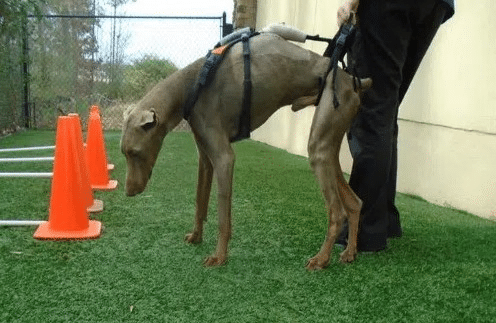
Rehabilitation became part of Spencer’s daily life. Physical therapy sessions helped him build strength he had never fully developed. At first, he needed full support just to stand. His movements were uncertain, his muscles weak. But with consistent care and gentle encouragement, progress replaced doubt. One step became two. Then a few more. Before long, Spencer was walking on his own.
As his body healed, something equally important began to change. Spencer’s personality emerged. The quiet, withdrawn dog transformed into a curious, affectionate companion. He greeted caregivers eagerly, soaking in attention and warmth as if discovering joy for the first time. The fear that once defined his behavior slowly gave way to trust.
By the time his recovery was complete, Spencer was almost unrecognizable from the dog who had arrived injured and alone. He was healthy, strong, and ready for a new chapter. That chapter arrived when a loving family opened their home to him. Surrounded by stability, kindness, and companionship, Spencer quickly learned what it meant to belong.
Today, Spencer’s life is filled with simple pleasures—routine walks, gentle affection, and the comfort of a place where he is truly wanted. His past is still part of his story, but it no longer defines him. Spencer’s journey is a reminder that healing is not only physical. It is emotional. It is built on patience, care, and second chances.
From surviving the streets to thriving in a loving home, Spencer’s transformation shows what compassion can achieve. His story continues, not as one of hardship, but as proof that every life, when given the chance, can move forward into something better.