Matilda’s story began quietly on the streets of Spain, at a time when many hunting dogs are left behind once the season ends. For dogs like her, the world suddenly becomes colder and more uncertain. Food disappears. Shelter is no longer guaranteed. And help feels like something that belongs to other lives, not theirs.
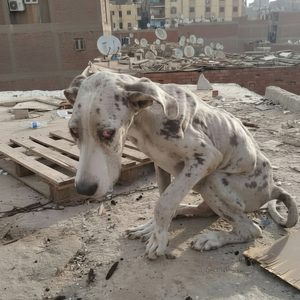
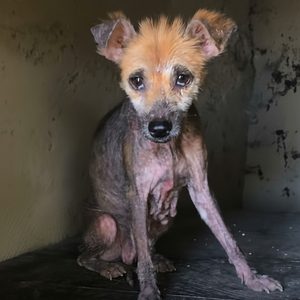
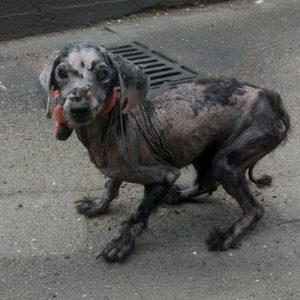
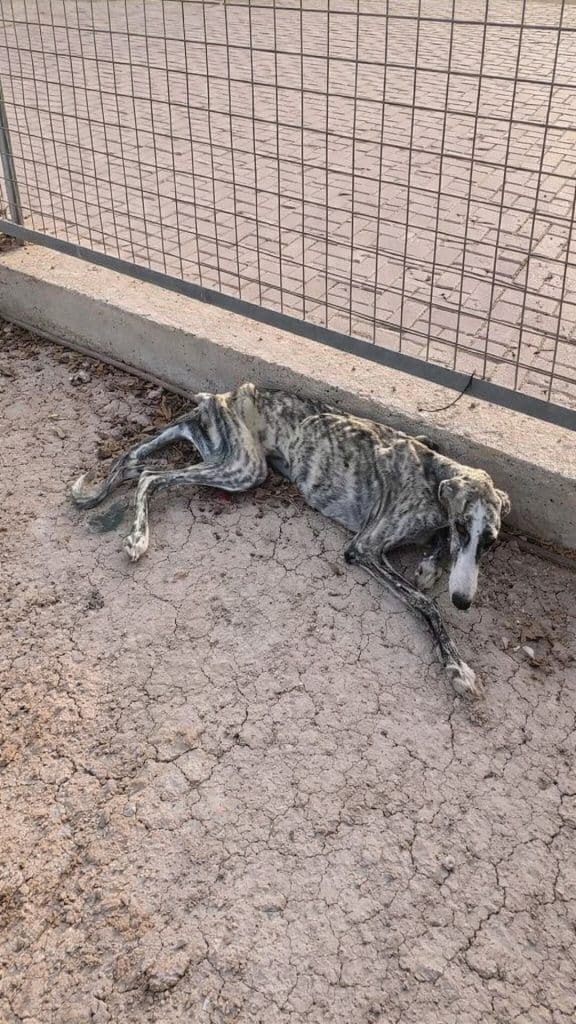
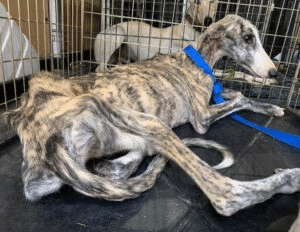
When Matilda was first seen, her body told a difficult truth. She was painfully thin, her ribs and hips sharply visible beneath fragile skin. Hunger had drained her strength, and parasites clung to her body, adding to her exhaustion. Every step she took was cautious, as if she had learned that danger could appear at any moment. Safety was not something she expected anymore.
Fear guided her reactions. Years of neglect had taught Matilda to be wary of people, and that instinct was hard to overcome. When a group of young people noticed her wandering alone, they understood immediately that she needed help. Instead of looking away, they reached out to someone who could act. That single decision changed the course of her life.
The rescue itself was tense. Matilda was overwhelmed, reacting out of pure survival rather than aggression. Every unfamiliar movement felt threatening. The sounds she made reflected panic and confusion, not anger. It was clear she had no idea what was happening—only that she was afraid. The situation required patience, calm, and courage.
VIDEO: A Life Saved – Matilda’s Journey from Suffering to Hope
Working together, the group carefully guided Matilda into a secure crate. It was a difficult moment, filled with emotion, but it marked the first step toward safety. Though Matilda couldn’t understand it then, that moment was the beginning of a new chapter.
She was taken straight to a veterinary clinic, where the focus shifted entirely to her health. There, the seriousness of her condition became clear. Matilda was dangerously underweight, dehydrated, and running a fever. Her body showed the effects of long-term neglect. Yet beneath her frailty, there was a quiet resilience that gave everyone hope.
Treatment began immediately. She received fluids, medication, and carefully managed meals. Examinations were done to rule out fractures or internal injuries. While her condition was critical, there was relief in knowing she had not suffered major physical trauma. Recovery would take time, but it was possible.
In the days that followed, small changes appeared. With regular nourishment and gentle care, Matilda slowly began to regain strength. The fear in her eyes didn’t disappear overnight, but her body started to respond to consistency. Each day brought subtle signs of progress.
One small moment stood out above the rest. For the first time since being rescued, Matilda wagged her tail. It was slight, almost hesitant, but it carried deep meaning. That movement marked the beginning of trust—proof that pain was loosening its grip and that hope was taking root.
Emotionally, Matilda remained cautious. Sudden sounds still startled her, and unfamiliar situations made her uneasy. But with gentle routines and patient care, she continued to move forward. Curiosity slowly replaced fear. Confidence began to grow in quiet ways.
Today, Matilda’s life looks very different from the one she once knew. She is no longer wandering the streets searching for scraps or shelter. She is surrounded by structure, care, and people committed to her healing. While her recovery is still ongoing, her future is no longer shaped by suffering.
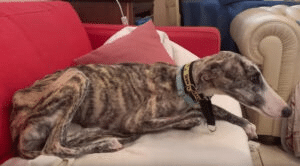
Matilda’s journey reminds us that healing doesn’t happen all at once. It is built through patience, kindness, and consistency. Dogs like her are not defined by what they endured. With the right care, they can learn to trust again.
In places where many lives are quietly forgotten, Matilda’s story stands as proof that hope can still find its way through. One choice to help. One life given another chance.