She wasn’t running.
She wasn’t barking.
She wasn’t asking for help.
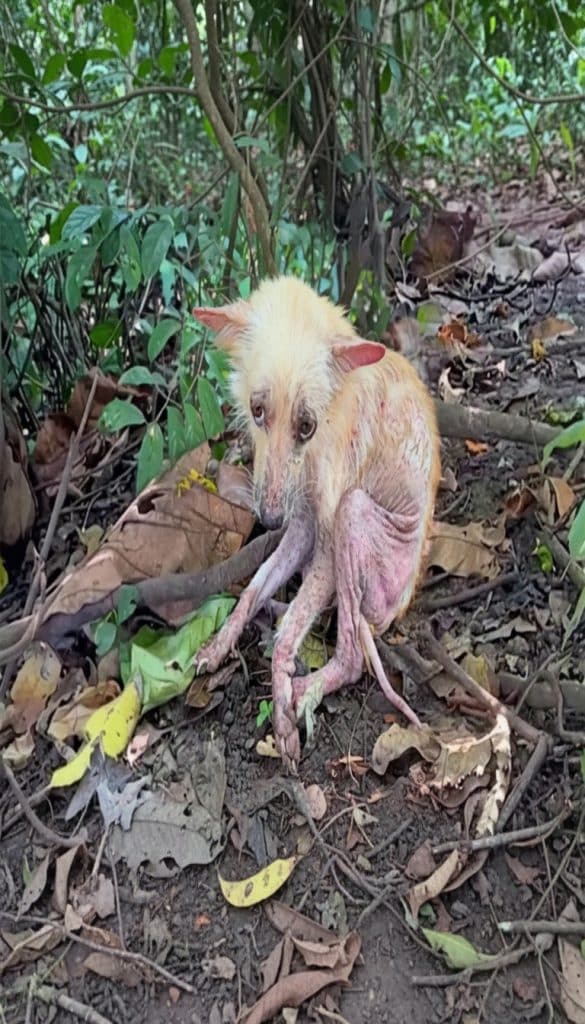
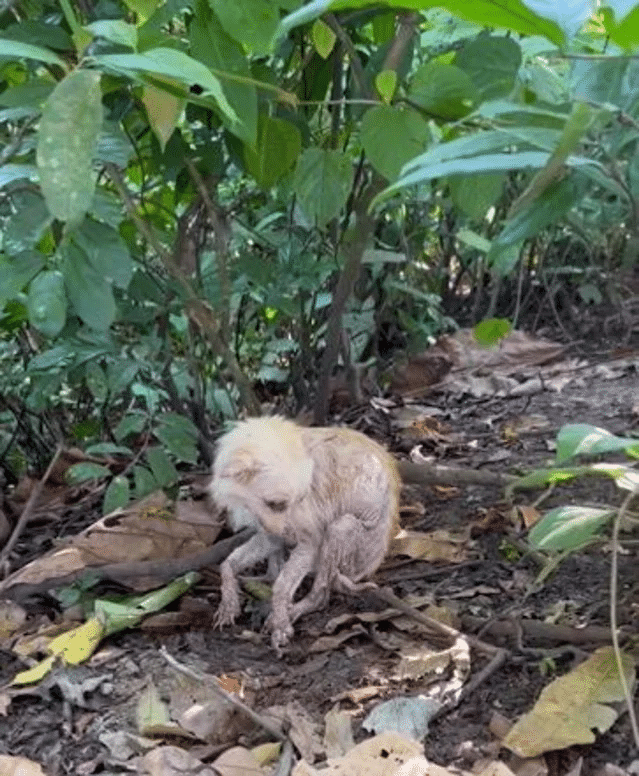
Hidden deep in the woods, a small female dog lay curled beneath fallen leaves, too weak to stand and too frightened to move. Her body trembled with exhaustion, her eyes wide with fear. It was clear she had been there for a long time—cold, hungry, and slowly fading into the background of a world that had already forgotten her.
At that moment, she didn’t have a name.
She didn’t have a future.
She only had whatever strength she had left.
A Body That Told the Truth
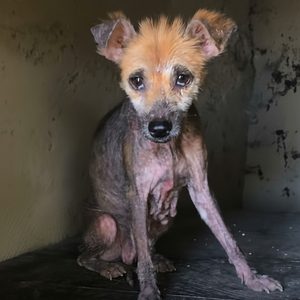
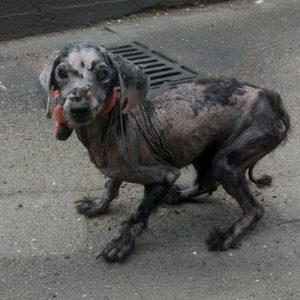
When rescuers reached her, the signs were impossible to ignore. Her frame was thin and fragile, her skin marked with sores that spoke of long-term neglect. Every small movement caused visible discomfort, as if her body had learned that motion only brought pain.
She didn’t resist.
She didn’t cry out.
She simply froze—bracing herself for whatever might come next.
Wrapped gently and carried to safety, she was finally given something she hadn’t known in years: careful hands and concern without fear.
Video: From Abandonment to Belonging: How a Forgotten Breeding Dog Found a Second Chance
What Her Past Revealed
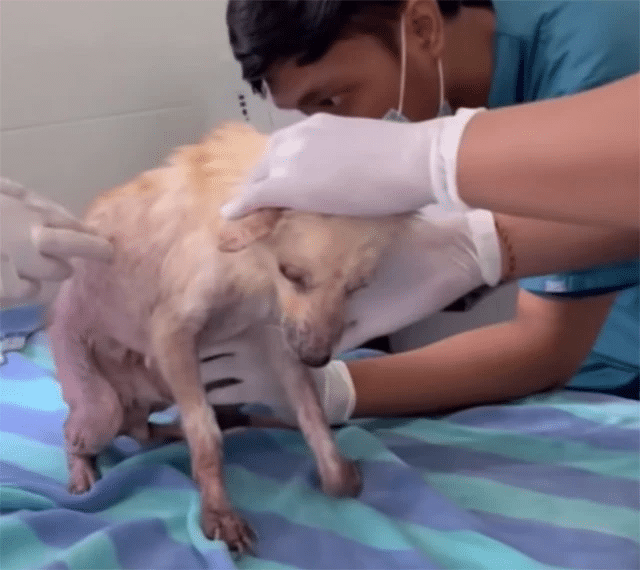
At the veterinary clinic, examinations began immediately. And with each test, a quiet but devastating story emerged.
She had been used only for breeding.
Kept confined.
Producing litter after litter.
Once her body could no longer serve that purpose, she was discarded—left behind as if her life no longer mattered. Her spine showed signs of deformity from years spent unable to stand or stretch. Trust, too, had been taken from her long before rescuers ever arrived.
Her Injuries Explained Everything
Further testing revealed the full extent of her suffering. She had a large hernia and a fractured pelvis—injuries that explained why she couldn’t walk and why even small shifts caused pain. The question wasn’t just how she would recover, but whether she ever truly could.
The days that followed were filled with careful monitoring, pain management, and quiet hope. Despite everything her body had endured, small signs of resilience appeared. She ate when offered food. She rested when spoken to gently. Slowly, she began to let go of constant fear.
After several days of stabilization, she was finally ready to leave the clinic. A foster home opened its doors—one built not on urgency, but on patience.
There were no cages.
No pressure.
No expectations.
Just warmth, calm routines, and the steady reassurance that she was safe. For the first time, she rested without fear. For the first time, she was allowed to simply exist.
Healing Takes Time
Progress didn’t come quickly—and that was okay. She startled easily. She hesitated at touch. But day by day, something changed.
She lifted her head when someone entered the room.
She accepted gentle affection.
She slept peacefully.
A month later, she returned for a follow-up exam. Her strength had improved enough for surgery. The hernia was repaired, and she was spayed—ensuring she would never again be used for breeding. Recovery required patience, but her quiet determination never faded.
A Life That Finally Belonged to Her
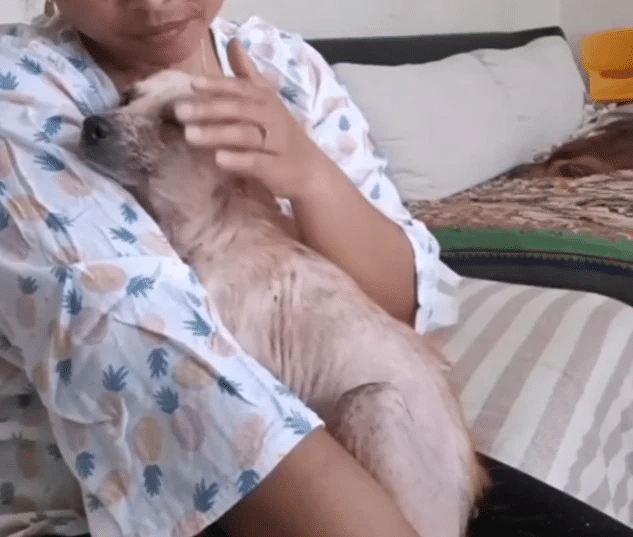
Nearly three months after being found in the woods, she was transformed. She could walk comfortably. She enjoyed gentle play. Most importantly, her eyes no longer reflected fear—they reflected trust.
When a forever family stepped forward, it was clear they didn’t see a discarded breeding dog. They saw a companion. A survivor. A life worth protecting.
Her journey is a reminder that compassion can rewrite even the most forgotten stories. She was abandoned when she needed help the most—but because someone stopped, listened, and cared, her life didn’t end in the woods.
It began there.