When rescuers heard about her situation, there was no time wasted. Emails were sent, transportation plans were arranged, and before sunrise, a team was already preparing to bring her to Wright-Way Rescue in Illinois. What awaited them there would be both heartbreaking and inspiring.
Arriving at Safety for the First Time
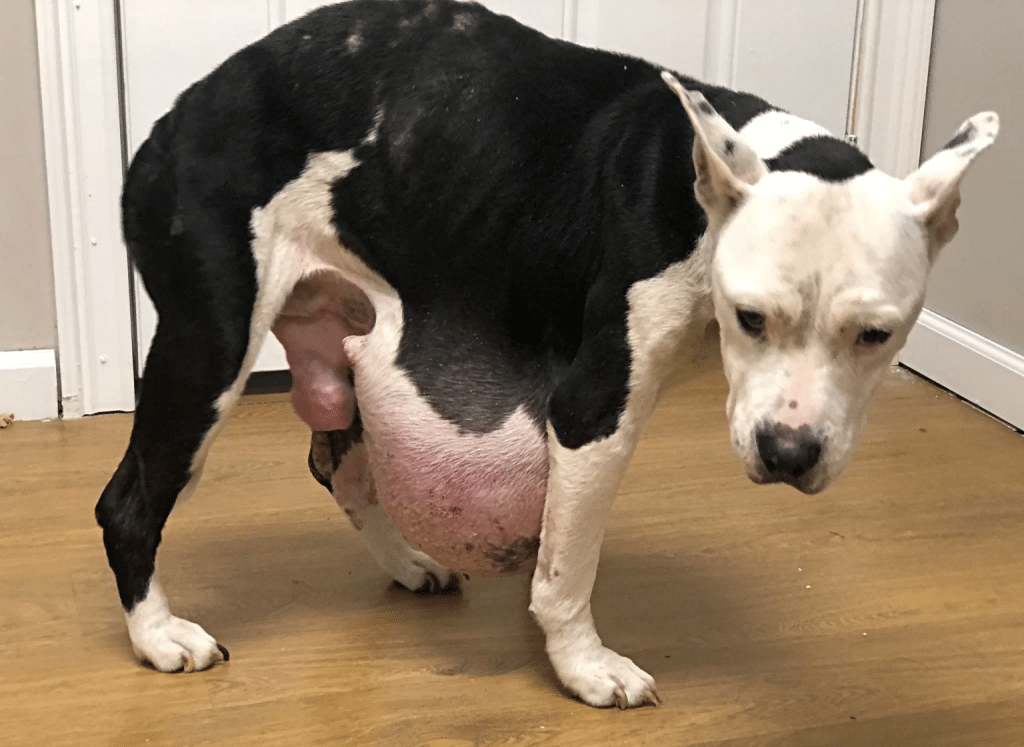
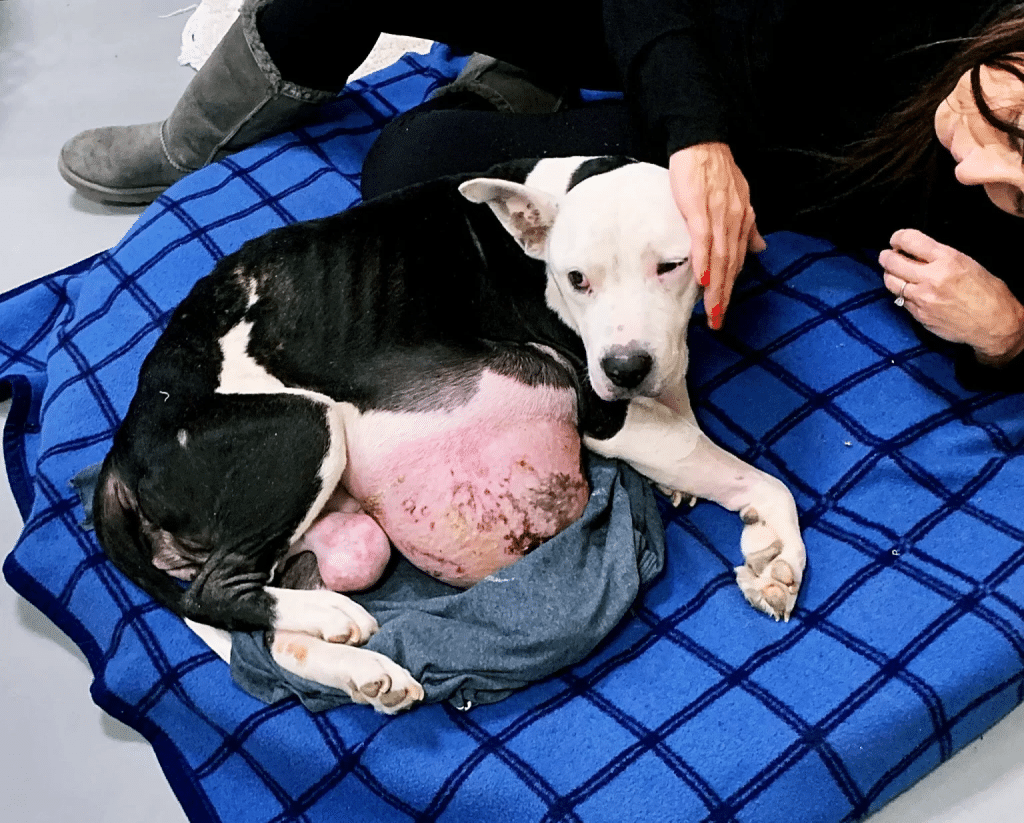
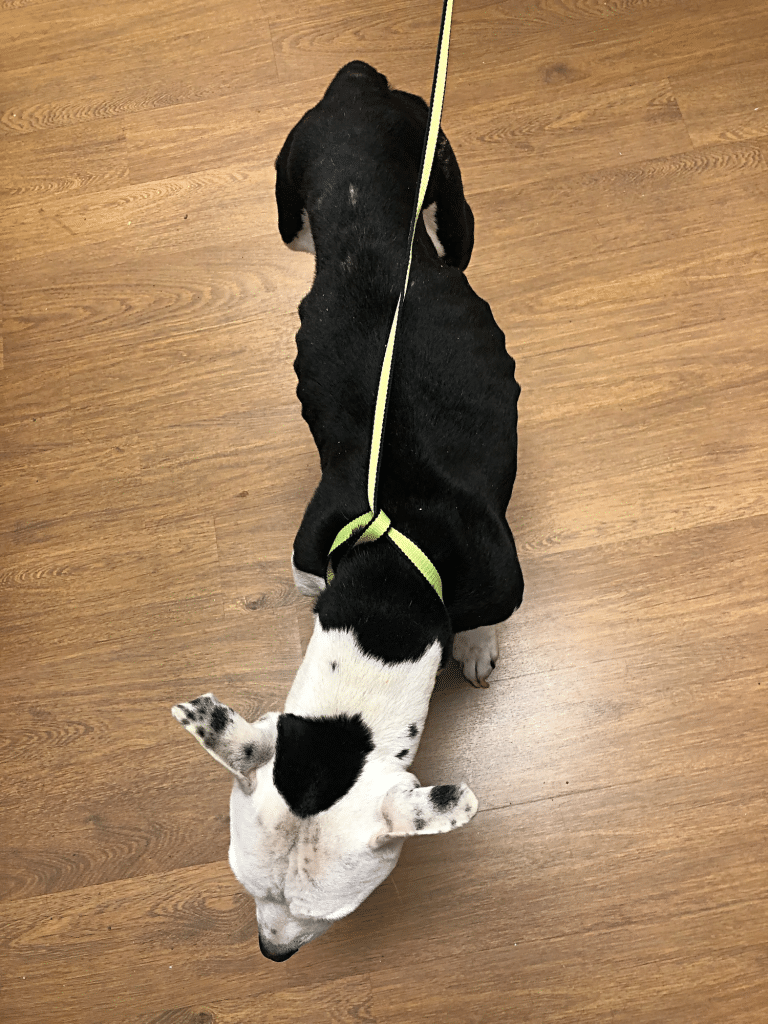
When Nina was finally carried through the doors of the rescue, the team immediately realized the severity of her condition. She was thin, weak, and clearly exhausted. Her coat was dull from neglect, and her ribs were easy to see beneath her skin. Two large masses hung from her abdomen, one so heavy that it pulled noticeably toward the ground. Her back legs were irritated and covered in sores, likely caused by a long-ignored skin infection.
Even so, she met the team with gentle, hopeful eyes—eyes that seemed to say she was ready for kindness.
Because the Southern Illinois medical team was dealing with temporary quarantine protocols, Nina was first evaluated at the Admissions Center, where a veterinarian ensured she was stable enough for travel. Soon after, she was transferred again to Morton Grove for imaging, bloodwork, and biopsies. The tumors appeared highly vascular, and immediate surgery carried too many risks. Nina needed time—time to rest, recover, and gain strength.
Video A Courageous Senior Pitbull Finds Hope After Years of Quiet Suffering
Finding Comfort in a Quiet, Healing Space
Once she settled into Wright-Way Rescue, Nina entered a world she had never truly known—one filled with comfort, warmth, and patient care. She was given her own soft bed, warm blankets, dim lighting to ease her stress, and small, nutritious meals to help her gain weight. Volunteers checked on her often, speaking softly to reassure her.
As Thanksgiving approached, the staff even promised she would have her own special dinner. For the first time in her life, Nina was surrounded not by silence and abandonment, but by people who genuinely wanted her to feel safe.
More information about her past slowly emerged. X-rays revealed an old injury—the remnants of a bullet near her left shoulder. Her former guardians had struggled with addiction, leaving Nina to survive in a stationary car for years, caught between shelter and isolation. Despite everything she had endured, Nina’s kindness never faded.
A Gentle Spirit Who Never Gave Up
Everyone who met Nina was moved by her personality. Even in pain, she leaned into every gentle touch. She wagged her tail slowly when someone knelt to greet her. She welcomed affection with the patience of a dog who had waited a lifetime for it.
Small improvements soon appeared. Her initial fever subsided. Her appetite grew stronger. Diagnostic imaging showed her abdomen was not compromised by hernia or internal abscesses—news that brought cautious relief to the team.
But just as hope rose, a blood test brought new concerns. Nina’s white blood cell count was drastically elevated, potentially pointing toward cancer. Still, the rescue team refused to give up on her. Instead, they shifted to a thoughtful, conservative medical plan—pain management, anti-inflammatory support, antibiotics, and carefully monitored hydration. Through Thanksgiving weekend, she was transferred to a 24-hour clinic so she wouldn’t be alone for a single moment.
In all, six veterinarians reviewed her case. Every expert agreed that immediate surgery carried too much risk. The large mass alone weighed nearly half of Nina’s body weight. Strength, not speed, would be the key to her survival.
Slow Progress, Steady Hope
And slowly, day by day, Nina began to respond.
Her eyes regained brightness. She finished all of her meals. She began taking short, gentle walks. Staff members noticed her tail lift higher each time they approached. Some volunteers stayed long after their shifts ended just to sit beside her, reading a book or talking softly while she rested her head on their lap.
The following Monday, Nina was scheduled for a CT scan with a surgical specialist. The imaging would map the internal structure of her tumors and reveal whether surgery might eventually be possible. Until then, the team continued focusing on what mattered most—making sure she felt safe, supported, and cherished.
More Than a Medical Case—A Symbol of Resilience
Nina’s story has become more than a medical journey. It is a reminder of what animals endure quietly, without complaint, and how deeply they depend on compassion. It is a testament to the power of second chances, even when they come late in life.
For the staff and volunteers who cared for her, Nina represented strength wrapped in gentleness. Her calm presence touched everyone who entered the room. Her resilience reminded them why rescue work matters—because every life, especially those forgotten by the world, deserves dignity, comfort, and love.
Through the support of people following her journey, Nina received far more than medical attention. She received connection. She received warmth. She received a chance to feel valued.
After eight long years of living unseen, Nina is unseen no more. She is safe. She is cared for. And most importantly, she finally has something she was denied for so long—hope.