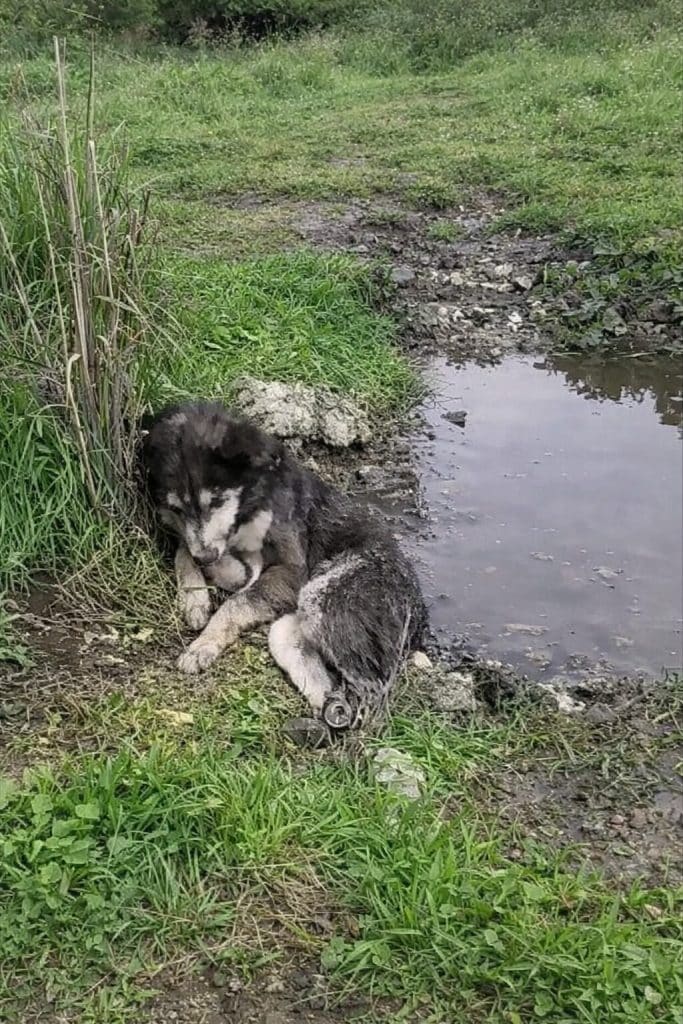
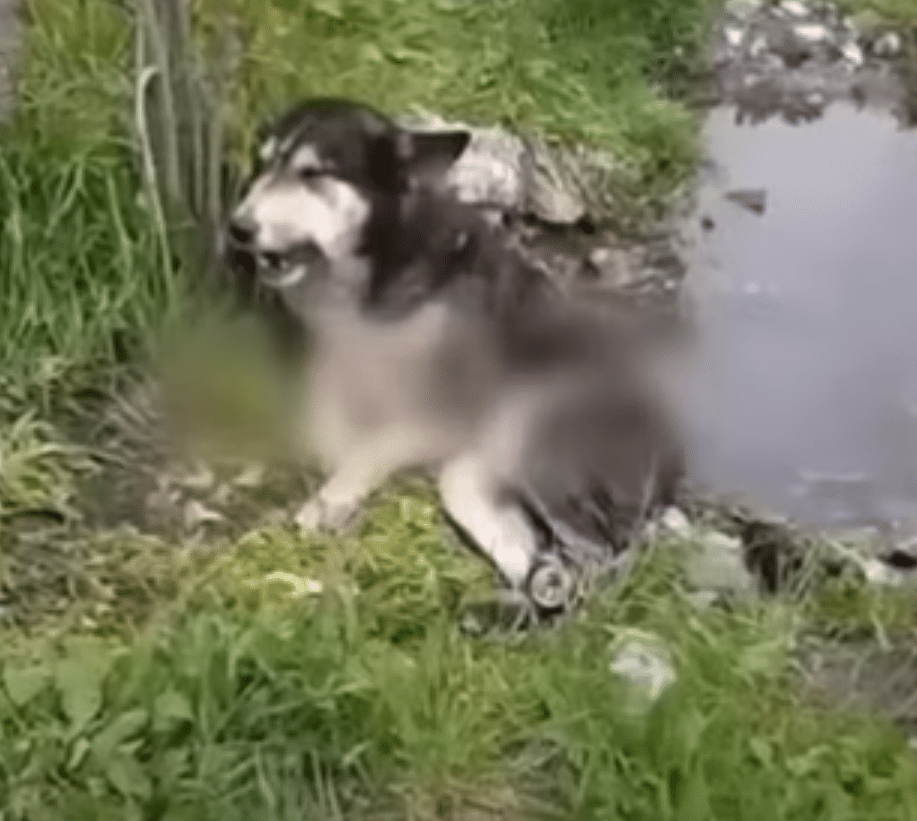
The rain fell steadily that day, soaking the ground until puddles formed along the roadside. In one of them, a tiny dog lay curled into herself, her body barely moving. Her name was Kozia. She was small, fragile, and completely still—except for the faint rise and fall of her chest as she struggled to breathe through the cold.
Her legs no longer responded to her. Once full of playful energy, they now lay motionless beneath her thin body. The rain chilled her to the bone, yet Kozia did not try to crawl away. She simply waited, eyes fixed down the road. Somewhere deep inside, she believed the people she trusted would come back for her.
She did not understand abandonment.
She only knew how to wait.
When rescuers arrived, the scene was almost unbearable. Kozia was soaked, shivering, and unable to move. Each breath took effort. Each blink seemed heavy. And yet, when she looked up, there was still trust in her eyes—a quiet hope that this time, the hands reaching toward her meant safety.
Video: Under the Rain, Her Paralyzed Limbs Froze as She Waited for Her Dad Who Had Abandoned Her
She was wrapped gently in warm blankets and rushed to a nearby clinic. Veterinarians worked quickly to stabilize her, warming her body and providing fluids. But it was clear that Kozia needed more than emergency care. She was transferred to a larger hospital, where specialists began running tests to understand what had happened to her small body.
The results brought mixed emotions. Kozia’s internal organs were functioning well. There were no signs of infection or disease. But imaging revealed the truth no one was ready to hear. The damage to her spine was permanent. Kozia would never walk again.
The room fell quiet. Everyone had hoped for a different answer. A young dog, already abandoned, now facing life without the ability to move her legs—it felt overwhelming. The rescue team couldn’t help but wonder what her future would look like. In a world where even healthy dogs are overlooked, how would a paralyzed puppy find a home?
That was when something unexpected happened.
A woman who had seen Kozia’s story reached out—not with hesitation, but with certainty. She didn’t ask whether Kozia would ever walk again. She didn’t focus on limitations. She simply said she wanted to give her a home. Not out of pity, but out of love.
Preparation took time. Careful planning was needed to ensure Kozia’s safety and comfort. But when she finally arrived at her new home, everything changed.
Gone was the cold rain. Gone was the lonely road. Kozia now rested on soft cushions, wrapped in warm blankets, surrounded by calm voices and gentle hands. Her new mother spoke to her softly, reassuring her with every touch. A customized wheelchair was fitted. Physical therapy began. And every small movement—every lift of her head, every burst of excitement—was celebrated.
Kozia began to bloom.
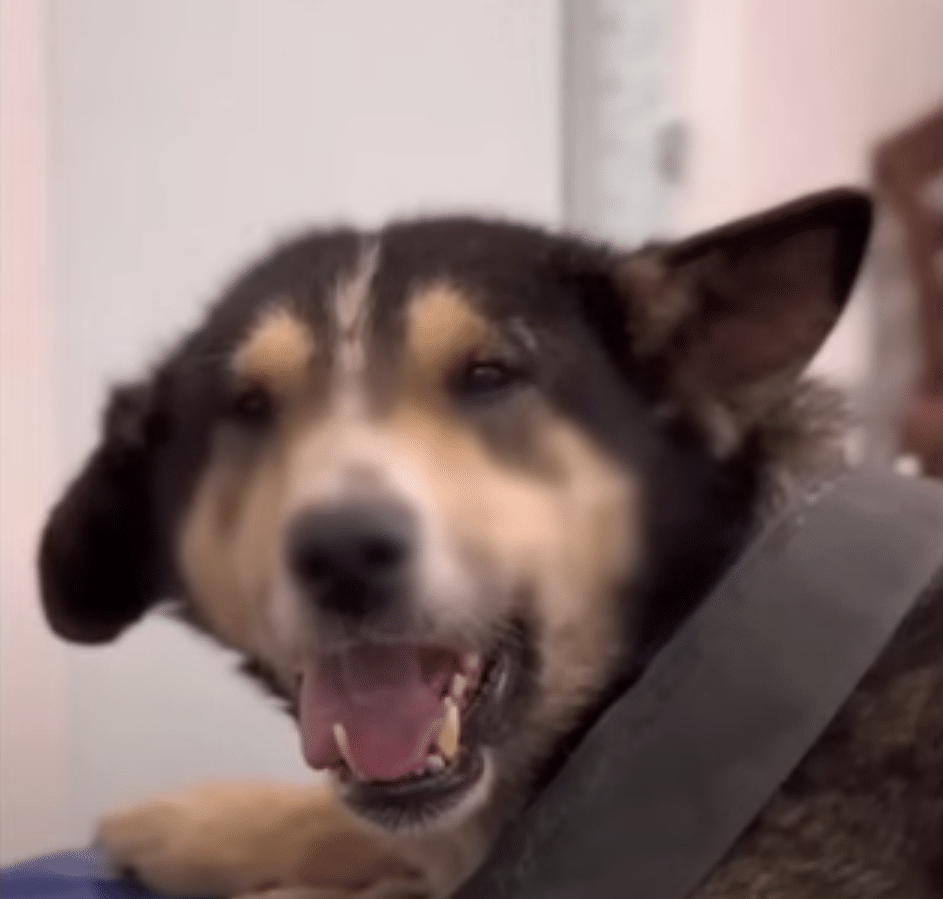
Her eyes grew brighter. Her spirit, which had never truly broken, finally had space to shine. With wheels beneath her, she learned how to move freely again. She raced down hallways, explored sunny yards, and chased toys in her own way. She discovered that joy doesn’t depend on perfect legs—and that love never comes with conditions.
Today, Kozia’s life looks nothing like the one she was left in. She is safe. She is cherished. She wakes up knowing she belongs. Her story is not about tragedy—it is about resilience, compassion, and second chances.
Kozia reminds us that worth is not measured by ability. That even when a body is broken, a heart can remain strong. And that sometimes, the ones who wait the longest are the ones who love the deepest.
She is no longer the silent figure in the rain.
She is a symbol of hope—rolling forward, surrounded by love, and finally home.