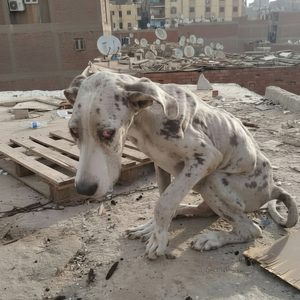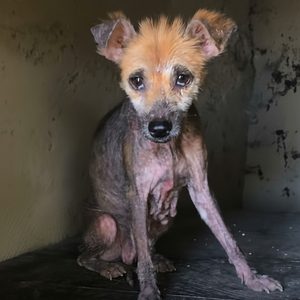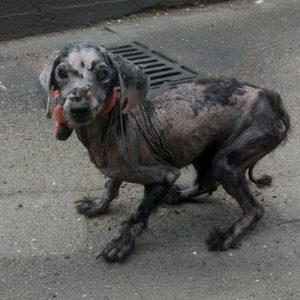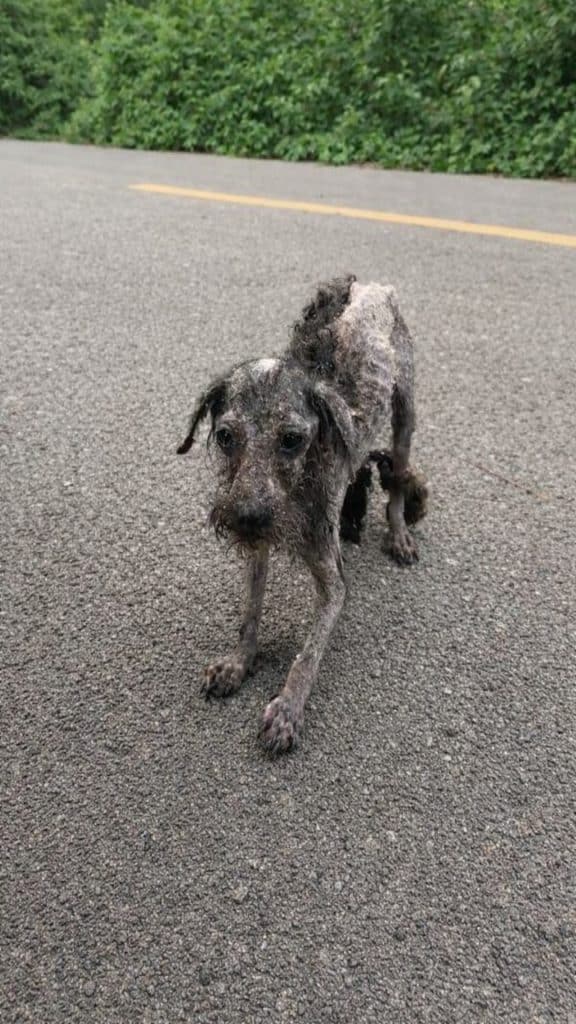
On a stretch of roadside most drivers passed without noticing, a small dog moved carefully along the pavement.
His head stayed low, his steps slow and uncertain, as if every movement required more strength than he had left. His body was painfully thin, his coat tangled and weighed down with dirt, hanging loosely over ribs shaped by far too many hungry days. Still, he kept going. Like so many animals left behind, he followed a simple instinct—the hope that someone, somewhere, might finally see him.
Up close, his condition told a story shaped by caution. He lingered near people but never fully approached, caught between fear and need. His posture remained guarded, his movements hesitant, as if trust had once come with consequences. Yet his eyes revealed something else entirely. They carried longing, uncertainty, and a quiet plea for help. This was not a dog who had given up. This was a dog who had learned to survive with almost nothing.
When food was offered, his response spoke volumes. He lowered himself to the ground and instinctively begged, as though asking permission to eat. Even then, he hesitated—sniffing carefully, glancing up again and again, prepared for the possibility that the food might disappear. It was a moment shaped by a past where meals were uncertain and kindness was never guaranteed.
Video: Dymka’s Second Chance: How a Forgotten Puppy Became a Beloved Companion
As those helping him looked closer, another concern became impossible to ignore. A large swelling was visible on his abdomen, something he had clearly been living with for a long time. It was evident that he needed more than food. He needed care, safety, and time. The decision to help was no longer a question. He was gently guided into a vehicle, leaving the roadside behind and stepping into the first chapter of a different future.
At the veterinary clinic, a thorough examination revealed the cause of the swelling—an inguinal hernia that would eventually require surgery. For now, however, his body was too weak to handle such a procedure. Severe malnutrition had left him fragile, and the priority became clear: restore strength first, then plan for what came next.
His recovery began with patience. A carefully measured feeding plan helped rebuild his strength without overwhelming his system. His skin, which showed signs of prolonged neglect, was treated to ease irritation and support healing. Every interaction was calm and deliberate, designed to reassure him that he was finally safe.
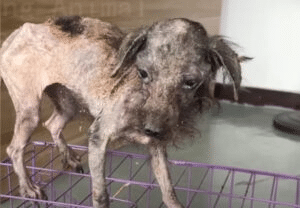
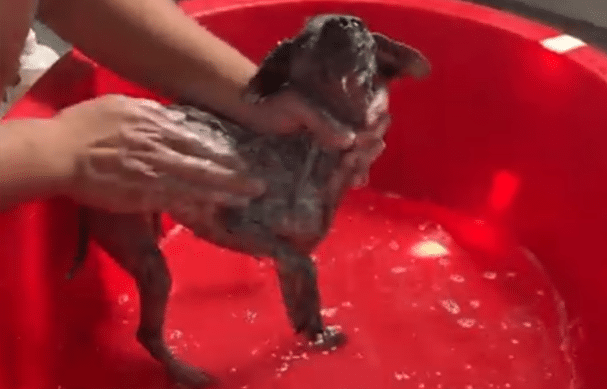
During his first grooming session, the extent of his hardship became even more visible. Thick mats of fur were gently removed, revealing dry skin and areas still recovering from long-term discomfort. When it was time for his bath, he trembled briefly, unsure of what to expect. But he didn’t resist. He stood quietly as warm water washed away layers of grime—and with them, part of the life he had endured.
What stood out most was his quiet resilience. He didn’t lash out. He didn’t retreat completely. Instead, he observed, learned, and adapted. Beneath his caution was a steady calm, a sense that he still believed life could improve. Day by day, small changes appeared. Regular meals brought energy back to his body. Medication eased his discomfort. Sleep came more deeply, without constant alertness.
Trust took longer, but consistency made space for it. At first, he watched from a distance. Then he accepted food without flinching. Gentle touches became possible. One day, his tail moved—just slightly, but enough to signal a shift from fear toward connection.
Weeks later, the transformation was undeniable. Healthy weight returned, softening the sharp lines of his once-fragile frame. His coat grew cleaner and fuller. His eyes, once fixed only on survival, began to reflect curiosity. He explored his surroundings with interest rather than anxiety. The dog who had wandered the roadside was slowly becoming someone new.
Most importantly, he was no longer alone. Surrounded by patience and care, Dymka began to understand what safety truly meant. Food arrived consistently. Hands were gentle. Rest no longer felt dangerous. His hernia, once too risky to address, could now be considered as part of a hopeful plan rather than an urgent fear.
Dymka’s journey is a reminder that countless animals carry quiet stories of endurance, simply waiting for someone to notice. Sometimes, all it takes to change a life is the decision to stop, look closer, and care.