Some stories don’t announce themselves.
They wait quietly, tucked away where few people ever look.
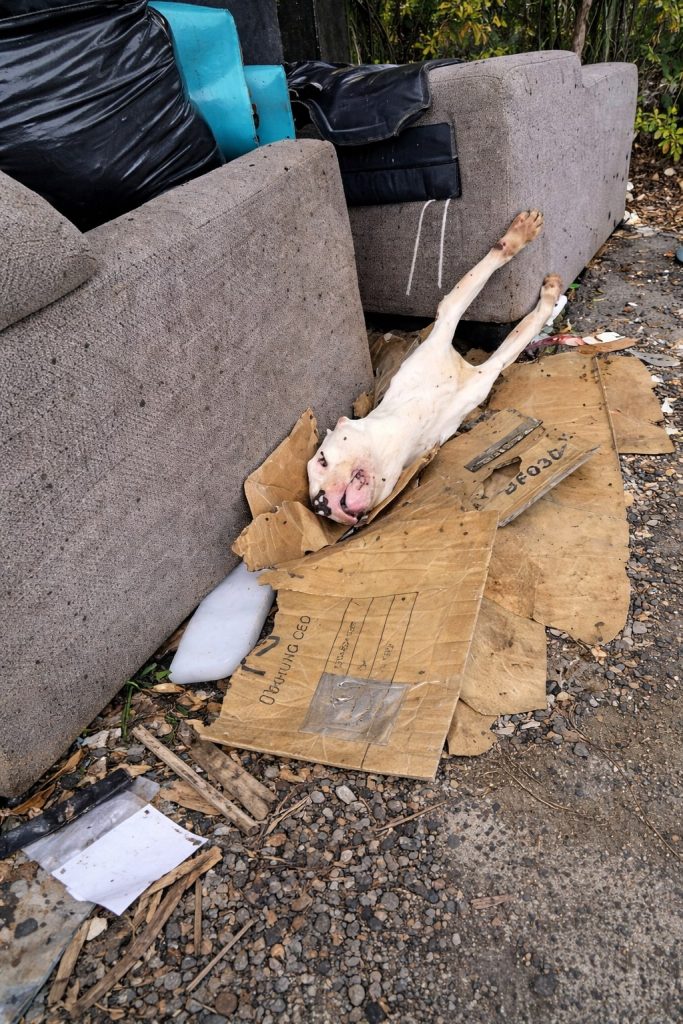
Jericho’s story began on the streets of Houston, in an area locals sadly recognize as a place where animals are often abandoned. On that day, a community feeder was making her usual rounds, offering food and water to dogs who depended on her kindness. At first, she noticed only a worn, discarded couch surrounded by debris—nothing unusual in that neighborhood.
Then she saw movement.
Beneath the broken furniture lay an elderly dog, frail and barely moving. His body was painfully thin, his strength nearly gone. He was trapped, unable to free himself, relying on chance and compassion to survive. It was clear he hadn’t wandered there on his own. Someone had left him with no escape.
Jericho didn’t panic.
He didn’t struggle.
Instead, he remained still, conserving what little energy he had left. That quiet endurance was heartbreaking—and it was also the moment his life began to change.
Video: Dumped There, Trapped Under a Discarded Couch—The Skinny Dog Who Refused to Give Up
Freeing him required patience and care. Every movement was slow, deliberate, guided by the fear that any sudden action could cause harm. Once he was safely lifted into waiting arms, Jericho was rushed to an emergency veterinary hospital. The drive was filled with uncertainty. No one knew if he would survive the night. But everyone knew he deserved the chance.
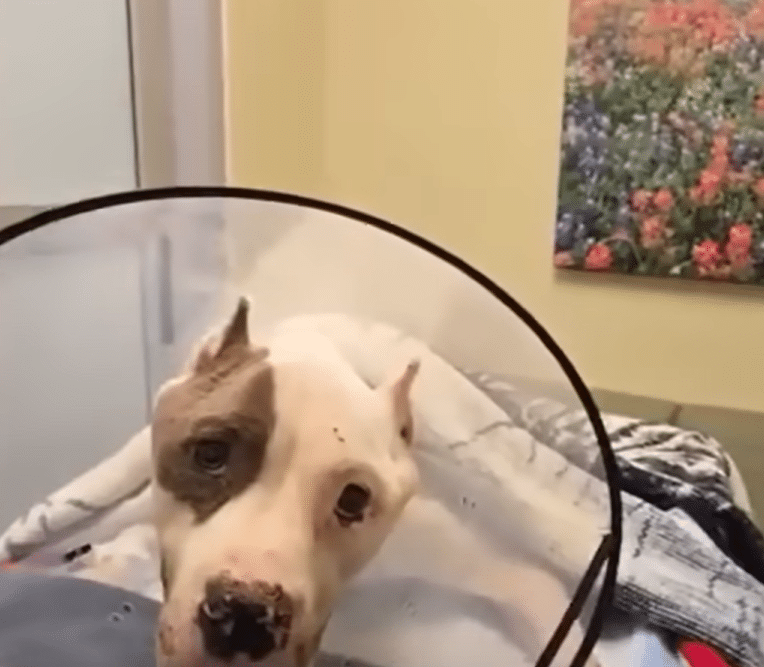
At the hospital, veterinarians worked gently to understand the toll years of neglect had taken. Jericho suffered from limited mobility and poor vision, conditions that develop not in days, but over long stretches of hardship. His body bore the signs of a life lived without care.
Yet there was something remarkable about him.
He remained calm. He accepted gentle touch. And behind his clouded eyes, there was still a spark—small, but unmistakable.
Rather than subjecting him to invasive procedures that might have caused stress, the care team chose a path centered on comfort and dignity. Supportive care became the focus—gentle therapies to encourage circulation, ease discomfort, and help his body do what it still could. There were no guarantees. But compassion guided every decision.
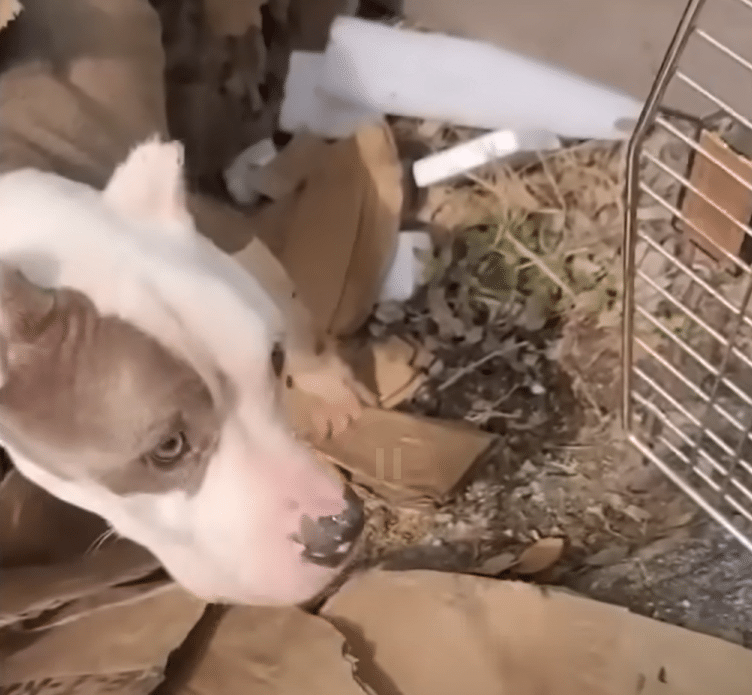
Within days, small changes appeared. Jericho began eating on his own. His strength, though limited, slowly returned. He responded to voices, leaning into hands that offered reassurance. These moments were modest, but meaningful. Each one signaled that Jericho hadn’t given up.
Soon, he was ready for the next step—a medical foster home where healing could continue in a calm, loving environment. His foster caregiver welcomed him with patience, knowing progress would be gradual. With support, Jericho attempted to stand. His first steps were unsteady, but they were real. And they carried a quiet sense of victory.
In the weeks that followed, Jericho’s personality began to surface. He enjoyed warm meals, soft bedding, and the comfort of not being alone. He learned routines. He responded to affection. Gentle excitement appeared when familiar voices entered the room. The dog once hidden beneath discarded furniture was now present—engaging with the world in his own quiet way.
Jericho’s recovery has not been a straight line. Healing at his age, after such prolonged neglect, takes time. But his story is no longer defined by what he lost. It is defined by what he gained—a chance to feel safe, valued, and cared for.
Beyond one dog’s journey, Jericho’s story reflects a larger truth. Abandonment remains a serious problem, especially in underserved areas. Change doesn’t happen overnight. But awareness matters. Compassion matters. And action—even from one person—can save a life.
Today, Jericho rests in warmth instead of fear. His days are filled with gentle care rather than uncertainty. While challenges may still lie ahead, hope is now part of his life.
In saving Jericho, his rescuers did more than change one story.
They reminded us that no life should be discarded—and that sometimes, hope is found exactly where the world once looked away.