For a long time, Polito belonged nowhere.
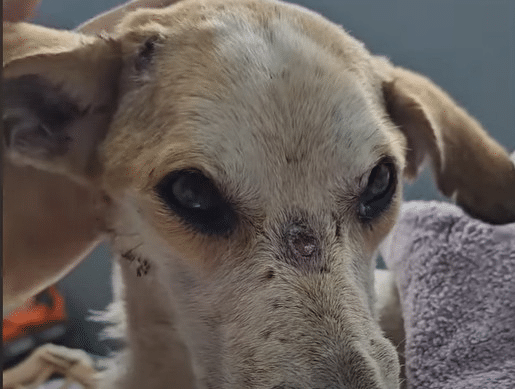
He wandered the streets of San Martín, small and constantly alert, navigating a world that had never offered him safety. Abandoned when he was still young, Polito learned early that survival meant keeping his distance. Small tumors on his body frightened passersby, reinforcing the space between him and the people around him. At just two years old, his fear had already hardened into instinct. Anyone who came too close was met with growls and quick warnings—not out of aggression, but out of self-protection.
Life had taught him to be ready for the worst.
Gaining Polito’s trust did not happen quickly. It took hours of quiet patience and careful movement before he allowed anyone to approach without retreating. Even then, every step forward was fragile. When the moment finally came to bring him to a veterinary hospital, his nervousness was unmistakable. Human touch still felt unfamiliar, and every sound made him tense.
At the clinic, doctors identified the cause behind his visible condition. Polito was diagnosed with transmissible venereal tumor (TVT), an illness that would require a series of chemotherapy treatments. For many dogs living on the streets, this diagnosis can be overwhelming. But with proper medical care, it is treatable—and hope remains.
Video: From Streets to Health: Polito’s Journey of Trust and Healing in San Martín
Healing Polito, however, meant more than treating his body.
Emotionally, he was guarded in every sense. His eyes stayed watchful. His posture remained tense. Years without care had taught him to expect nothing good. At Servivet Veterinary Clinic, this fear showed itself clearly. Polito refused to eat, his weakened condition and low hemoglobin making recovery even more challenging. Standard feeding methods failed. Even tempting food went untouched.
So his caregivers adapted.
With patience, they began syringe feeding him a specialized A/D canned diet designed for fragile dogs. Each small feeding was an act of trust—one that Polito accepted slowly, cautiously. Bit by bit, nourishment returned to his body, and with it, strength.
Progress came quietly. Day by day, Polito began accepting more food on his own. Each bite marked more than physical improvement—it signaled emotional change. The fear in his eyes softened. Defensive growls faded into silence. He began allowing gentle touches, then brief moments of affection. A tentative tail wag appeared, surprising everyone who remembered how unreachable he once was.
Chemotherapy sessions followed a careful schedule. The treatments were demanding, especially for a dog who had spent most of his life defending himself from the world. Yet Polito endured. Under the steady care of experienced professionals, his resilience showed itself again and again.
Gradually, the results became visible. The tumors began to shrink. His body relaxed. He started walking with more confidence, exploring his surroundings with curiosity instead of caution. While he continues to regain weight and strength, the change is undeniable. The streets that once defined his life are now behind him.
Today, Polito experiences something he had never known before—routine, safety, and consistent care. He rests without fear. He eats without hesitation. He responds to kind voices and gentle hands with growing ease.
Polito’s journey is a reminder that healing takes time. Trust cannot be rushed, and recovery is rarely immediate. But with patience, compassion, and skilled care, even the most guarded hearts can begin to open.
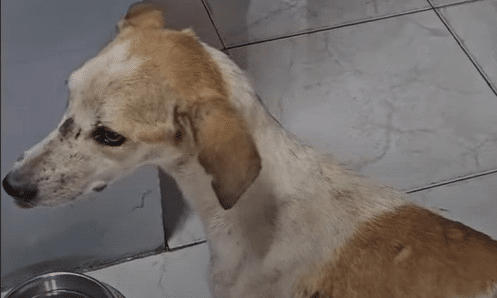
His story is still unfolding. As treatment continues and his health improves, Polito moves forward—no longer surviving, but learning how to live. Each step he takes is a quiet victory, and a testament to what can happen when someone chooses not to give up on a dog who once had no reason to trust at all.