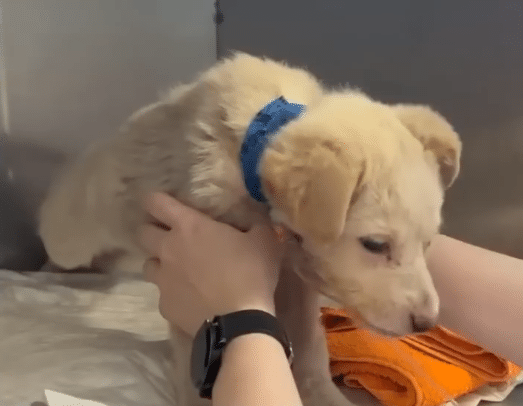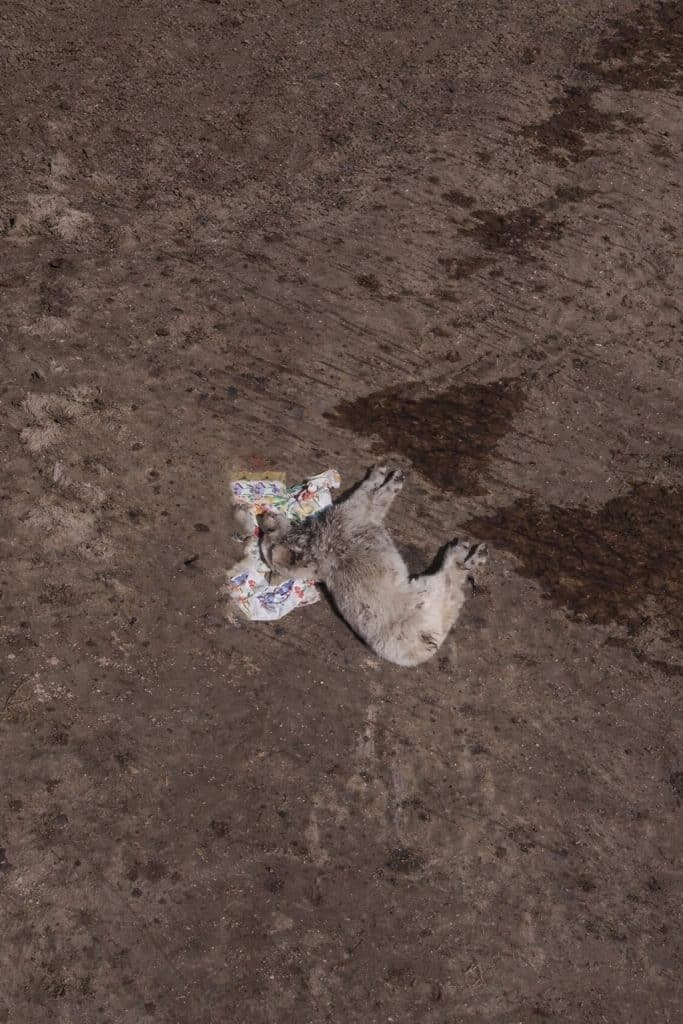
Marisa was only two months old when she was found.
A tiny puppy, weighing just over six pounds, lying alone in a cemetery—her body shaking violently, her breathing shallow and uneven. She was barely conscious, caught somewhere between awareness and darkness.
There was no time to wait.
She was rushed away as her small body fought desperately to stay alive.
In that moment, nothing about her condition suggested survival.
Only urgency did.
When Every Number Felt Like a Warning
Marisa was taken from one clinic to another, then another still. Each stop brought more concern.
Her blood values were dangerously low.
Her fever climbed higher than what a body her size should ever endure. Breathing became labored. Blood pressure wavered without warning.
Doctors worked through possibilities. Severe poisoning. A massive parasitic infection. Something was draining her strength faster than it could be replaced.
Treatment began immediately—oxygen support, continuous fluids, emergency blood transfusions. There were moments when Marisa slipped into deep unconsciousness, unable to swallow, unable to respond, kept alive through careful monitoring and tube feeding.
Hope existed—but only quietly.
Video: Found Barely Alive in a Cemetery—How Marisa Fought Her Way Back
The Smallest Signs That Changed Everything
Days passed slowly.
Then, almost imperceptibly, something shifted.
Marisa began to respond. A blink. A small movement. Eventually, the return of a reflex many had feared was lost.
For the first time, she managed to eat on her own.
It wasn’t strength yet.
But it was intention.
Further treatment revealed the source of her collapse. A severe parasitic infestation had been consuming the blood she was given, leaving her body exhausted no matter how much support it received. Once stable enough, Marisa underwent her first deworming treatment—an essential step toward real recovery.
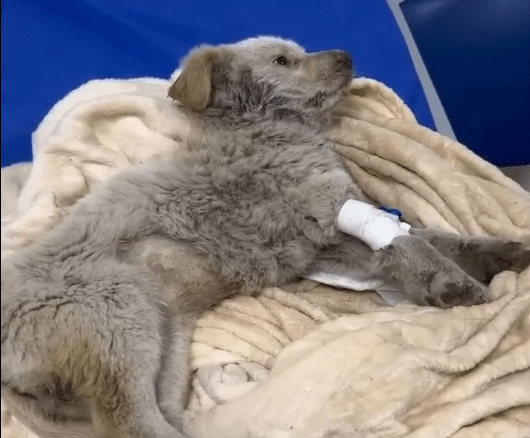
Learning to Stand After Almost Losing Everything
Today, Marisa is awake.
She can walk, though her steps are unsteady. Occasional stumbles remind everyone of the neurological impact left behind by her illness. Her reflexes are slower now, and her body still needs time to relearn balance.
But she moves forward.
Each step—however uncertain—is her own.
Veterinarians continue to monitor her progress closely, especially her nervous system. The road ahead still requires patience. Still requires care.
But the most dangerous part is behind her.
What Marisa’s Story Leaves Behind
Survival doesn’t always look dramatic.
Sometimes, it looks like a puppy lifting her head after days of silence. Sometimes, it looks like eating without help. Standing without falling.
Marisa’s journey is a reminder of what dedication, medical care, and quiet perseverance can make possible.
She didn’t survive because the path was easy.
She survived because no one stopped trying—especially when it mattered most.