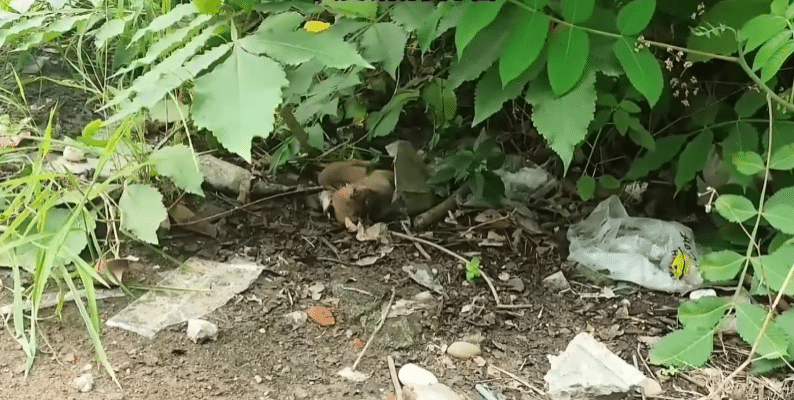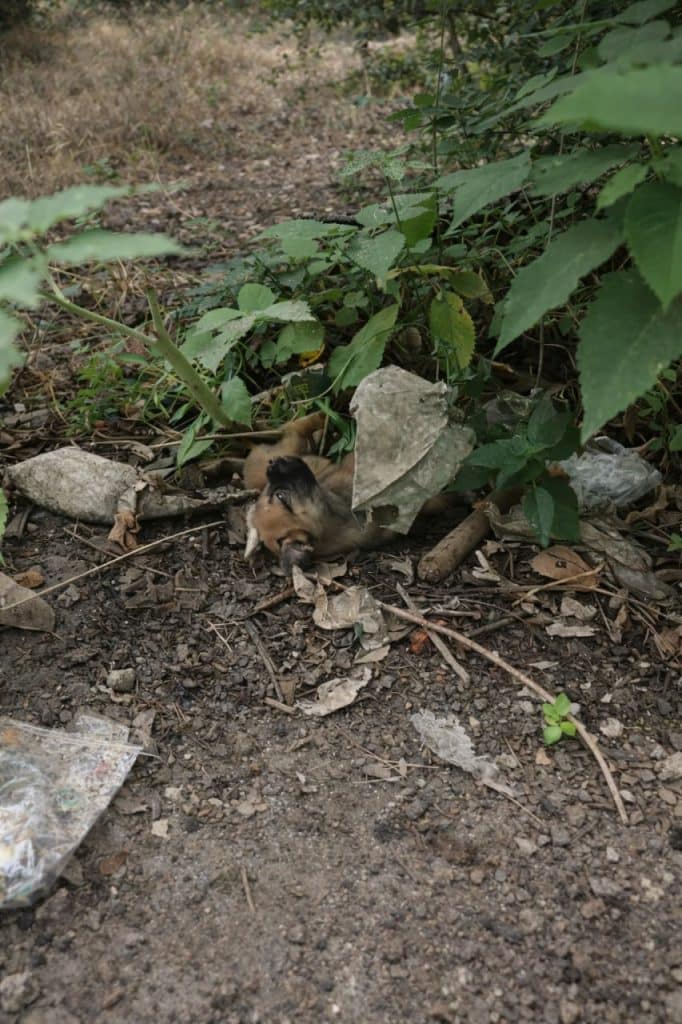
He was almost invisible at first.
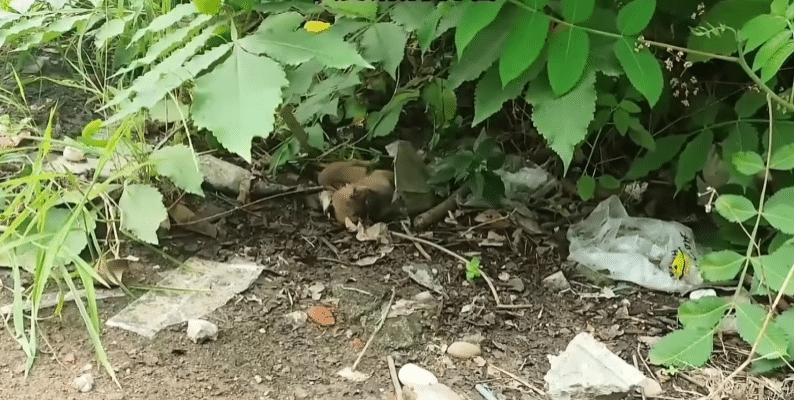
Curled tightly beneath a tree, surrounded by discarded trash and fallen leaves, the tiny puppy made only the faintest sound. It wasn’t loud enough to demand attention—just a weak cry that suggested he was still there, still holding on. When a passerby finally noticed him, it became clear this was not just a lost puppy, but one who could not move at all.
A Fragile Beginning
The puppy lay on his side, unable to stand or even crawl away. His small body trembled with every attempt to shift position. All four legs were unresponsive, leaving him completely dependent on whoever chose to help him. He was taken in immediately and given a name—Qiang Ge—marking the beginning of a journey no one yet understood.
The Exhausting First Days
Caring for Qiang Ge was demanding from the very start. He could not eat on his own, so every two hours—day and night—he was gently lifted and fed liquid nutrition. Sleep became a luxury for his caregiver, but skipping a feeding was never an option.
Between meals, his legs and joints were carefully stretched and massaged to prevent stiffness. Each session was done slowly, with patience, as if every touch carried reassurance that he was not alone anymore. Progress was not visible, but consistency mattered.
By the sixth day, new challenges appeared. Constant effort to move caused irritation and inflammation around his eyes. Treatment was adjusted, care became even gentler, and still the routine continued. Giving up was never discussed.
Video: The Puppy Who Couldn’t Move — And the Two-Month Journey That Changed Everything
Uncertain Answers, Steady Resolve
A veterinary visit brought difficult news. The diagnosis suggested a serious neurological condition, possibly related to past illness. Recovery was considered unlikely. The outlook was unclear, and expectations were carefully tempered.
Still, Qiang Ge’s caregiver chose to continue. Medication was started, nutrition was improved, and supportive supplements were added—not because success was guaranteed, but because hope remained. Sometimes, belief itself becomes part of healing.
Small Steps Toward Something Bigger
Gradually, something began to change.
Qiang Ge learned how to eat on his own while lying low to the ground. Meals were messy, slow, and exhausting—but his appetite was strong. Each bite felt like a victory. Encouraged by the presence of two older dogs in the home, he became curious. He watched them move, followed their sounds, and tried to imitate them in his own way.
First came crawling. Then, brief moments of balance. He fell often, rested, and tried again. No one rushed him. Every attempt was met with gentle encouragement and quiet praise.
A Future Once Thought Impossible
Two months after he was first found beneath that tree, Qiang Ge stood on his own.
Not perfectly. Not confidently at first. But steadily enough to take steps, then run, then play. The day his bark returned—clear, strong, and full of energy—his caregiver knew the danger had passed. It was the sound of a puppy who had truly come back.
Today, Qiang Ge is active, curious, and fully part of his family. The puppy who once could not move now races through his days with enthusiasm. His journey is a reminder that healing does not always follow medical predictions alone. Sometimes it follows patience, routine, and the decision to stay when leaving would be easier.
Qiang Ge did not recover overnight. He recovered because someone chose to try—again and again—until hope had room to grow.