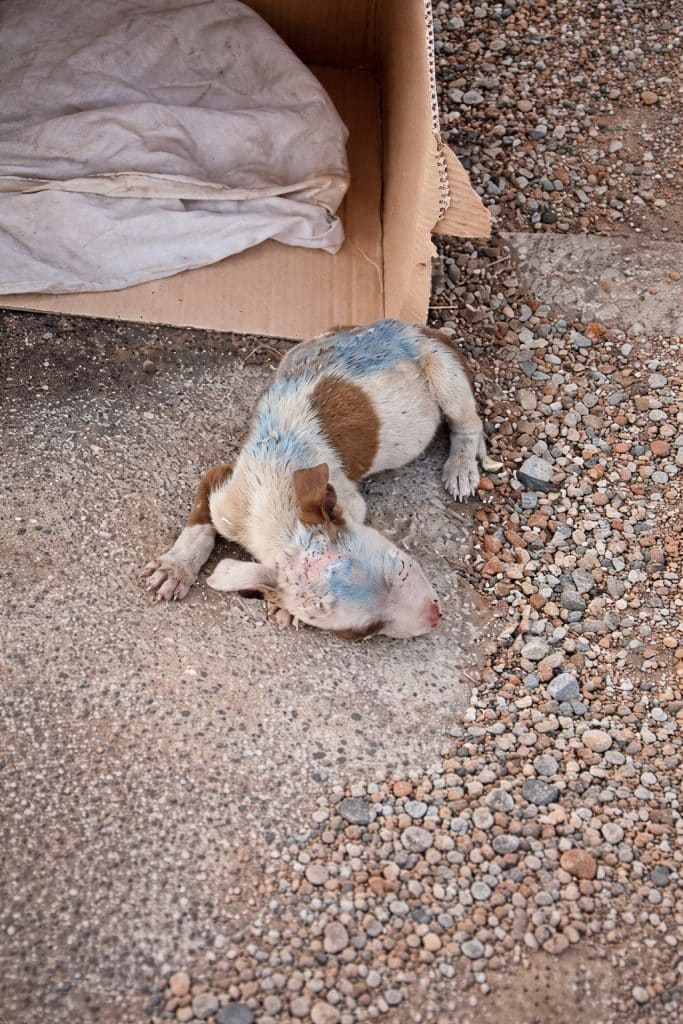
On the side of a busy road, surrounded by noise and rushing traffic, a small cardboard box sat quietly against the curb. Inside it, curled tightly to conserve warmth and strength, was a tiny dog named Miguelzinho. He did not bark. He did not cry. He simply waited, as if unsure whether anyone would notice him at all.
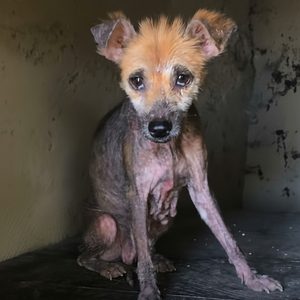
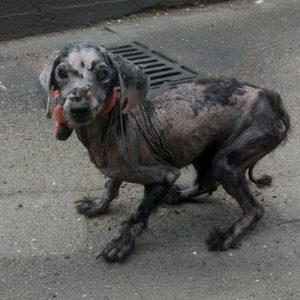
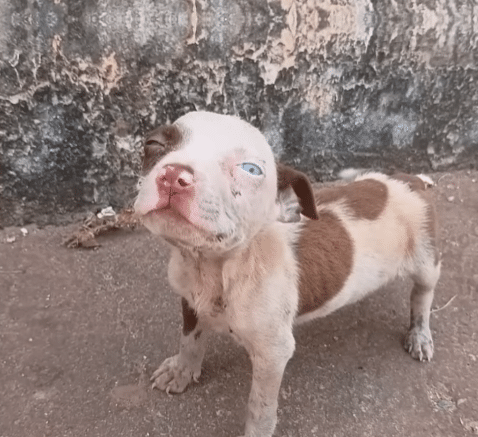
Miguelzinho’s body told a story before he ever moved. He was painfully thin, his bones visible beneath uneven patches of fur. Small wounds marked his skin, signs of long-term neglect rather than a single moment of hardship. What stood out most, though, were his eyes. One was a bright blue, the other a warm brown. They made him strikingly unique—but they also reflected exhaustion, confusion, and quiet surrender.
When rescuers approached, Miguelzinho barely reacted. He didn’t try to run or pull away. He remained still, watching them closely, as though accepting whatever came next. It was clear he had spent too long learning that resistance brought no reward.
The First Days of Safety
Miguelzinho was brought to a veterinary clinic, where the pace of life immediately slowed. There was no urgency placed on forcing recovery. Instead, everything was gentle and patient.
In the beginning, he showed little interest in food. He would sniff the bowl cautiously, take a few careful bites, then stop. After eating, he curled into himself and slept deeply, allowing his weakened body to recover in small increments. Touch still made him tense. When hands reached toward him, his body instinctively folded inward, protecting itself from what it feared might come next.
Healing, for Miguelzinho, was not immediate. It required time, consistency, and respect for his boundaries.
Video: From Abandoned to Adored — Miguelzinho’s Journey from Fear to Belonging
When Care Begins to Work
By the second and third weeks, subtle changes began to appear.
Physically, Miguelzinho started gaining weight. His breathing grew calmer. His steps became steadier, no longer hesitant or uncertain. His coat slowly filled in, replacing patchy fur with a healthier shine. These changes were quiet but meaningful, signs that his body was beginning to trust its new environment.
Emotionally, the transformation was even more profound.
Miguelzinho no longer recoiled from gentle touch. Instead, he leaned into warmth, allowing himself to relax. His tail wagged softly when familiar voices filled the room. For the first time, he began to seek comfort rather than avoid it.
Trust, once broken, was being rebuilt piece by piece.
Learning What Safety Feels Like
As days passed, Miguelzinho grew comfortable around other animals in the home. He played cautiously at first with other dogs and even shared space peacefully with cats. At night, instead of curling tightly in fear, he stretched out fully while sleeping—an unmistakable sign that he finally felt safe.
He no longer watched every movement with worry. He rested deeply. He lived in the moment instead of bracing for what might happen next.
A New Life Begins
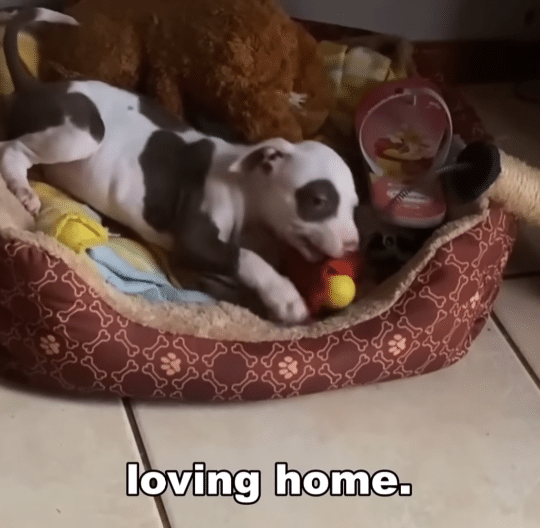
One month after his rescue, Miguelzinho was unrecognizable from the fragile dog found in a cardboard box.
He had found a loving home. He stayed close to the people who cared for him, no longer afraid of being left behind. His eyes—once dull with exhaustion—now sparkled with curiosity. In the final moments of the video, Miguelzinho appears healthy and confident, wearing a pearl collar that highlights not only his beauty, but the dignity he had always deserved.
When Small Acts Change Everything
Miguelzinho’s story is a reminder that saving a life does not always require grand gestures. Sometimes, it begins with something simple—slowing down, noticing, and choosing not to look away.
A single moment of compassion can turn fear into trust, and abandonment into belonging.
Miguelzinho waited quietly in a box by the road.
Someone stopped.
And because of that choice, his life changed forever.