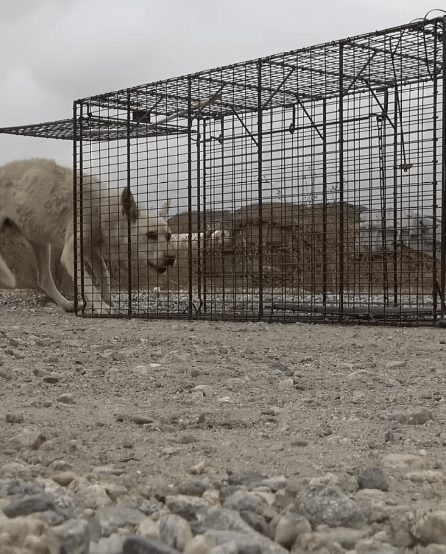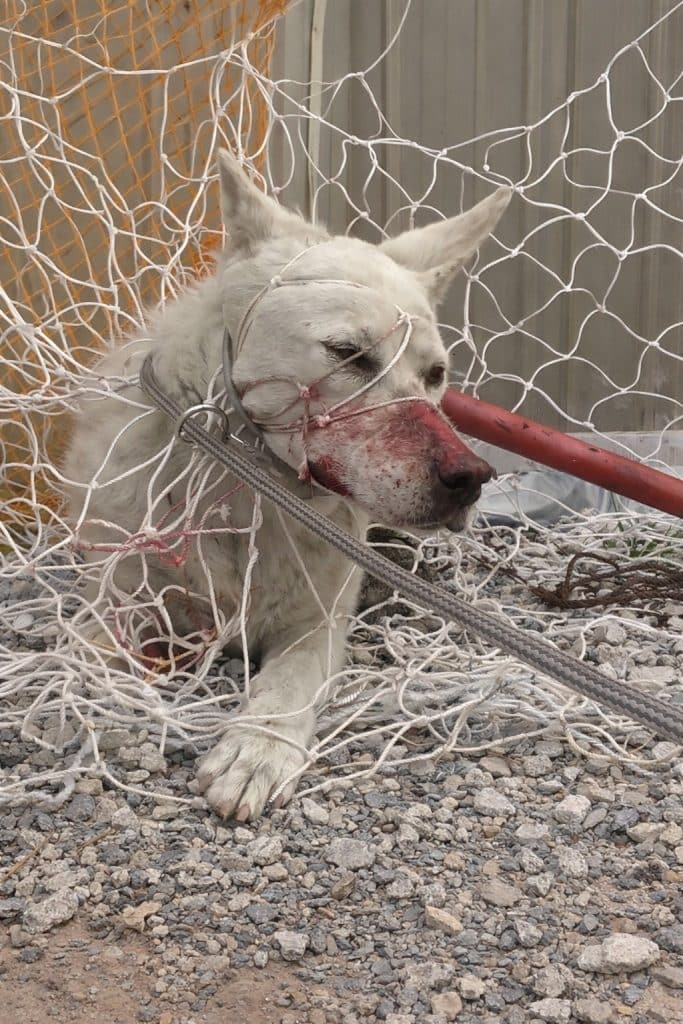
In a deserted industrial zone filled with shipping containers, scrap materials, and scattered debris, a large white dog wandered alone. His name would later become Tonka. His once-thick coat was now thin and unkempt, and his body showed signs of long-term hunger. His nose was red and irritated, likely from repeatedly pushing against metal surfaces or digging in search of food. Every movement he made was cautious. He walked slowly, scanning his surroundings, as though danger could appear at any moment.
Hunger Battling Fear
Tonka was starving—but fear controlled him more than hunger. When rescuers first spotted him, he kept his distance, watching carefully from afar. His ribs were visible beneath his fur, yet he would not approach easily. Survival had taught him that humans could not always be trusted. He circled cautiously, sniffing the air, retreating whenever anyone moved too quickly.
Video: Tonka’s Emotional Rescue in an Abandoned Industrial Yard
Hours of Patience on the Cold Ground
One rescuer made a decision that would shape Tonka’s future. Instead of chasing him, he sat down quietly on the ground, lowering himself to Tonka’s level. For hours, he remained still, speaking softly and scattering small pieces of food along a gentle path leading toward a humane trap. There was no rush, no sudden movement—only patience.
Tonka stepped forward. Then paused. Then retreated. The internal struggle was visible: hunger urging him forward, fear pulling him back. He placed one paw inside the trap, then stepped out again. Each small movement showed the weight of his uncertainty.
When the Plan Changed
Just when it seemed progress was being made, Tonka sensed something unfamiliar. He suddenly bolted, refusing to enter the trap again. The rescue team knew they could not risk losing him in such a dangerous environment. A new plan had to be implemented quickly.
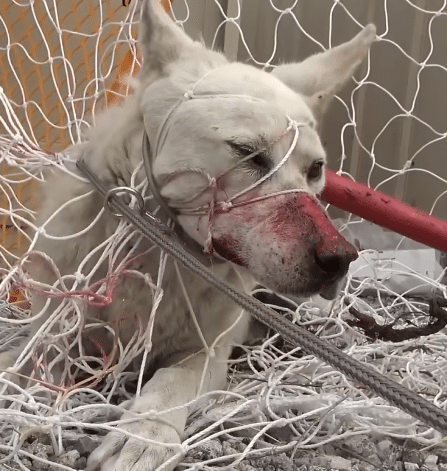
With careful coordination, the team used a humane net to safely secure him. Tonka panicked at first, struggling against the unfamiliar restraint. His fear was not aggression—it was confusion and survival instinct. A female rescuer named Loreta knelt beside him, speaking gently, reassuring him with calm words and soft tones. Slowly, his frantic movements lessened. He realized the hands around him were not there to harm him.
A Journey Toward Stability
Once safely contained, Tonka was placed in a secure crate and transported to the CARES rescue center. Even there, he remained overwhelmed. His body was safe, but his mind had not yet caught up. Volunteers approached carefully, allowing him to sniff their hands through the bars. Some days he leaned away, unsure. Other moments, he allowed brief contact. Trust, they knew, would not happen overnight.
The First Chapter of Healing
The video ends not with a dramatic transformation, but with something quieter and more meaningful: safety. Tonka sits inside his enclosure, no longer wandering the industrial yard. His eyes still hold uncertainty, but they also hold something new—possibility.
Healing for dogs like Tonka is not instant. It is built slowly, through consistent care, gentle voices, and daily reassurance. His story is just beginning. The fear that once defined him will take time to fade, but for the first time in a long while, he is no longer alone.
Tonka’s journey reminds us that rescue is not only about saving a life in one moment—it is about staying, patiently, until trust has a chance to grow.