The rescue team received a message about a stray dog trapped somewhere inside a residential area.
At first, nothing seemed unusual. But after searching carefully, they found something deeply concerning.
A vertical trash pit.
More than five meters deep.
Only about half a meter wide.
The opening was narrow, almost hidden among debris. Looking down, they could barely make out movement in the darkness below.
A dog had fallen in.
There was no way he could climb out on his own.
The space was tight, dangerous, and filled with discarded waste. Every passing hour increased the risk — dehydration, exhaustion, or injury.
He had been alone down there, unseen.
Until that moment.
Climbing Down Into the Unknown
The first attempt to reach him involved a short wooden ladder, but it was unstable and far too short. It became clear that a safer solution was needed.
The team found an extendable aluminum ladder.
John, the lead rescuer, secured it carefully and began climbing down into the shaft.
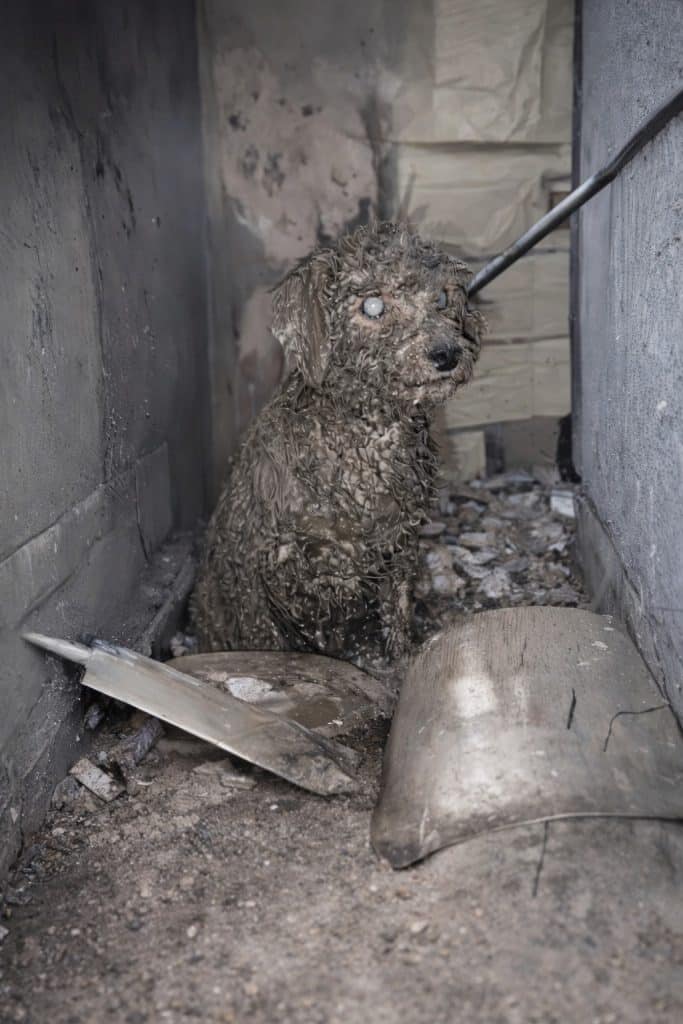
The air was heavy. The walls were close. Waste materials lined the bottom. When he reached the dog, he saw a small body trembling uncontrollably in the dim light.
The dog was frozen in fear.
He did not bark.
He did not move.
His eyes — cloudy and pale — revealed something heartbreaking.
He could not see.
Video: Trapped in a 5-Meter Waste Shaft, Blind and Terrified — Watch His Rescue to Safety
Earning Trust in the Dark
John did not grab him immediately.
Instead, he spoke softly and offered small pieces of ham he had brought along. The scent seemed to reach the dog before the sound of his voice did.
Hunger overcame fear.
The dog ate gently — not aggressively, but carefully, as though unsure whether this moment was real.
Gradually, his trembling slowed.
Trust, fragile but present, began to form.
When John finally lifted him, the dog did not resist. He allowed himself to be held and secured. Carefully, slowly, they climbed back up the ladder together.
The darkness was behind him.
A Body Covered in Mud, a Spirit Still Alive
Once above ground, the full extent of his condition became clear.
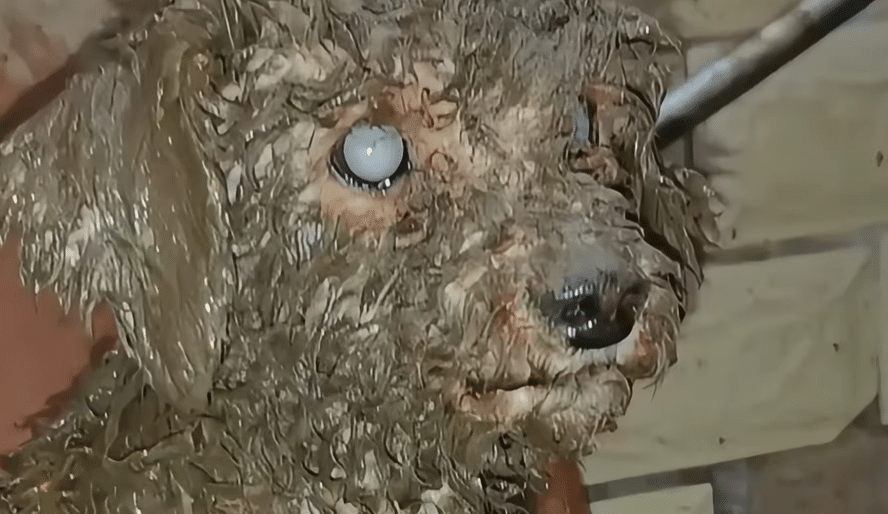
He was coated in thick layers of mud and waste. The smell was overwhelming. Parasites clung to his fur. His body shook not only from fear, but from cold and exhaustion.
And his eyes — opaque and white — confirmed what they suspected.
He was completely blind.
Yet even in that state, he did not show aggression.
He simply leaned quietly into the hands that held him.
Washing Away the Past
Back at the rescue home, the team began the long process of cleaning him.
It took four full baths before the water stopped turning dark with dirt. Parasites were removed carefully. His skin was treated gently.
They gave him a name: Happiness.
It was not ironic.
It was hopeful.
Despite his blindness, despite everything he had endured, there was something gentle about him — something that suggested he still had the capacity for joy.
Over the next week, his physical condition improved noticeably. He received eye drops daily, even though the veterinarian explained that the chance of restoring sight was almost nonexistent.
But sight was not the only thing that mattered.
He began eating well.
He responded to voices.
He wagged his tail when familiar footsteps approached.
The trembling faded.
He learned to navigate small spaces by scent and sound. He trusted the hands that guided him.
He was no longer a dog trapped in darkness.
He was a dog learning to live differently.
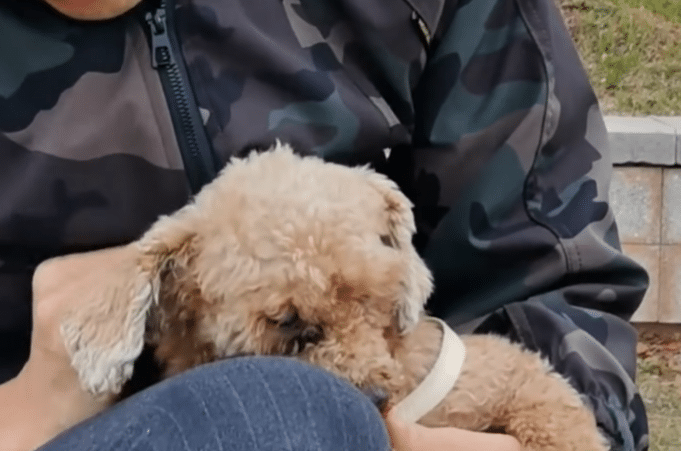
A Life That Still Holds Light
Happiness may never see the world again.
But he feels it.
He feels warmth instead of damp concrete.
He hears gentle voices instead of echoes in a shaft.
He senses safety instead of isolation.
His story is a reminder that rescue is not only about dramatic moments.
It is about showing up.
Climbing down.
Refusing to ignore a life in danger.
Sometimes, even when vision cannot be restored, hope can.
And sometimes, a name like Happiness is not a wish — it is a promise.