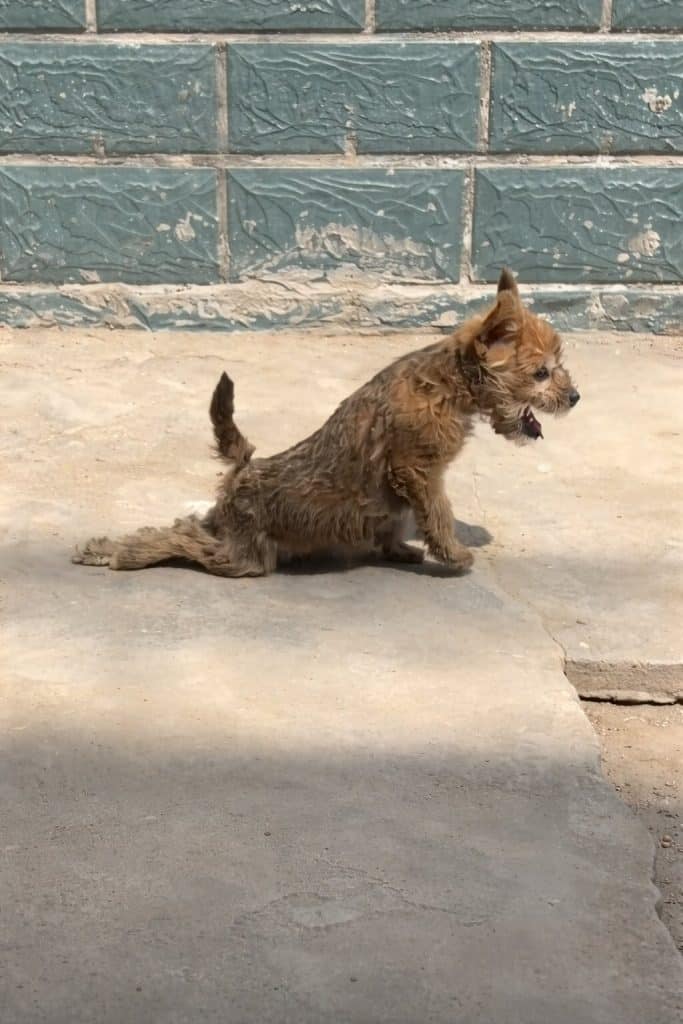
When rescuers first saw him, he wasn’t walking.
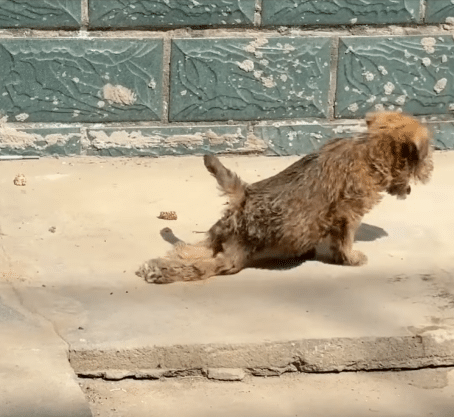
He was pulling himself forward with his front legs, inch by inch, his back legs trailing silently behind him.
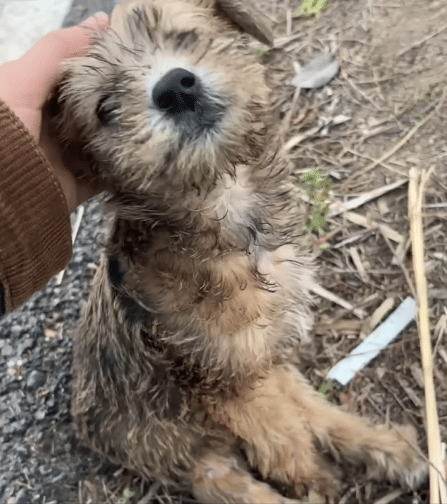
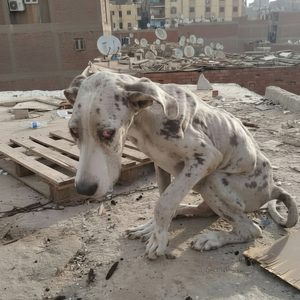
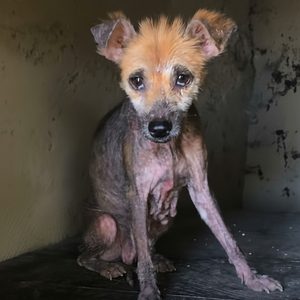
His body was thin. His fur was tangled and dirty. Every movement required effort. The ground beneath him was not soft grass or warm bedding — it was rough, unforgiving earth.
He did not bark.
He did not ask for attention.
He simply kept moving the only way he knew how.
For a long time, that had been enough to survive.
But survival is not the same as living.
The First Gentle Hands
After he was rescued, he was taken straight to a veterinary clinic.
Inside, everything changed.
He was cleaned carefully. Warm milk was offered. His weight was recorded — lower than it should have been. His body showed signs of prolonged weakness in his hind legs.
Yet beneath the exhaustion, there was something steady in his expression.
Not defeat.
Just patience.
The medical team began a comprehensive recovery plan. It wasn’t a quick fix. It was a process.
Acupuncture sessions were introduced to stimulate nerve response. Gentle electrical stimulation helped activate muscles that had been inactive for far too long. Physical therapy became part of his daily rhythm.
Each session was slow.
Deliberate.
Hopeful.
Video: Watch the Moment He Takes His First Independent Steps
Learning to Stand Again
To strengthen his body without overwhelming him, he was fitted with a small mobility cart designed for animals with limited rear-leg function.
The first attempts were unsteady.
His movements wobbled. His back legs hesitated. There were moments when he paused, unsure.
But he did not refuse.
He tried again.
And again.
With each day, the connection between his brain and his muscles grew stronger. Sensation slowly returned. Small shifts became noticeable. His hind legs began to respond — first with subtle movement, then with weight-bearing attempts.
Recovery rarely announces itself with fanfare.
It whispers in progress.
In the video, there is a pause before it happens.
He stands still for a second longer than usual.
Then, carefully, without the cart — he pushes upward.
It is not perfect.
It is not fast.
But it is real.
He takes one step.
Then another.
There is no cheering in his ears. No understanding of how remarkable this moment is.
He simply walks.
And in that quiet action, everything changes.
From Wobbling to Running
Weeks pass.
The cart becomes less necessary.
His muscles strengthen. His confidence grows. What once required assistance now happens naturally.
Soon, he is walking across the room on his own. Then trotting.
Then — one bright afternoon — he runs across grass for the first time.
Not dragged.
Not carried.
Running.
His tail lifts high. His ears move freely. His body, once confined to inches, now stretches into full motion.
A New Reflection in the Mirror
With health restored, attention turns to comfort and care.
His fur is trimmed neatly. His coat regains shine. His body fills out with proper nutrition. His eyes — once distant and tired — now follow his new family with alert curiosity.
He no longer measures distance in inches.
He measures it in joy.
Today, he sleeps indoors. He walks without hesitation. He moves with purpose and energy.
The dog who once scraped himself across the ground now runs through open spaces with ease.
Not because recovery was easy.
But because someone believed that he deserved the chance to try.
And sometimes, that belief is where healing truly begins.