It began with noise.
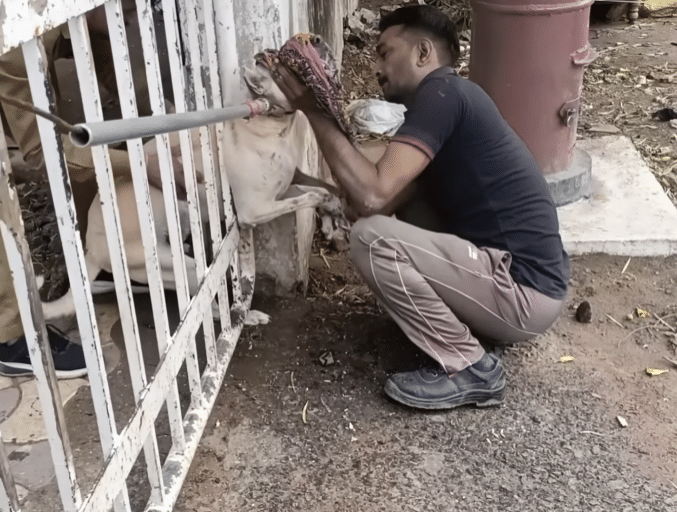
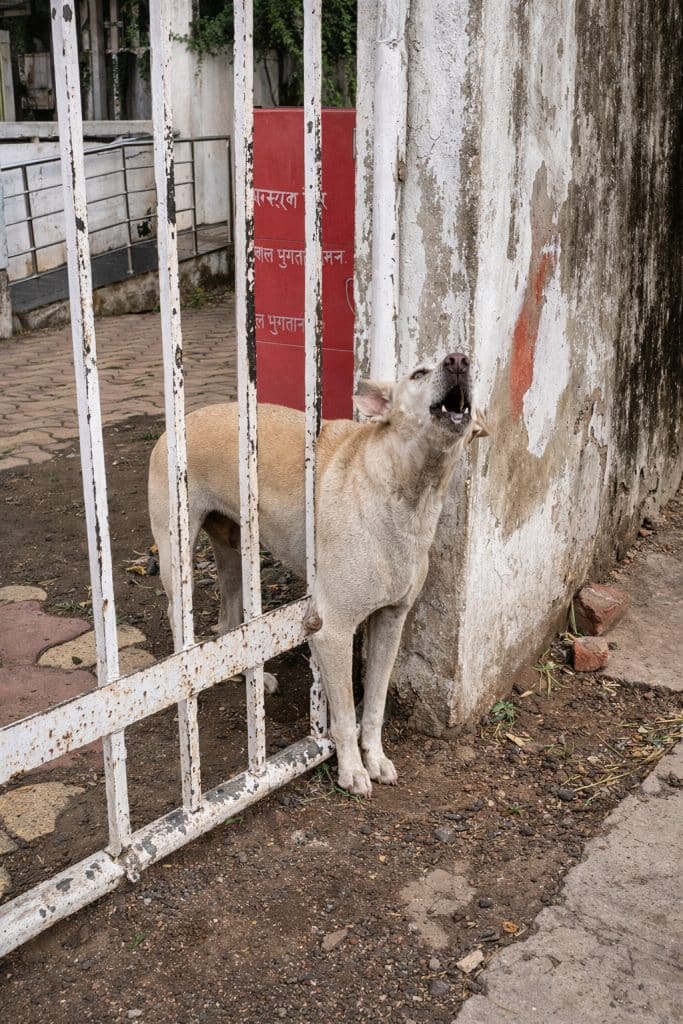
Residents of a building heard frantic barking echoing through the courtyard. When they stepped outside, they saw him—a stray dog wedged tightly between the vertical bars of a white iron gate.
His body was stuck halfway through.
The space was too narrow. His chest had pushed forward, but his hips could not follow. Every attempt to pull free only made him more panicked. His barking grew louder, sharper, not out of aggression—but fear.
To anyone watching from a distance, he looked dangerous.
Up close, he looked desperate.
No one knew how long he had struggled there before being noticed.
But it was clear he could not escape alone.
When Fear Looks Like Anger
Building staff quickly contacted Rescue Foundation Gujarat, understanding that this situation required experience and patience.
When the rescue team arrived, they assessed the scene carefully.
The dog’s eyes were wide.
His breathing was fast.
Every movement felt like a threat to him.
A trapped animal does not understand help.
He only understands fear.
To ensure everyone’s safety—including his—the rescuers used a humane control pole to gently secure his head from a safe distance. It wasn’t punishment. It was protection.
For him.
For them.
Because panic can lead to injury on both sides.
Video: Terrified And Trapped In Iron Bars, He Fought The Only Hands Trying To Save Him
Calming the Storm Before Setting Him Free
Even with gentle restraint, the dog continued to bark and twist.
So the rescuers slowed everything down.
One volunteer spoke softly, repeating calm phrases. Another offered food, placing it close enough for him to smell. A cloth was carefully wrapped around his muzzle—not harshly, but securely—acting as a temporary safeguard so no one would be bitten in fear.
There was no rushing.
No shouting.
Only patience.
Gradually, the barking softened. His body, once rigid with panic, began to loosen. He was still afraid—but he was no longer fighting blindly.
That small shift made all the difference.
The Careful Work of Untangling Fear
Freeing him required coordination.
The team, along with a few nearby residents, gently adjusted his position. His front legs had pushed too far forward through the bars, making it harder to reverse.
Slowly, they guided one leg back.
Then the other.
Carefully repositioning his shoulders.
Finally, with steady hands and controlled movements, they eased his body backward through the narrow gap.
For a brief moment, he stood still.
Free.
Then instinct took over.
He ran.
Not out of rejection.
But because fear still lived in his muscles.
Following Up With Quiet Compassion
Rescue doesn’t always end with a leash or adoption.
Sometimes it begins with observation.
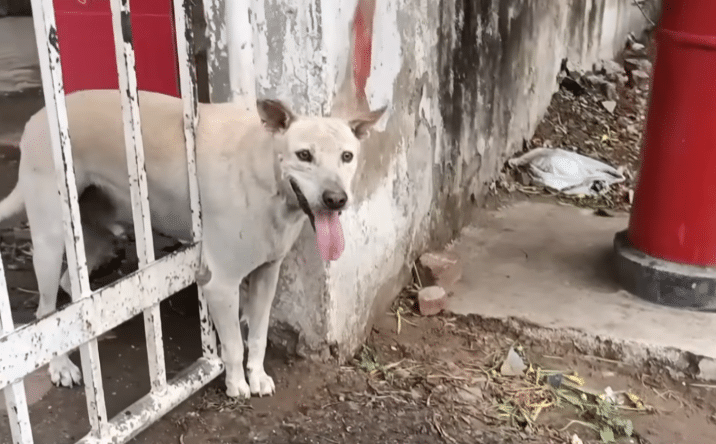
The volunteers from Rescue Foundation Gujarat continued to monitor him from a respectful distance in the days that followed. They ensured he had access to food and clean water in a safer area nearby.
Without bars.
Without pressure.
Without panic.
Gradually, the tension in his posture softened. He no longer barked at every movement. He kept his distance—but he watched with less suspicion.
Trust, after all, is not rebuilt in a single afternoon.
It unfolds quietly.
What This Rescue Teaches Us
From afar, he looked aggressive.
Up close, he was simply afraid.
His story reminds us that fear can disguise itself as anger. That survival instincts can look like hostility. And that compassion sometimes requires stepping forward when it would be easier to step back.
He wasn’t trapped because he was wild.
He was trapped because he was searching—for a way through, for safety, perhaps even for belonging.
That day, iron bars held his body.
But patience and kindness set him free.
And sometimes, that is enough.