For more than two weeks, she waited.
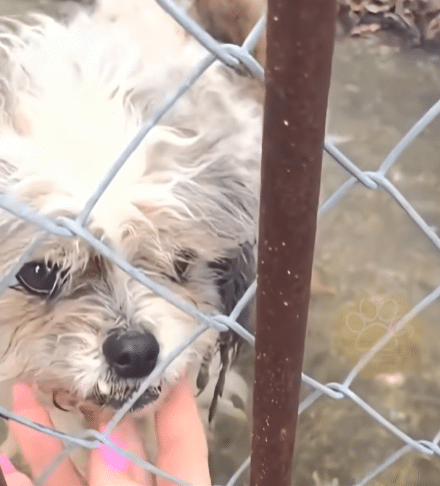
Behind a cold iron fence, a small dog stood alone in a yard that had grown silent. Her owner — an elderly woman — had been hospitalized. There were relatives. There were neighbors.
But no one stepped forward.
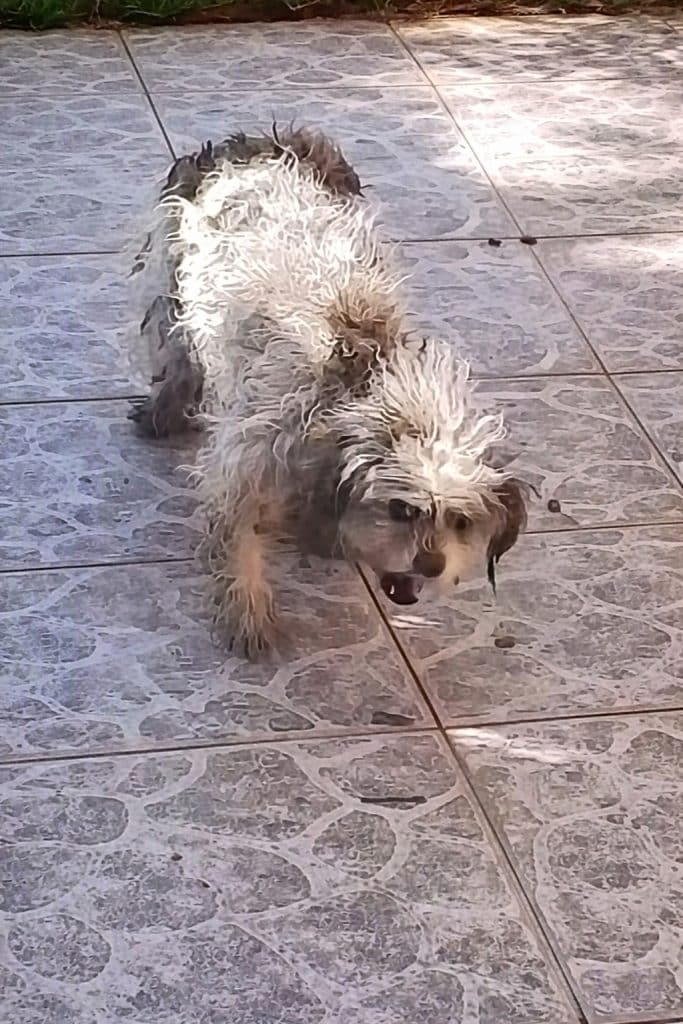
For over fifteen days, she was left without proper food, without water, without even the simplest care. Her fur tangled into thick, heavy mats that clung to her tiny body like a burden she could not escape. She walked stiffly, trembling — not only from weakness, but from fear.
Strangers passing by noticed her suffering.
Some tossed bits of food over the fence.
It was the only reason she survived.
But survival is not the same as living.
A Body Hidden Beneath Neglect
When volunteers finally intervened, the sight was difficult to forget.
Her coat had become a dense, knotted shell. Each step seemed painful. Her eyes avoided direct contact, as if she had already learned that waiting rarely changed anything.
She did not bark.
She did not protest.
She simply allowed herself to be lifted.
As though she understood that this moment was different.
It was the first time in weeks that someone touched her with intention — not pity from a distance, but real care.
Video: After 15 Days Locked Behind Iron Bars, She Finally Felt Gentle Hands Again
The Slow Reveal of the Dog Beneath
At the care facility, the team worked patiently.
Electric clippers hummed softly as thick mats of fur were carefully removed. Layer by layer, the heavy coat fell away. Beneath it, her fragile frame was revealed — thin, undernourished, and far smaller than anyone had realized.
What had looked like stubborn dirt was actually neglect hardened over time.
After trimming came her first proper bath.
Warm water replaced cold air.
Soft towels replaced rough ground.
Gentle hands replaced indifference.
For the first time in many days, her body could breathe.
Discovering the Hidden Wounds
As her coat disappeared, the rescuers noticed more than thinness.
There were marks along her body from prolonged deprivation. And most concerning of all, a large mass around her neck — possibly the result of long-term restraint or untreated injury.
Veterinary examination followed quickly.
Despite everything, she remained calm.
No snapping.
No resistance.
Only quiet acceptance.
They gave her a name: Mimosa.
A name that matched her softness.
A Gentle Spirit That Refused to Harden
What surprised everyone most was not her physical condition.
It was her temperament.
After weeks of abandonment, Mimosa did not shrink from kindness. She leaned gently into touch. She watched her caregivers with cautious curiosity. When someone spoke softly to her, her eyes seemed to listen.
There was no bitterness in her.
Only relief.
A New Beginning in Pink Wool
Recovery did not happen overnight.
Meals were reintroduced slowly.
Medical monitoring addressed the mass on her neck.
Her strength rebuilt one careful day at a time.
Then one afternoon, something simple but powerful happened.
Mimosa stepped onto grass — not dirt, not concrete — but soft green ground. She wore a small pink sweater to keep her warm. Sunlight touched her clean fur.
She walked slowly at first.
Then, more confidently.
Her tail moved gently behind her.
The dog who had once stood trembling behind iron bars was now exploring open space.

What Mimosa’s Story Teaches Us
Neglect often hides in silence.
It can happen in neighborhoods.
Behind fences.
In plain sight.
But so can compassion.
Mimosa’s survival began with strangers who tossed food over a fence. Her healing began with volunteers who chose not to look away.
Her story reminds us:
No dog deserves to be forgotten.
Neglect does not erase gentleness.
And sometimes, the quietest souls carry the greatest resilience.
Today, Mimosa walks forward — clean, warm, and cared for.
Not because her past disappeared.
But because someone decided her future mattered.