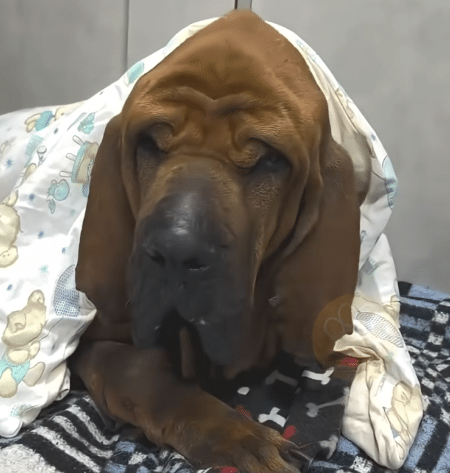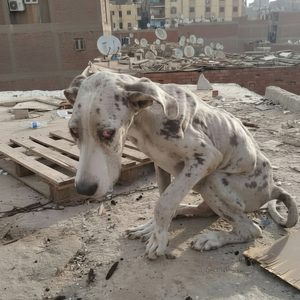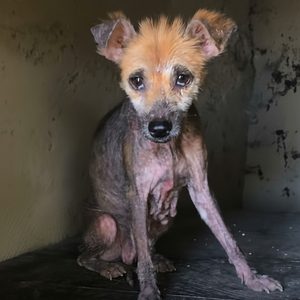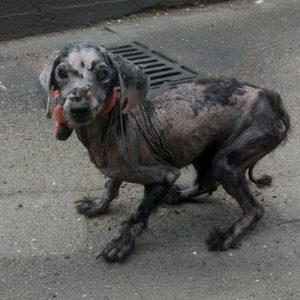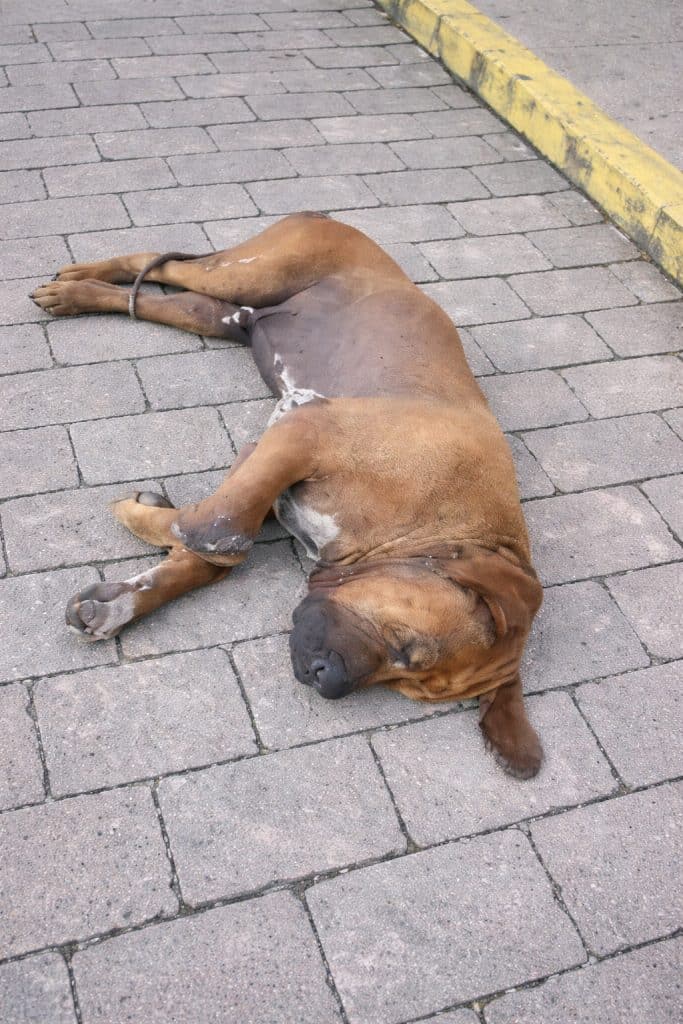
Duffy was found at a roadside gas station, a place meant for brief pauses — not for survival.
For more than a month, he stayed there.
No collar.
No shelter.
No one returning for him.
His body told the story of prolonged suffering. Wounds covered his skin. His joints were swollen and painful. Infected growths had developed across his fragile frame. He was so weak he could barely rise on his own.
His eyes were badly damaged. Veterinarians later suspected he was also suffering from hypothyroidism — a condition that had quietly drained his strength over time, leaving him exhausted and unable to fight back.
Yet he remained there.
Waiting.
When Rescue Finally Arrived
The moment rescuers approached, Duffy did not run.
He did not resist.
He seemed too tired to be afraid.
He was rushed for emergency care. The medical team moved quickly but gently. Multiple surgeries were necessary — infected masses had to be removed. His eyes required delicate treatment. His body needed stabilization before anything else could begin.
At the same time, doctors began endocrine therapy to address the suspected thyroid disorder that had contributed to his physical decline.
It was not one problem.
It was many.
And each one demanded patience.
Video: Abandoned for Weeks at a Gas Station, He Thought No One Was Coming — Until Everything Changed
A Long Road Through Treatment
Recovery did not happen overnight.
There were dressings to change.
Medications to monitor.
Hormone levels to balance.
Duffy’s body had endured neglect for too long. It would take time to restore what had been lost.
But slowly, subtle shifts began to appear.
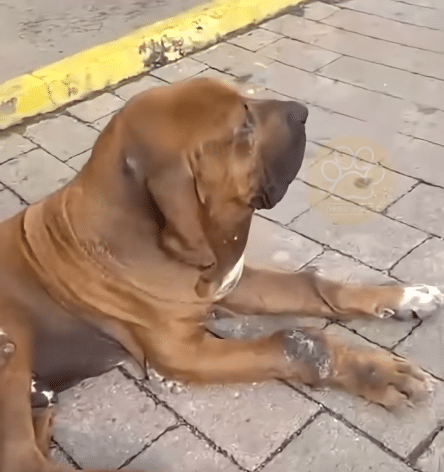
He started eating again — first cautiously, then with real appetite. His weight stabilized. The swelling in his joints reduced. His posture grew steadier. Where exhaustion once dominated his expression, a quiet alertness began to return.
His caregivers noticed something even more important.
His eyes, though still healing, no longer carried that distant, resigned look.
They followed movement.
They responded to voices.
They softened.
Small Victories That Meant Everything
The first time Duffy stood on his own without collapsing, the room grew quiet.
It wasn’t dramatic.
It wasn’t perfect.
But it was progress.
From there, each day brought another modest triumph — a few steady steps, a tail that moved slightly when someone entered, a willingness to lean gently into a hand offering comfort.
His transformation was not loud.
It was steady.
The dog who once seemed ready to surrender began choosing — in small, consistent ways — to engage with life again.
More Than Medical Recovery
Duffy’s healing was not only physical.
Being abandoned in a public place leaves more than visible wounds. It leaves confusion. It leaves uncertainty.
Yet with consistent care and calm reassurance, he began to trust again.
He allowed touch without flinching. He rested peacefully in a warm space. He no longer scanned the distance as if waiting for someone who never returned.
Instead, he focused on the people who stayed.
A Second Chance Earned Through Compassion
Today, Duffy is no longer the fragile figure lying beside a gas pump.
He is stronger.
He is stable.
He is present.
The infections have been treated. The surgeries have healed. His thyroid condition is being managed carefully. Most importantly, he no longer faces the world alone.
Duffy’s story reminds us of something simple but powerful:
Compassion requires patience.
Healing requires consistency.
And second chances are built step by step.
He waited more than a month in a place meant for passing through.
Now, he has somewhere to stay.
And that makes all the difference.