Traffic passed her by.
Engines roared. Tires rolled inches away.
But Lola did not move.
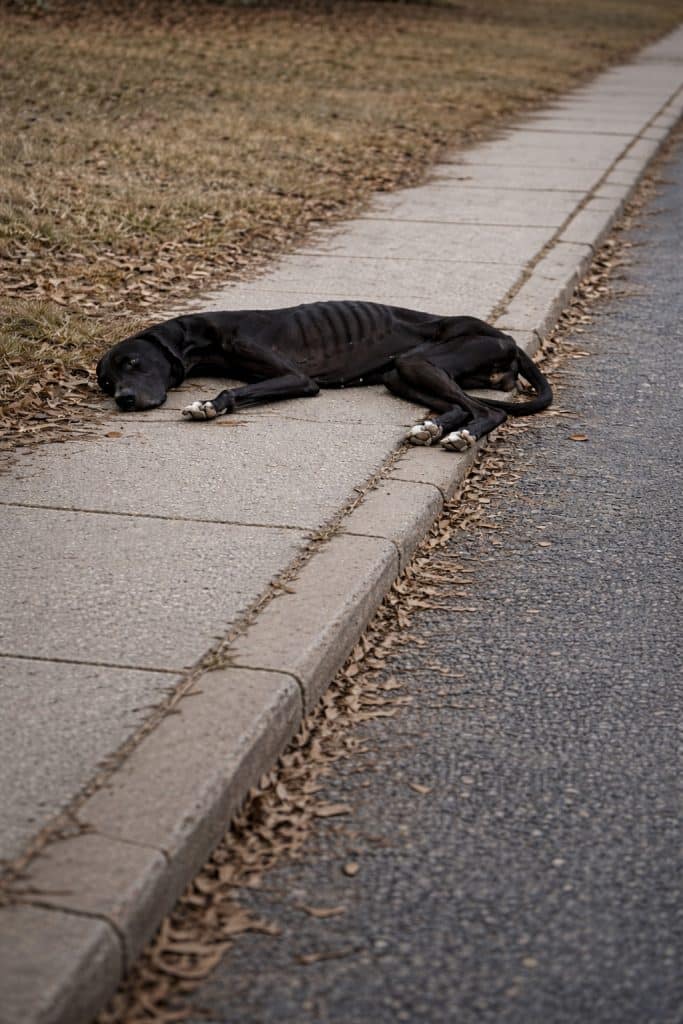
The black Great Dane lay in the middle of the street, her body so thin it seemed impossible she was still breathing. Weeks of starvation had reduced her to skin and bone. Each rib was visible. Each breath shallow.
People noticed.
No one stopped.
Until rescuers arrived.
The First Glimpse of How Much She Had Endured
When they approached, Lola didn’t try to run.
She didn’t growl.
She didn’t resist.
She simply looked up with tired eyes that seemed far older than her estimated five or six years.
At the veterinary clinic, the reality became clear. Lola’s body was severely emaciated. Her breathing was fragile. Tests revealed advanced heartworm disease — a serious condition that would require long, careful treatment.
Soon after admission, her condition worsened.
She developed a fever.
She vomited.
Discharge from her nose signaled infection.
Every symptom confirmed what rescuers already feared:
She was standing at the edge of survival.
Video: Found Starving in the Road, She Tried to Stand — And Refused to Give Up
A Quiet Strength No One Expected
Despite her weakness, Lola did something extraordinary.
When doctors supported her, she tried to stand.
Her legs trembled. Her body swayed. Yet she made the effort — not once, but repeatedly. The medical team was stunned that a dog so fragile could still attempt to hold herself upright.
She did not fight the hands examining her.
She watched them carefully, as if choosing trust over fear.
It wasn’t dramatic.
It was quiet determination.
Long Nights and Gentle Vigilance
Lola was moved to a quiet bedroom for recovery.
There were no loud kennels. No harsh lights. Just a calm space and someone sleeping nearby to monitor her breathing through the night.
The first days were delicate.
She required assisted support just to walk a few steps. A sling helped lift her weakened frame so her legs could relearn movement. Each short walk was slow and deliberate.
But movement, even minimal, mattered.
Nutrition was reintroduced cautiously. At first, her appetite was faint. Then one day, she showed interest.
Small bites of turkey.
Freshly cooked eggs.
Carefully portioned meals.
It was the beginning of rebuilding.
The Moment Her Tail Moved
Healing is often measured in lab results.
But sometimes, it is measured in a single tail wag.
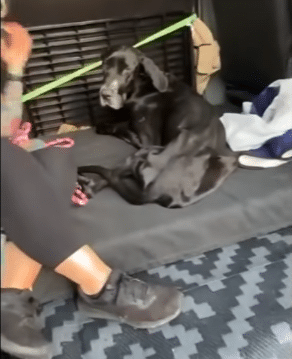
One afternoon, as her caregiver knelt beside her, Lola’s tail moved gently. Not out of excitement — but acknowledgment.
Soon after, she leaned forward and softly licked the hand that had been steady beside her for days.
It was a small gesture.
But it signaled something enormous:
Hope had returned.
Strength in the Sunlight
As weeks passed, Lola began spending short periods outside.
At first, she resisted movement. Her body still felt unfamiliar after weeks of weakness. But sunlight warmed her coat. Fresh air filled her lungs.
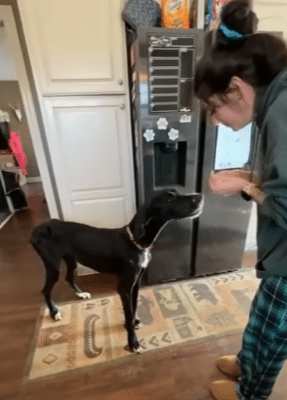
Gradually, she began walking farther across the yard.
Her muscles strengthened.
Her posture lifted.
Her eyes brightened.
The Great Dane who once lay helpless in the road began to reveal her true nature — gentle, affectionate, quietly grateful.
She sought companionship.
She rested peacefully.
She responded to kindness with calm trust.
A Beginning That Feels Like a Second Life
Lola’s recovery is ongoing. Heartworm treatment requires patience and careful monitoring. Weight gain takes time. Strength must be rebuilt slowly.
But she is no longer alone on a busy street.
She is surrounded by care.
The dog who once looked as though she had surrendered is now showing resilience in every steady step.
Her story reminds us:
Even when a body is weakened, the will to live can remain.
Compassion can reach someone everyone else passed by.
And sometimes, survival begins with someone choosing to stop.
Lola was once invisible in the middle of the road.
Now she is seen, protected, and walking toward a future that once seemed impossible.