When rescuers first noticed Pandora, they immediately understood that her situation was heartbreaking—but also urgent. She was tied to a metal pole along a busy sidewalk, exposed to the heat and noise of passing traffic. Her body was thin and exhausted, clearly worn down by days without proper care. She had recently given birth, yet her puppies were nowhere to be found. Everything about her posture told a quiet story of loss, confusion, and relentless maternal instinct.
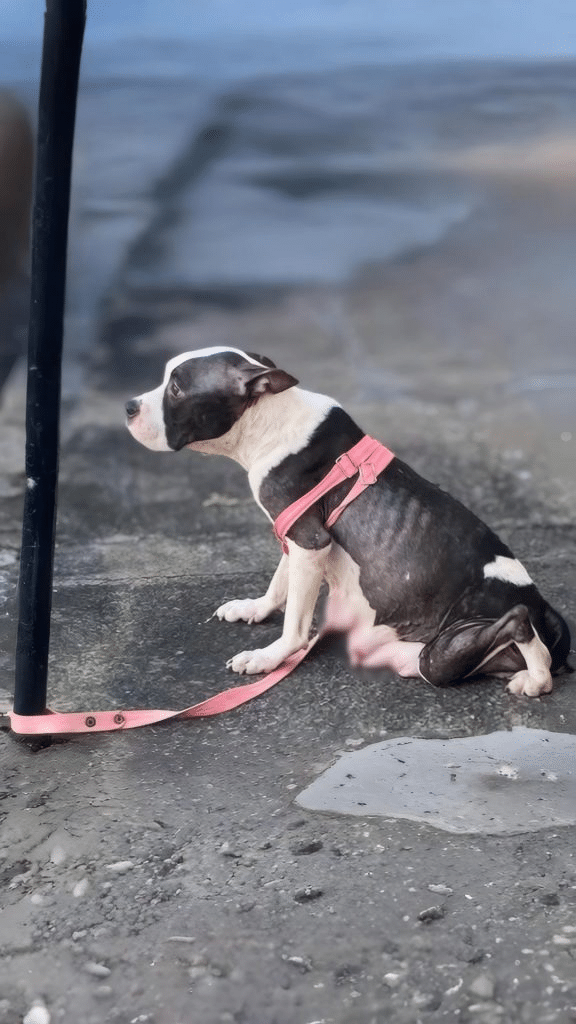
Pandora remained in that same spot for hours, sometimes days, unable to move freely or search properly for her babies. Her body was still producing milk, a natural response to motherhood, and it was a painful reminder that her newborns had been taken from her too soon. She looked around constantly, watching every person who passed by, as if hoping one of them might help reunite her family—or at least notice her distress.
Many people walked past. Some slowed down and looked at her with concern, while others hurried away, unsure of what to do or unwilling to get involved. Pandora didn’t bark loudly or cause a scene. Instead, she let out soft cries from time to time, conserving her energy. Hunger and fatigue had drained her strength, but her eyes still held a fragile spark of hope. She seemed to believe that kindness might still find her.
When a local rescue team arrived, Pandora’s reaction reflected a life shaped by disappointment. She didn’t rush toward them or welcome their presence. Instead, she stayed alert and cautious, unsure whether these new humans were a threat or a lifeline. Dogs who have been neglected often learn to protect themselves by keeping their distance, and Pandora was no different.
The rescuers approached slowly, speaking in calm, reassuring voices. They placed food and water nearby and stepped back, allowing her to decide when she felt safe enough to move. After a few tense moments, Pandora took small, hesitant steps forward. Even after she was untied and freed from the pole, she resisted leaving. Her instinct was still focused on finding her puppies, even if that meant ignoring her own needs.
Video A Mother’s Silent Plea: How Pandora Found Hope After Losing Everything
The emotional strain eventually caught up with her. Pandora grew weak and unsteady, overwhelmed by hunger, stress, and grief. The rescue team stayed with her, refusing to rush or force the situation. With patience and gentle encouragement, they helped her into their vehicle, promising—through tone and touch—that she was finally safe.
At the shelter, Pandora received a full medical evaluation. She was severely undernourished, her coat dull and her skin irritated from parasites. More concerning was the condition of her mammary glands, which were swollen and painful due to milk production without nursing puppies. Veterinarians immediately began treatment to relieve discomfort and prevent infection. She was given medication, nutritious meals, and a warm bath that washed away days of dirt and stress.
Physically, Pandora began to stabilize within days. Emotionally, however, healing would take much longer.
She spent most of her time lying quietly in her kennel, resting her head on her paws. She showed little interest in toys or attention. Whenever she heard other dogs bark, she lifted her head, listening closely—as if hoping for a familiar sound. Her sadness wasn’t loud or dramatic; it was heavy, lingering, and deeply rooted.
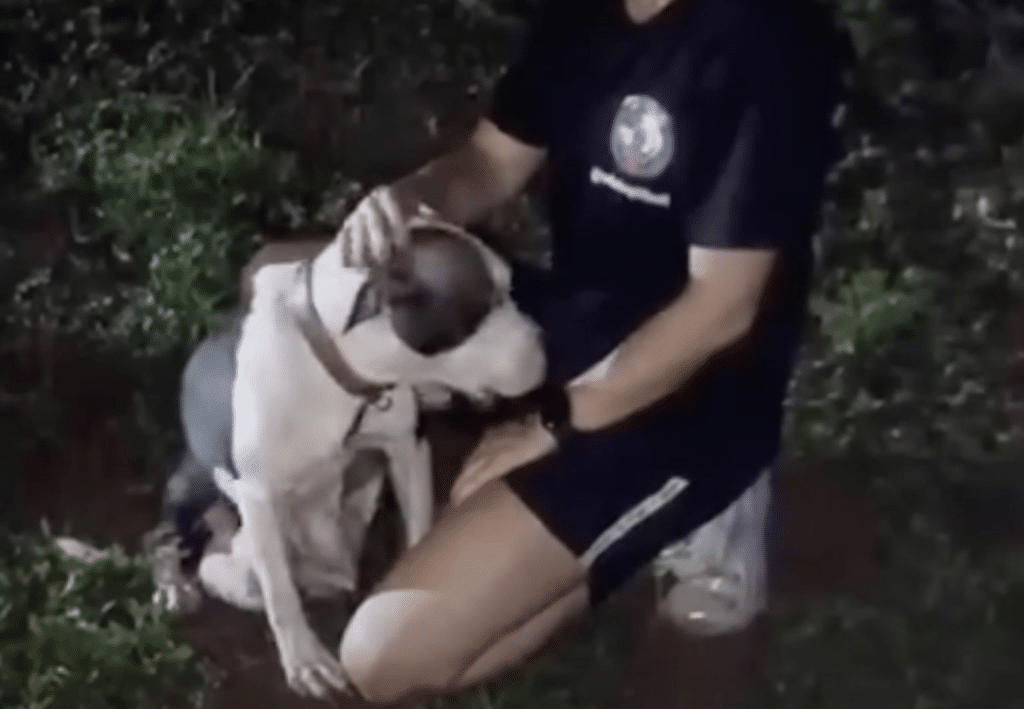
Shelter staff made sure Pandora was never alone in her recovery. They checked on her often, spoke softly to her, and offered gentle affection without overwhelming her. Trust, they knew, couldn’t be rushed. Occasionally, Pandora would react nervously when other dogs came too close—not from aggression, but from fear and uncertainty shaped by her past.
Then, slowly, something began to change.
Pandora was introduced to another rescue dog who had also experienced abandonment. Instead of approaching her with excitement or dominance, the dog moved calmly and respectfully. There was no pressure—just quiet companionship. At first, Pandora remained still, unsure how to respond. But over time, she allowed the other dog to sit nearby. Eventually, they began walking together, sharing space without fear.
That simple connection marked a turning point.
Pandora’s body language softened. Her posture relaxed. Her tail, once still, began to move again. The sadness in her eyes slowly gave way to curiosity and warmth. Shelter staff watched with quiet joy as her spirit resurfaced, one gentle step at a time.
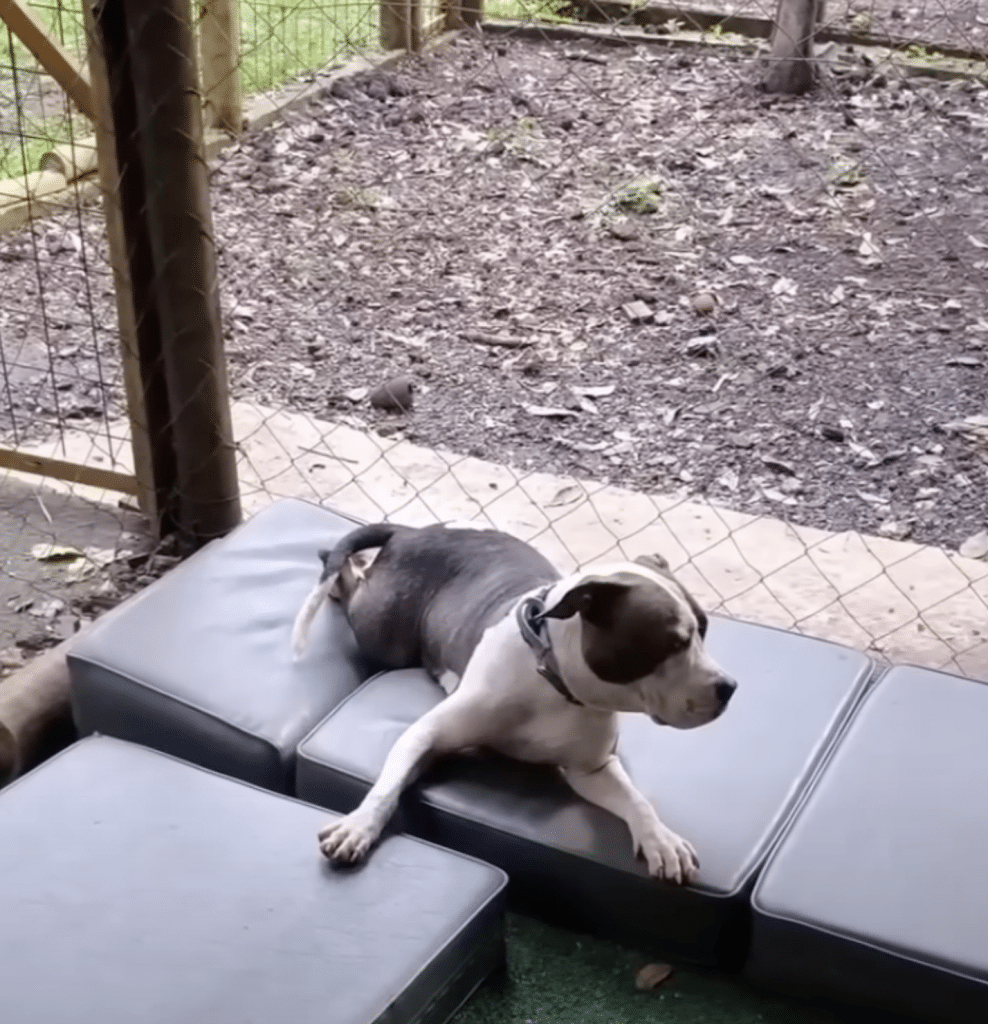
Weeks passed, and Pandora continued to improve. She accepted treats with enthusiasm, interacted more comfortably with people, and even began to play. While her past could never be erased, it no longer defined her future.
One day, a family came across Pandora’s story online. Something about her gentle presence and quiet resilience touched their hearts. They visited the shelter and met her in person. Pandora responded immediately to their calm voices and kind hands. She leaned into their touch, as if recognizing that she had finally found where she belonged.
Soon after, Pandora left the shelter with her new family.
Today, her life looks entirely different. She enjoys sunny mornings in a safe yard, peaceful afternoons on soft blankets, and evenings surrounded by people who cherish her. She runs, plays, and greets each day with a wagging tail. The fear and loneliness that once defined her have been replaced with trust, comfort, and joy.
Pandora’s journey is a powerful reminder that even after profound loss, healing is possible. With patience, compassion, and love, a broken chapter can give way to a brighter story—one filled with second chances and renewed hope.