At first glance, the scene felt unsettling.
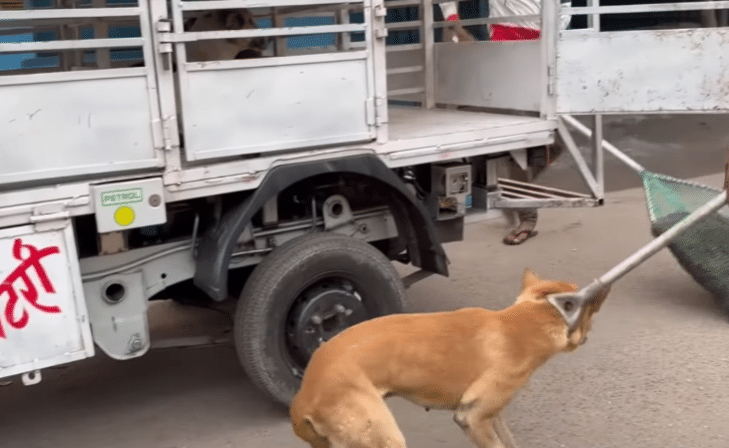
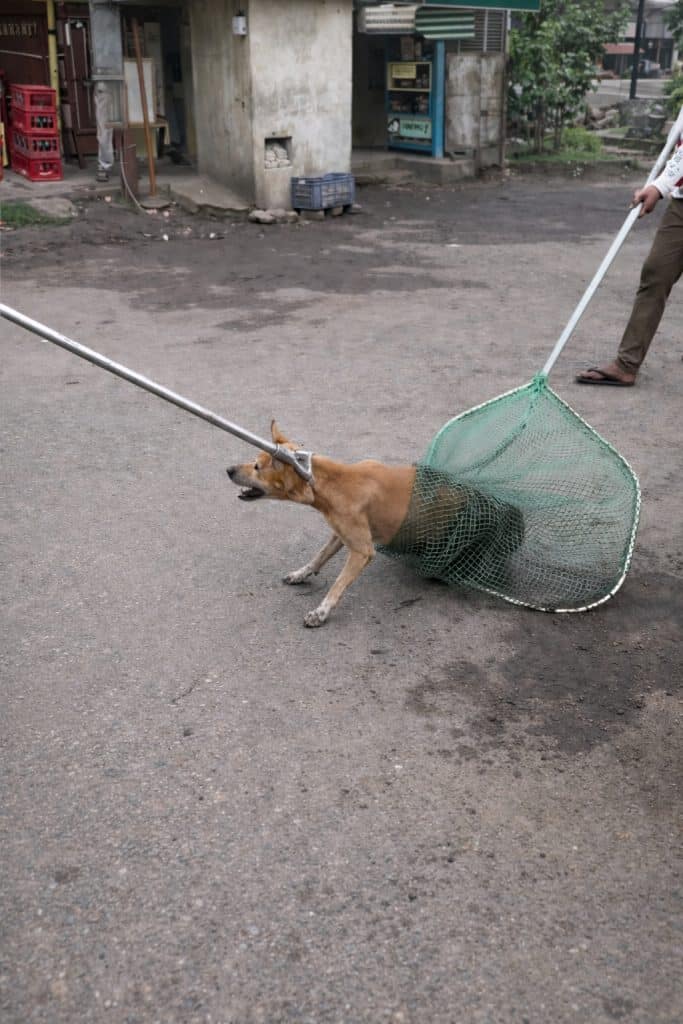
A thin stray dog stood in the middle of a busy street, his body weak, his movements slow. When municipal workers approached with specialized equipment and a transport cage, some bystanders assumed the worst.
But what happened next told a very different story.
This was not cruelty.
It was intervention.
And for this dog, it may have been the only chance he had.
A Dog in Visible Distress
The first moments of the video reveal a dog in concerning condition.
His body appears underweight.
His responses are delayed.
He seems fatigued, possibly unwell.
He does not run far when people move toward him. He looks confused more than aggressive — unsure, uncertain, and visibly tired.
Left untreated, a condition like this can worsen quickly. Infection, dehydration, or other illness could place not only the dog at risk, but also the surrounding community.
Sometimes the most compassionate act is stepping in before it’s too late.
Video: What Looked Like “Capture” Was Actually His First Step Toward Treatment
A Careful, Measured Approach
Contrary to what many assume when they see animal control tools, the workers did not rush or act harshly.
They moved slowly.
One observed the dog’s behavior to avoid causing panic. Another prepared the transport crate nearby. A humane control pole was used — not to harm, but to maintain safe distance for both the dog and the handlers.
The dog appeared frightened at first, but exhaustion limited his resistance.
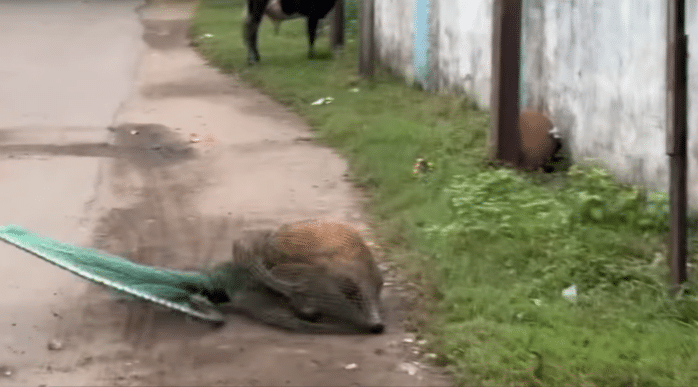
Within minutes, he was gently guided into the crate.
There were no sudden movements. No chaos.
Just a quiet, controlled process designed to keep everyone safe.
Understanding What Happens After Capture
When people see a metal cage and a control pole, they often assume cruelty.
But the responsibilities of municipal animal care teams are broader than many realize. Their work typically includes:
Health evaluations for stray animals
Vaccinations to prevent rabies
Treatment for infectious conditions
Sterilization to prevent overpopulation
Release back into the community once recovered
In cases where a dog appears ill or vulnerable, intervention is not punishment — it is protection.
For this particular dog, the goal was clear: medical evaluation and care.
When Intervention Becomes Compassion
It’s easy to misunderstand moments taken out of context.
A frightened animal.
A uniformed worker.
A metal cage.
But what we don’t see in a short clip is what happens next — the veterinary checks, the medication, the recovery process.
A sick dog left untreated on the street faces ongoing pain and possible decline. With timely care, that outcome can change.
What looks strict on the surface may, in reality, be structured compassion.
A Broader Reminder
This video quietly reminds us of something important.
Helping animals sometimes requires procedures that appear firm. Safety tools exist to prevent injury to both humans and animals. Controlled capture allows for examination, vaccination, and treatment that wandering alone could never provide.
In many communities, this system is designed not to harm — but to stabilize and protect.
And for this dog, the crate may not have represented confinement.
It may have represented relief.
Looking Beyond the First Impression
Not every rescue unfolds with soft blankets and open arms.
Some begin with uniforms, equipment, and protocols.
But intention matters.
Behind what looked like “catching a stray” was an effort to prevent suffering. To offer medical care. To reduce the risk of disease. To give a vulnerable animal a chance to heal.
Sometimes the most important help doesn’t look gentle in the first frame.
But if we follow the story further, we often find that compassion was there all along.