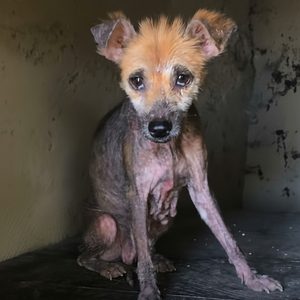
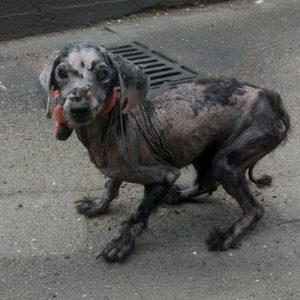
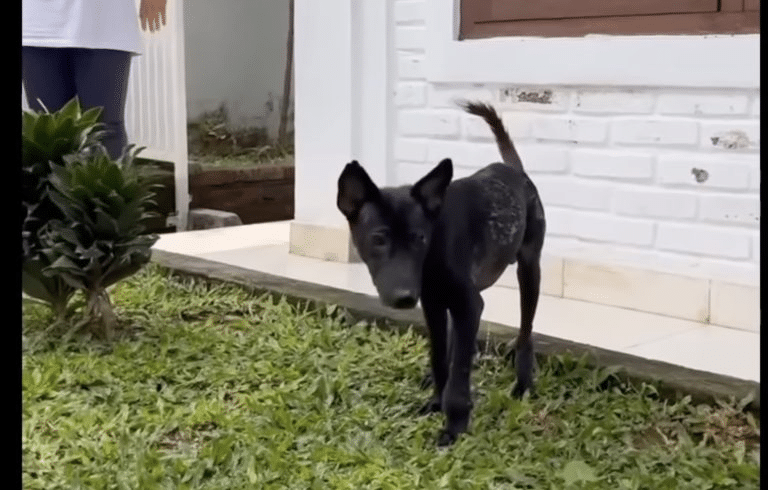
On a humid morning in Bali, an emaciated puppy stood motionless near the edge of a busy street. His head hung low, his body thin and fragile, as if the weight of the world had pressed him into surrender. He was only eight months old, yet he already carried a lifetime of hardship. No collar. No shelter. No one to call his own. This was Bibo’s reality — a young dog surviving day by day with nothing but instinct and fading hope.
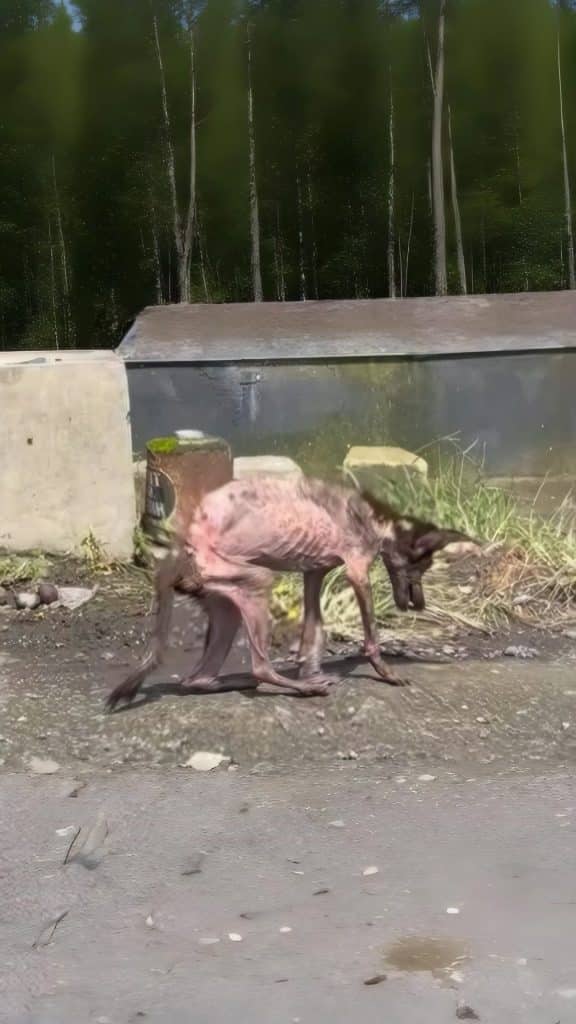
Bibo’s condition told a painful story without words. His skin was dry and inflamed, covered with thick patches where fur should have been. Hunger had hollowed out his small frame, making every rib visible beneath his damaged skin. He had grown weak from constant discomfort, and even standing required effort. To many passersby, he looked beyond saving — just another stray in a place where too many animals struggle to survive.
But even in his weakest moments, something inside Bibo refused to disappear.
When a local rescue team finally noticed him, they didn’t see a lost cause. They saw a life still fighting. Bibo didn’t run when they approached. He didn’t bark or resist. He simply looked up, eyes tired but searching, as if quietly asking whether this moment would be different. For the first time in weeks — maybe months — someone stopped.
The rescuers moved quickly, wrapping him gently and taking him straight to a veterinary clinic. Every minute mattered. His body temperature was dangerously low, and dehydration had drained what little strength he had left. The veterinary staff immediately began treatment, providing fluids, medication, and warmth. For Bibo, this was not just medical care — it was the first experience of safety he had ever known.
The first few days were uncertain. Some moments brought cautious optimism, others quiet worry. Bibo slept often, his small chest rising and falling slowly as his body worked to recover. He barely touched food at first, too exhausted to eat much. Yet each time a caregiver sat beside him, speaking softly or offering a gentle touch, his breathing seemed to ease. Slowly, he began to respond.
One volunteer made a decision that would change everything — she brought Bibo home.
Video He Lowered His Head in Silence, Alone on the Streets — Until One Act of Kindness Changed Everything
In her care, Bibo found something new: consistency. A warm bed lined with soft blankets became his safe place. Meals arrived at the same times each day. Voices around him were calm and kind. There was no rush, no pressure — only patience. She introduced him to other gentle dogs in the home, allowing him to observe from a distance. At first, he simply watched. Tails wagging. Playful steps. Relaxed trust.
Over time, Bibo began to copy what he saw.
A cautious tail movement. A small step forward. A soft lick on a familiar hand. Each gesture was a victory.
The weeks that followed marked the beginning of a remarkable transformation. As treatment continued, Bibo’s skin slowly healed. The irritation faded, and new fur began to grow — first in thin patches, then thicker and softer. His appetite returned, and with it came strength. Standing became easier. Walking no longer felt like a burden. His eyes, once clouded with exhaustion, began to shine with curiosity.
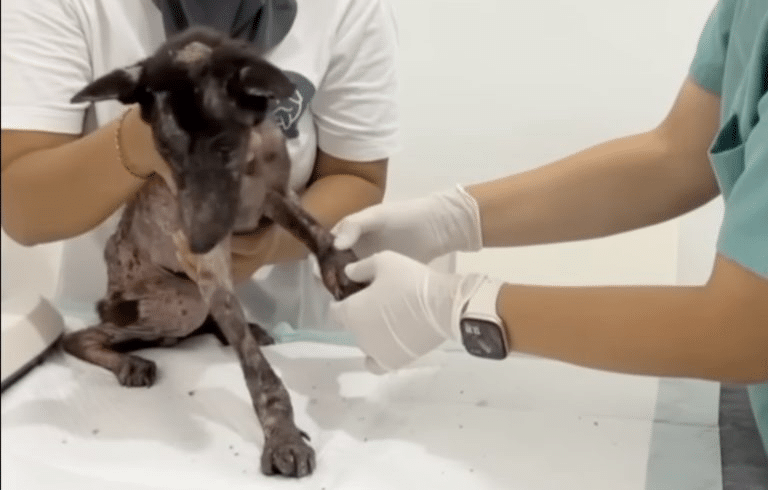
Emotionally, the change was just as profound. Bibo learned that hands could bring comfort instead of fear. That rest did not require constant alertness. That affection could be given freely and safely. One morning, he greeted his caregiver with an enthusiastic tail wag — a simple moment that carried immense meaning. Trust had taken root.
By the third month, Bibo was almost unrecognizable from the puppy found on the street. He played in the yard with confidence, rolling in the grass and chasing toys with joyful determination. He loved quiet moments too — curling up beside his caregiver at night, content and peaceful. Each day reinforced the same lesson: he was no longer alone.
Bibo’s journey is not just about recovery. It’s about what happens when compassion interrupts indifference. So many had walked past him without stopping, not out of cruelty, but because they believed someone else might help — or that it was already too late. One person choosing differently made all the difference.
Today, Bibo lives with security and love. His scars have faded, replaced by healthy fur and a playful spirit. More importantly, his life now reflects what every animal deserves — care, dignity, and a chance to thrive. He wakes each morning knowing food will come, warmth will remain, and kindness will not disappear.
His story reminds us that suffering often hides in plain sight, and that transformation begins with awareness. Behind tired eyes and fragile bodies are souls waiting to be seen. Bibo didn’t need miracles — he needed someone willing to pause, to care, and to believe he was worth saving.
And because someone did, a life was rewritten.