When rescuers first spotted Mishka, winter had nearly claimed him. He lay tucked into a shallow pocket of snow, his aging body barely moving, his breath faint in the icy air. His back legs were completely still, unable to support him or respond to his will. Alone and exposed, Mishka looked like a dog who had quietly accepted the end. But that moment—cold, silent, and heartbreaking—was not the final chapter of his life. It was the beginning of a remarkable journey built on resilience, compassion, and the belief that every life deserves hope.

Mishka was a senior dog, already slowed by age and wear, yet nothing could have prepared his rescuers for what they discovered next. Once he was carefully lifted from the snow and rushed to warmth and safety, it became clear that something far more serious was wrong. His back legs showed no strength at all. At the veterinary clinic, examinations and imaging revealed a painful truth: an old bullet injury lodged in his spine. The damage had been there for years, silently stealing his mobility and eventually leaving him partially paralyzed.
For many older animals, such a diagnosis can feel like a closed door. Age, injury, and limited mobility are often viewed as insurmountable obstacles. But Mishka’s rescuers chose to see beyond the x-ray results. They saw a gentle soul with kind eyes, a dog who still responded to soft voices and human touch. Instead of focusing on what he had lost, they focused on what remained—a calm spirit, a will to live, and a chance to experience comfort again.
In the early days of recovery, Mishka was understandably withdrawn. The shock of being unable to stand had taken an emotional toll. His gaze often seemed distant, as if he were unsure whether trying again was worth the effort. Yet day by day, surrounded by patient caregivers, something began to change. Consistent routines, reassuring hands, and quiet encouragement slowly rebuilt his trust. He was reminded, again and again, that his life still held value.
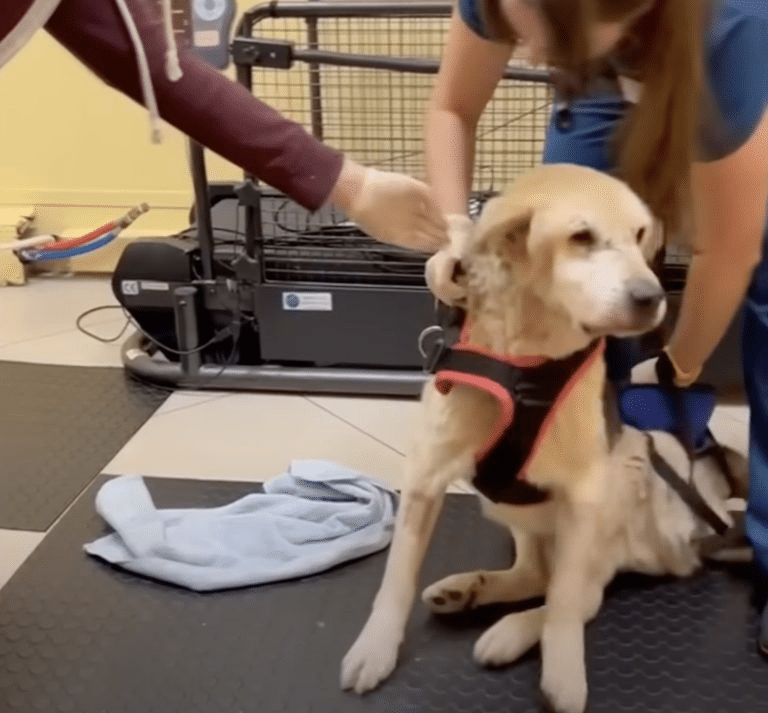
Physical therapy became a cornerstone of Mishka’s recovery. The sessions were gentle but purposeful. Trained hands guided his legs through careful movements to keep muscles active and joints flexible. Warm treatments eased stiffness, while massage improved circulation and comfort. Progress came in small increments—a slight twitch, a brief moment of balance—but every improvement was celebrated. Each sign of response was proof that Mishka’s body had not given up, even if it needed help finding a new way forward.
Video From Frozen Silence to a Life in Motion: Mishka’s Powerful Second Chance
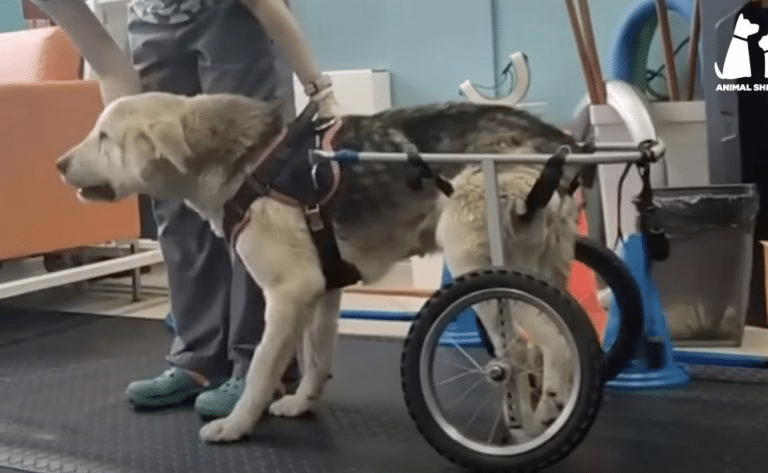
As therapy continued, the team introduced a solution that would change Mishka’s daily life: a custom wheelchair designed specifically for his size and condition. At first, the device seemed strange and confusing. The wheels, the harness, the unfamiliar sensation of being upright again—it was a lot for a dog who had known only stillness for so long. But patience made all the difference. With calm guidance and steady reassurance, Mishka began to understand that this new support was not a restriction, but a gift.
The first attempts were cautious. His movements were tentative, unsure. Yet with each session, his confidence grew. The wheelchair gave him something he hadn’t felt in a long time—freedom. He could move forward under his own power, feel the ground beneath him, and explore his surroundings again. The transformation was gradual but undeniable. Where there had once been resignation, there was now curiosity. Where there had been sadness, there was determination.
Soon, Mishka was rolling through open spaces with growing ease, greeting familiar faces with a wagging tail and a brighter expression. His posture changed. His eyes, once heavy with doubt, now reflected trust and quiet joy. The wheelchair became a symbol not of limitation, but of possibility. It allowed Mishka to reclaim independence on his own terms.
Mishka’s story is not just about physical recovery. It is about the power of second chances, especially for older dogs who are so often overlooked. Age did not diminish his ability to feel joy, form bonds, or inspire others. Instead, it highlighted the importance of compassion and commitment. With the right care and support, even lives touched by hardship can rediscover comfort and purpose.
Today, Mishka lives each day with dignity. He greets mornings with enthusiasm, moves confidently with his wheels, and enjoys the simple pleasures of companionship and security. His journey stands as a reminder that resilience does not always look like running or jumping. Sometimes, it looks like getting up again in a new way, refusing to let the past define the future.
For anyone who has ever wondered whether kindness truly makes a difference, Mishka provides the answer. His life was changed because someone stopped, cared, and chose not to look away. In doing so, they gave him more than mobility—they gave him hope. And in return, Mishka continues to share a powerful message: it is never too late for healing, and every life is worth fighting for.