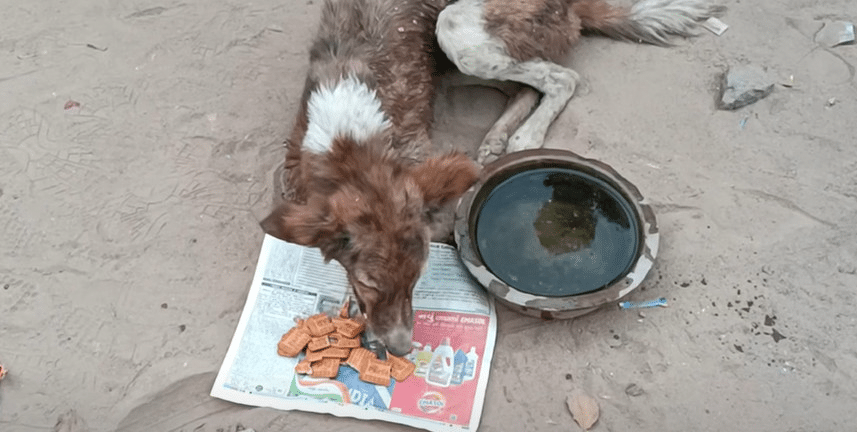
The call came in quietly but urgently, the kind of message that instantly stills a room. A dog had been found badly injured. He couldn’t stand. He couldn’t walk. A deep wound around his neck caused him constant pain, and no one knew how long he had been suffering alone. What stood out immediately, though, wasn’t just the injury—it was the calmness described by the caller. Even in pain, this dog was gentle.
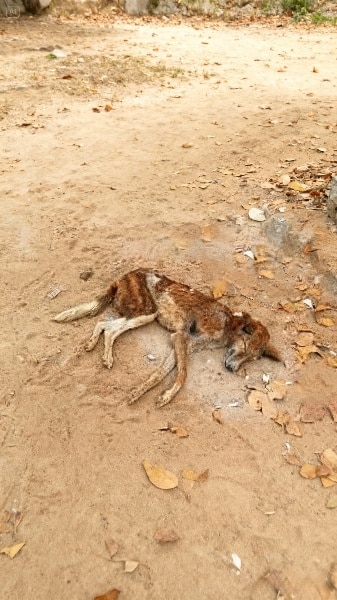
When we arrived, the scene was heartbreaking in the softest, most humbling way. He lay still, his body weak and unresponsive, yet his eyes followed every movement. There was no fear in them. No anger. Just a quiet awareness, as if he knew help had finally arrived and he was ready to accept it.
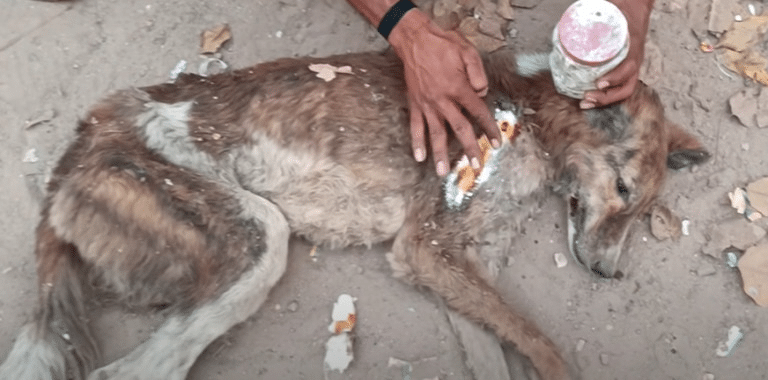
Despite everything he had endured, he didn’t growl. He didn’t bark. He didn’t flinch. As we carefully examined his injury and began to clean and dress the wound, he stayed completely still. His breathing remained slow and steady. It was as though he understood that the hands touching him were there to help, not harm.
That level of trust is something you never forget.
The wound on his neck was severe, but there was a small blessing hidden within the pain. There were no signs of infection complications, which meant we could move forward with treatment immediately. In rescue work, moments like that matter. They mean time. They mean hope.
He was transported to the clinic right away, wrapped in warmth and care. The veterinary team moved quickly but gently, administering antibiotics to protect him from infection, along with vitamins and pain relief to ease his discomfort. Every step was taken with patience, because this dog—this quiet, brave soul—deserved nothing less.
Throughout it all, he never resisted.
Video Paralyzed but Trusting, This Injured Dog Stayed Gentle Even Through the Pain
Even as the treatments continued, he remained calm, offering soft eye contact and a presence that felt almost comforting to everyone around him. It’s hard to explain how powerful that kind of gentleness can be. In a world where pain often creates fear or aggression, this dog chose trust instead.
Behind the injury was a spirit full of patience and resilience. You could feel it in the way he rested his head. In the way his tail gave the faintest movement when spoken to kindly. This was a dog who still believed in people, even after life had given him every reason not to.
His inability to walk added another layer of uncertainty. Whether caused by trauma, nerve damage, or prolonged neglect, paralysis is a frightening diagnosis—for humans and animals alike. But what mattered most in those early days wasn’t the final outcome. It was stability. Comfort. Safety.
And those were things we could give him.
Day by day, his care continued. Clean bedding. Regular meals. Gentle repositioning. Quiet voices. Each small act added up, reinforcing the message he seemed to already know: he was no longer alone. He was no longer forgotten.
Recovery is rarely fast in cases like this. Healing isn’t just physical—it’s emotional. And while his body still has a long road ahead, his heart is already showing signs of strength. He responds to kindness with trust. He responds to care with calm acceptance. Those qualities can’t be taught. They come from somewhere deep within.
What makes stories like his so powerful isn’t just survival. It’s character. This dog didn’t harden. He didn’t shut down. He stayed open, even when the world hadn’t been kind to him. That kind of resilience is rare, and it reminds us why compassion matters so much.
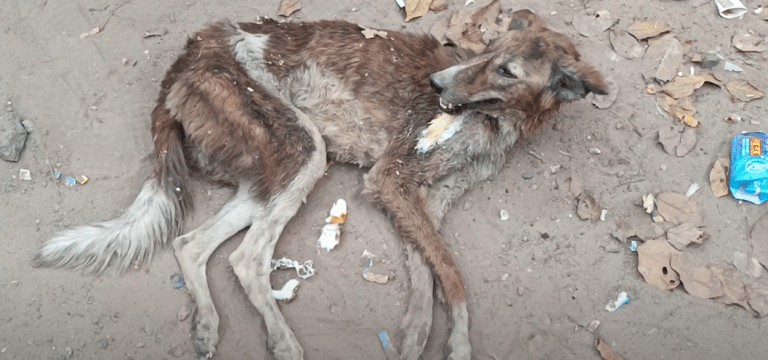
He may not be able to walk yet, but his journey is far from over. With continued medical care, physical support, and patient rehabilitation, there is real potential for improvement. And even if his mobility remains limited, his quality of life doesn’t have to be.
What he needs most now is consistency. Stability. Love. The same things every living being needs to heal fully.
His story is a quiet reminder that gentleness can survive even the hardest circumstances. That trust can exist without guarantees. And that sometimes, the strongest souls are the ones who suffer silently—and still choose kindness.
In his calm eyes, you don’t see defeat. You see hope.