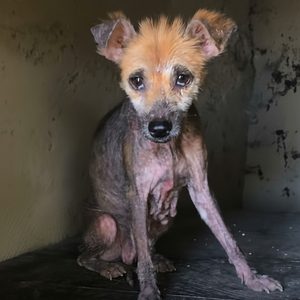
Life on the streets rarely offers mercy. For stray dogs, each sunrise brings the same quiet struggle—finding food, avoiding danger, and searching for a place that feels even remotely safe. Over time, survival instincts take over. Trust fades. Hope becomes a distant idea rather than a feeling. For many, human kindness is something learned only through absence.

That was the reality Habanero lived with for years.
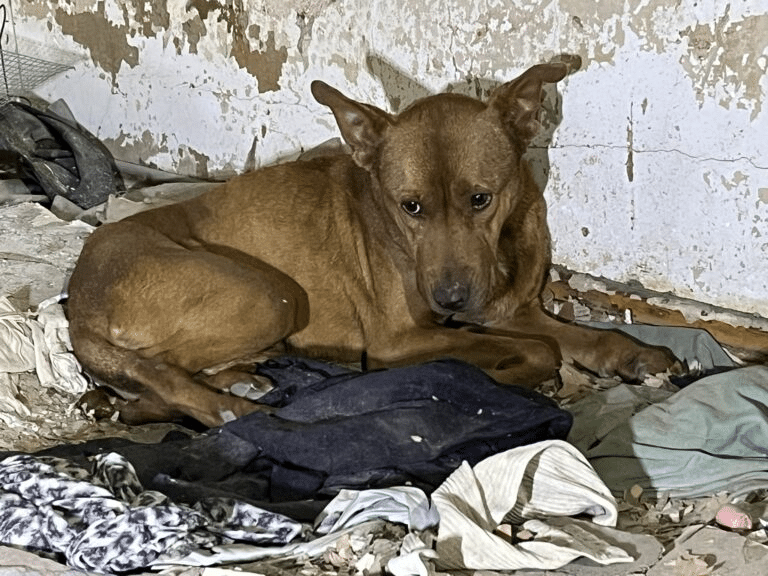
She survived by staying invisible, moving carefully through forgotten corners of the city where abandoned buildings and overgrown lots offered brief shelter from the elements. Her alert posture and constant retreat were not signs of aggression, but lessons learned the hard way. Every sudden sound sent her heart racing. Every unfamiliar figure felt like a threat. Life had taught her one rule above all others: stay cautious, or don’t survive.
From the outside, Habanero looked like a dog who had given up on connection. But beneath that guarded exterior was a quiet resilience, waiting for the right moment to surface.
That moment came when a local rescue team received reports of a fearful dog hiding in and around a long-vacant apartment building. The structure was unsafe and crumbling, but it offered just enough cover for a dog determined to stay out of sight. Volunteers searched the building carefully, calling softly and checking each darkened room. Still, Habanero remained hidden, watching silently from places where fear felt safer than hope.
As colder weather approached, concern grew. Winter would make survival far more difficult, especially for a dog already living on the edge. Instead of forcing a rushed rescue, the team chose patience. They returned again, moving slowly, listening closely, and giving Habanero space to observe without feeling trapped.
One afternoon, she was spotted resting outside on a patch of grass. The moment she realized she had been seen, instinct took over. She bolted back inside the building, disappearing into shadow. It was clear that earning her trust would require more than persistence—it would require understanding.
Video From the Streets to Safety: How Habanero Learned to Trust AgainPublished
The following day, the rescuers returned with a new plan. Instead of chasing or cornering her, they let the environment guide them. Soft voices replaced hurried steps. Food was offered from a distance. No sudden movements. No pressure.
Inside one of the damaged apartments, they found her curled tightly in place, trembling from head to tail. She wasn’t running anymore. Fear had frozen her completely. It was a moment that demanded empathy, not urgency.
The team spoke gently, allowing silence to do its work. Food was placed nearby, close enough to be inviting but far enough to feel safe. After long minutes that felt like hours, Habanero made her first choice toward trust. She moved forward.
That small step changed everything.
Rather than attaching a leash that might overwhelm her, the team used a crate to offer security instead of restraint. Inside its enclosed space, Habanero seemed to relax slightly, as though protection finally outweighed fear. She was carried carefully to the vehicle and transported to safety.
At the shelter, a full medical examination revealed something unexpected: her body was healthy. The true wounds were emotional. She remained wary of unfamiliar faces and sudden gestures, but she was no longer alone—and that mattered.
Healing did not happen overnight.
Days turned into weeks, and every interaction followed the same rule: let Habanero set the pace. Staff members spoke softly, moved slowly, and celebrated even the smallest progress. Over time, her constant trembling began to ease. Her posture softened. She learned that hands could offer comfort instead of harm.
Daily walks became part of her routine. At first, she moved cautiously, scanning every sound and shadow. But step by step, curiosity began to replace fear. She started lifting her head, sniffing the air, and pausing not out of panic—but interest.
Trust, once unfamiliar, became possible.
As her confidence grew, so did her affection. Gentle eye contact replaced avoidance. She leaned into quiet moments. Occasionally, she offered small gestures of connection—a relaxed tail, a calm presence, a soft nuzzle. Each sign was earned through patience, not expectation.
When the time came, Habanero was placed into a foster home—a turning point that marked her readiness for a new chapter. The transition was handled carefully, with routines designed to help her feel secure. In a home environment, something remarkable happened.
She blossomed.
The consistency of daily life, the warmth of a safe place to sleep, and the steady reassurance of kind humans allowed Habanero to truly relax. Fear no longer shaped her decisions. Playfulness emerged. Confidence grew. She began to explore her surroundings with curiosity rather than caution.

Today, Habanero’s life looks nothing like the one she once knew. The lonely days of hiding and surviving have been replaced with comfort, affection, and belonging. She is no longer defined by her past, but by the future she now gets to live.
Her journey is a reminder that healing doesn’t require force—it requires time. With compassion, patience, and understanding, even the most frightened hearts can learn to trust again.
Habanero didn’t just find safety.
She found home.