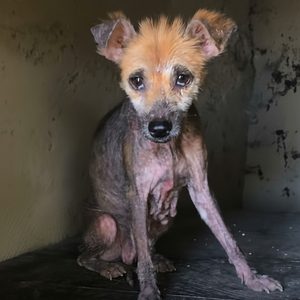
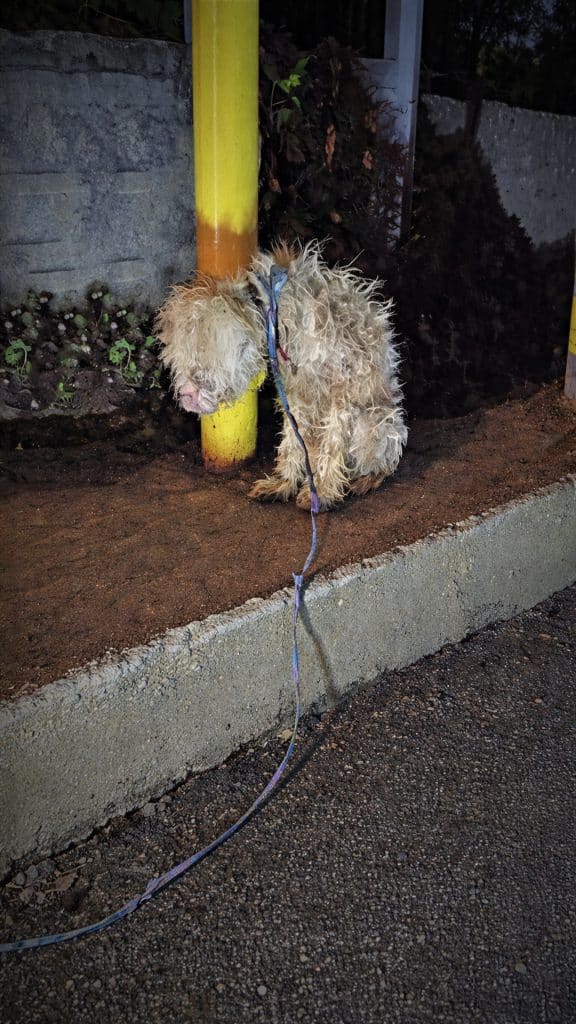
In a quiet corner of a small American town, there was a dog that many people noticed—but few truly saw. She was tied to the same spot day after day, standing patiently near the roadside, watching every passing car as if one of them might finally stop for her. At first, some assumed she belonged to someone nearby. Others believed she was being kept there temporarily. But as time passed, the truth became harder to ignore. This dog had been left behind.
Rescuers would later name her Candy.
Candy’s world had narrowed to a few feet of ground and a fixed point where she remained loyal long after loyalty no longer made sense. Hours turned into days. Days quietly stretched into weeks. She stayed, waiting for a familiar face that never returned. Her posture told a story of hope mixed with confusion—ears alert, eyes searching, body still. Even in abandonment, she believed someone was coming back for her.
Local authorities were notified, but their response was limited. Notices were issued. Time passed. Nothing changed for Candy. She remained tied, exposed to the elements, dependent on occasional scraps and the kindness of strangers who came and went. No one officially intervened, and Candy continued to wait.
Eventually, one resident could no longer walk past without stopping. Moved by the sight of a dog who had been waiting far too long, they approached carefully and untied her. Freedom, however, was not something Candy immediately understood. She did not run. She did not wander off. Instead, she stayed close, glancing back at the empty road as if afraid to leave the only place she knew.
But no one came.
As the weeks went on, Candy’s physical condition declined. Without regular meals or medical care, her body grew thinner, her movements slower. The cord that once loosely held her in place had become a serious problem. Over time, it pressed into her neck, cutting deeper with every passing day. What started as restraint became injury, causing constant discomfort and putting her health at serious risk.
Video Abandoned but Not Forgotten: Candy’s Journey from Waiting Alone to Finding HopeLast
Candy was also afraid. Whenever someone approached too closely, she would back away, unsure whether the outstretched hand meant help or harm. Those who wanted to assist her understood that rushing would only make things worse. They knew patience was the only way forward.
Food was placed nearby, carefully and quietly. Candy watched from a distance at first, cautious and unsure. Hunger eventually overcame fear. When she finally stepped forward to eat, it marked a turning point. That simple act—accepting food—was the beginning of trust.
From there, progress came slowly but steadily. Rescuers returned regularly, keeping their movements calm and their voices soft. Over time, Candy allowed them closer. When the moment was right, they gently removed the cord from her neck, taking great care not to worsen her injury. She did not resist. She seemed to understand that these people were different.
Candy was then taken to a veterinary clinic for a full evaluation. Despite everything she had endured, she remained calm throughout the process. The veterinary team quickly realized how serious her condition was. The wound around her neck was deep and severe, showing just how long she had been tied without relief. Treating it required careful attention and time.
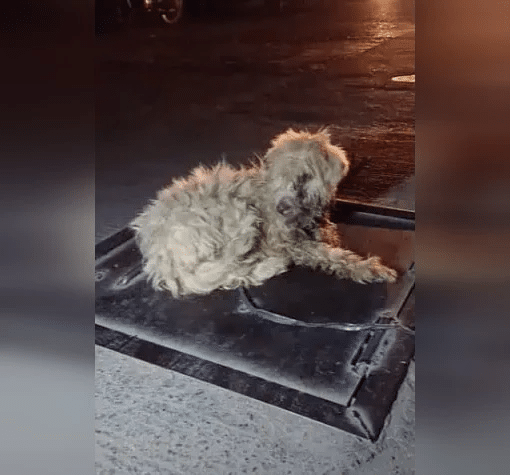
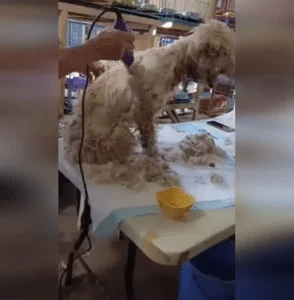
Further examination revealed additional challenges. One ear showed signs of damage, likely from encounters while she was left to fend for herself. Her coat was heavily matted, concealing the true extent of her frailty. Once her fur was trimmed away, the reality was clear. Candy was underweight, her body worn down by prolonged neglect. Still, there was a quiet gentleness about her that stood out to everyone who met her.
Treatment began immediately. Her wounds were cleaned and dressed, and for the first time in a long while, Candy could rest without pain pulling at her neck. Proper nutrition helped her regain strength day by day. Fresh water, warmth, and a safe place to sleep allowed her body to begin healing.
Just as important was her emotional recovery.
The fear that once defined her behavior slowly faded. She became more curious, more observant. She started responding to voices, leaning into gentle touch, and allowing herself moments of comfort. The dog who once flinched at every movement was learning that not all humans disappear—and not all hands cause harm.
The name Candy suited her perfectly. Beneath the dirt, injuries, and fear was a sweet-natured dog with quiet resilience. As her health improved, her personality began to shine. She showed patience, calmness, and an unmistakable desire to connect.
Today, Candy’s life looks very different.
She no longer waits in one place for someone who will never return. Instead, she looks ahead. Her injuries continue to heal, and her trust grows stronger each day. She has learned that safety and kindness can be consistent, not temporary.
Candy is now ready for adoption.
She is ready for a home where meals are regular, care is dependable, and love is unconditional. A home where she will never be tied down and forgotten, but welcomed as a companion and family member.
Candy’s journey is a reminder of what patience and compassion can accomplish. She survived abandonment not because life was easy, but because hope endured until someone chose to act. Her story represents countless animals who wait silently, depending on human kindness to change their future.
Candy is no longer just a symbol of neglect. She is proof that recovery is possible, that trust can be rebuilt, and that a second chance—when finally given—can change everything.