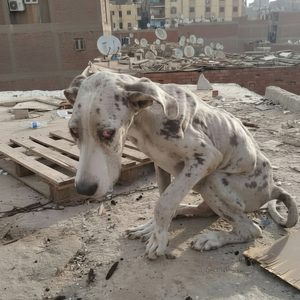
In the middle of a crowded train station in Lima, Peru, where announcements echoed overhead and commuters hurried past with eyes fixed on their destinations, a small dog sat completely still. He was tied to a piece of wheeled equipment, left behind as if he were invisible. People passed him by all day—some distracted, others indifferent—never realizing that this quiet figure was slowly fading right in front of them.
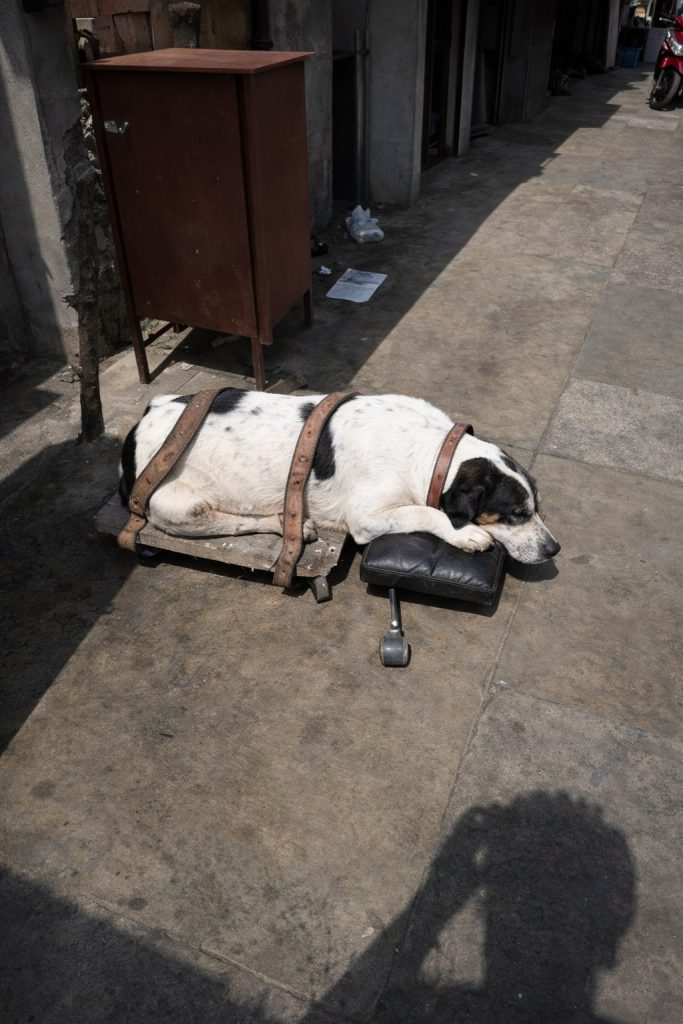
The dog’s body was rigid from exhaustion. His head drooped forward, too heavy for his weakened neck to hold upright. Thick straps cut into his small frame, binding him so tightly that even shifting his weight was impossible. He didn’t bark. He didn’t struggle. He simply waited.
Later, rescuers would name him Cabezón, a nickname inspired by the way his head bobbed forward from sheer fatigue and injury. At the time, though, he was just another overlooked soul in a city where stray animals are a daily sight—and where injured dogs often endure the hardest realities.
Hours passed before anyone truly noticed him. It wasn’t adults rushing for trains who stopped, but a few children whose curiosity and kindness cut through the noise of the station. They saw the dog’s labored breathing, the fear in his eyes, and the way his body trembled when he tried to move. The children brought him food and water, staying close as if their presence alone could offer comfort.
Eventually, with patience and care, they managed to free him from the machine that had held him captive. But by the time the straps were loosened, it was painfully clear that the damage went far beyond what could be seen.
Video Tied, Injured, and Forgotten: This Dog Was Left at a Train Station Until One Woman Stepped In
Word of the dog’s condition reached Sara Moran, the founder of a small but dedicated rescue called Milagros Perrunos—a sanctuary known for helping dogs with severe disabilities. Sara had seen countless cases of neglect, but something about this one stood out. Based on the injuries, she suspected that Cabezón had been abandoned after hurting his hind legs, discarded when caring for him became inconvenient.
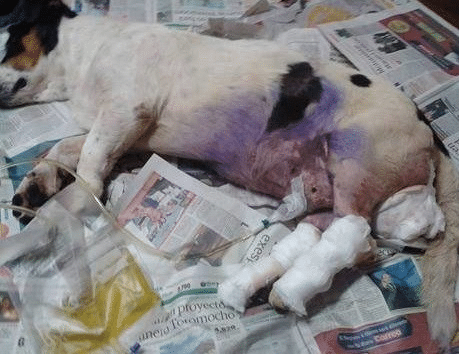
When Cabezón arrived at the shelter, the reality of his condition unfolded quickly. A full veterinary evaluation revealed devastating injuries: serious spinal trauma, failing kidneys, open sores that had gone untreated, and internal damage caused by being restrained for an extended period. He had been forced to remain in one position, unable to move, unable to relieve himself properly, and unable to escape the pain.
The prognosis was grim. Even if he survived the immediate crisis, he would never walk again. For many dogs in similar circumstances, this would have marked the end of their journey. In places where resources are limited, animals with paralysis or chronic illness are often written off as hopeless cases.
But Cabezón had arrived at the one place where “hopeless” didn’t exist.
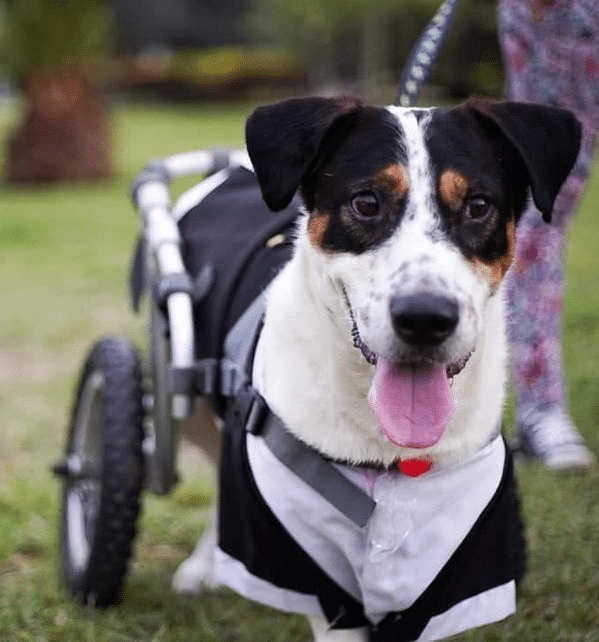
Milagros Perrunos was built on the belief that every dog, regardless of physical condition, deserves dignity and care. Sara and her team specialize in helping animals that others have given up on—dogs who need wheelchairs, lifelong medical support, or simply a safe place to rest without pain.
Cabezón was given a soft bed, clean bandages, and something he hadn’t known in a long time: gentle human touch. Volunteers monitored him day and night, adjusting his position, keeping him comfortable, and speaking to him in calm, reassuring voices. Even in his weakened state, he responded to kindness, lifting his eyes when someone approached and relaxing when he felt a hand rest on his head.
Recovery was slow and uncertain. Some days were better than others. There were moments when his body seemed too tired to keep fighting, and moments when a small wag of his tail hinted at a will that refused to disappear. The medical team focused on managing pain, supporting his kidneys, and preventing further infection.
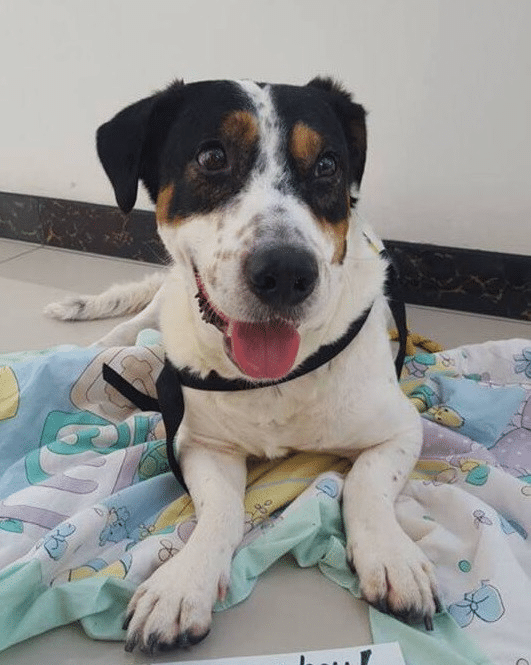
Through it all, Cabezón remained quiet, but his presence filled the room. He wasn’t defined by what he had lost, but by the strength it took to endure what he had survived.
Stray animals in Peru often face overwhelming odds, especially those with visible disabilities. Many never make it to safety. Cabezón’s story could have ended at that train station, unnoticed and forgotten. Instead, it became a powerful reminder of how one act of compassion can change everything.
Today, his future is still uncertain. He may never regain mobility, and his medical needs will always be complex. But what he has now is something far more important than a guarantee of tomorrow. He has safety. He has people who care enough to try. He has a place where his life matters.
In a world that once walked past him without a second glance, Cabezón is no longer invisible. He is seen, valued, and loved—not for what he can do, but for who he is.