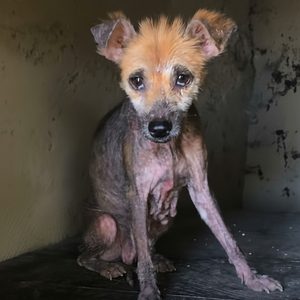
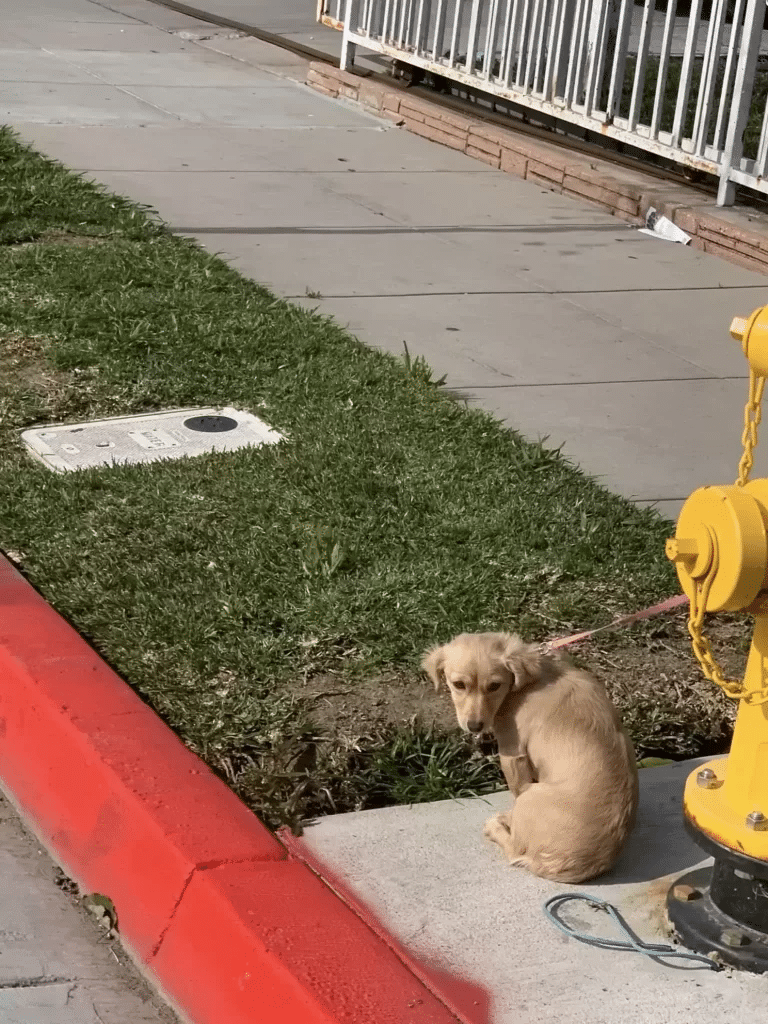
She sat motionless beside the fire hydrant, her small body pressed tightly against the cold concrete, as if trying to disappear. The leash around her neck was pulled so snugly that she could barely move, wrapping around the metal post again and again until escape was impossible. Her head hung low, eyes dull and distant. She didn’t bark. She didn’t cry. She didn’t even lift her face when people passed by. It was as if the world had already taught her that asking for help was pointless.
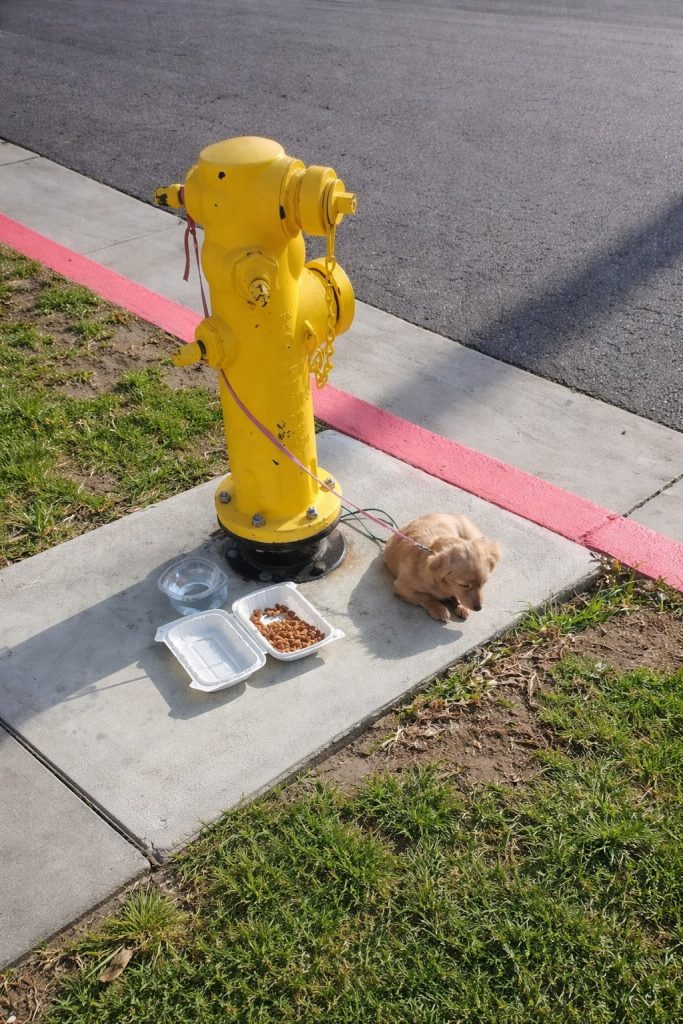
News of the abandoned puppy spread quickly through the neighborhood, eventually reaching a woman who had seen far too many heartbreaking cases like this before. As the founder of a dog rescue organization in Southern California, she knew the signs all too well. Dogs tied to poles, fences, or hydrants were often left behind by families who chose convenience over compassion. This puppy’s story followed that painful pattern. Whoever left her behind had placed a small plastic container of food and water nearby, perhaps to ease their guilt. But the bowl remained untouched. Fear had closed her appetite completely.
Witnesses said the puppy had been there for hours, curled tightly on the sidewalk, trembling whenever a loud sound passed by. Cars rushed past. Strangers walked around her. Life continued, but she stayed frozen in place, overwhelmed by confusion and abandonment. She was only eight months old, still a baby, and yet she had already learned what it felt like to be left behind.
The rescuer wanted desperately to reach the scene herself, but distance and time worked against her. Knowing every minute mattered, she reached out to someone nearby, a woman who lived just a few blocks away. Without hesitation, that woman dropped everything and hurried to the hydrant. What she found was worse than expected. The puppy’s leash had twisted tightly around the hydrant, binding her in a spiral of panic. The dog’s body was tense, muscles stiff with fear and exhaustion.
Video The Puppy Who Couldn’t Lift Her Head: From a Cold Fire Hydrant to a Second Chance at Life
When the woman knelt down, speaking gently, the puppy reacted with a low growl. It wasn’t aggression—it was terror. She had no idea who this stranger was or what might happen next. From the other end of the phone, the rescuer calmly guided the woman, encouraging patience and slow movements. No rushing. No grabbing. Just quiet reassurance.
Minutes passed before the puppy allowed the leash to be untangled. When it was finally freed, the woman carefully wrapped her in a soft blanket and lifted her into her arms. For the first time since being abandoned, the puppy felt warmth instead of cold pavement. She would later be named Cici.
But the relief was short-lived. On the drive to the veterinary clinic, Cici’s fragile body began to shut down. She shook uncontrollably and became sick, her small system overwhelmed by stress, hunger, and dehydration. Even though food and water had been left behind, fear had kept her from touching either. Her body had been running on empty, and now it was paying the price.
At the veterinary hospital, the staff moved quickly. Cici was given fluids, wrapped in warm blankets, and placed under close observation. Gentle hands worked carefully around her, offering not just medical care, but kindness. Slowly, the trembling eased. Her breathing steadied. The crisis passed.
Within hours, the change was remarkable. The puppy who couldn’t lift her head beside a fire hydrant was now alert, watching the room with cautious curiosity. Her tail began to wag, just slightly at first, then more confidently. Each passing moment seemed to remind her that she was safe.
During her stay, Cici formed a special bond with one person at the clinic. Every time that familiar face appeared, her entire body lit up with excitement. She wagged her tail, wiggled with joy, and leaned in close, soaking up every bit of affection. That connection became an anchor for her healing. In those quiet moments, curled in loving arms, Cici rested and regained her strength.
The clinic became her refuge, a place where fear slowly loosened its grip. Day by day, she transformed from a withdrawn, trembling puppy into a bright-eyed, affectionate dog. The sadness that once weighed her down began to lift, replaced by trust and gentle curiosity.

Eventually, the time came for Cici to leave the hospital. She was strong enough now to move into foster care, a temporary home where she could continue to heal in a calm, loving environment. Saying goodbye was emotional for everyone who had watched her journey so closely. She had become a symbol of resilience within those walls.
Her foster family welcomed her with open hearts, offering her routine, patience, and unconditional love. It wasn’t her final destination, but it was a critical step forward. For the first time in her young life, Cici had stability. She had a soft place to sleep, regular meals, and people who spoke to her with kindness instead of indifference.
Looking at her now, it’s hard to imagine that she was once the puppy too sad to lift her head. Her eyes shine brighter. Her tail wags freely. Her spirit, once buried beneath fear and abandonment, is alive and visible again.
Cici’s journey is a powerful reminder of how deeply animals feel loss—and how profoundly they respond to compassion. She didn’t need grand gestures. She needed someone to stop. Someone to notice. Someone to care.
From a lonely hydrant to a warm foster home, her story proves that even the smallest act of kindness can change a life forever.