Mishka’s story is one of quiet strength, deep resilience, and the life-changing power of compassion. Long before he found safety and warmth, Mishka was a senior dog surviving on little more than instinct and fading hope. His world had grown painfully small, defined by cold nights, physical suffering, and the loneliness that comes when trust has been broken. Found during the heart of winter, Mishka lay motionless in the snow, unable to stand, unable to run, and seemingly unable to imagine a future beyond that frozen moment.
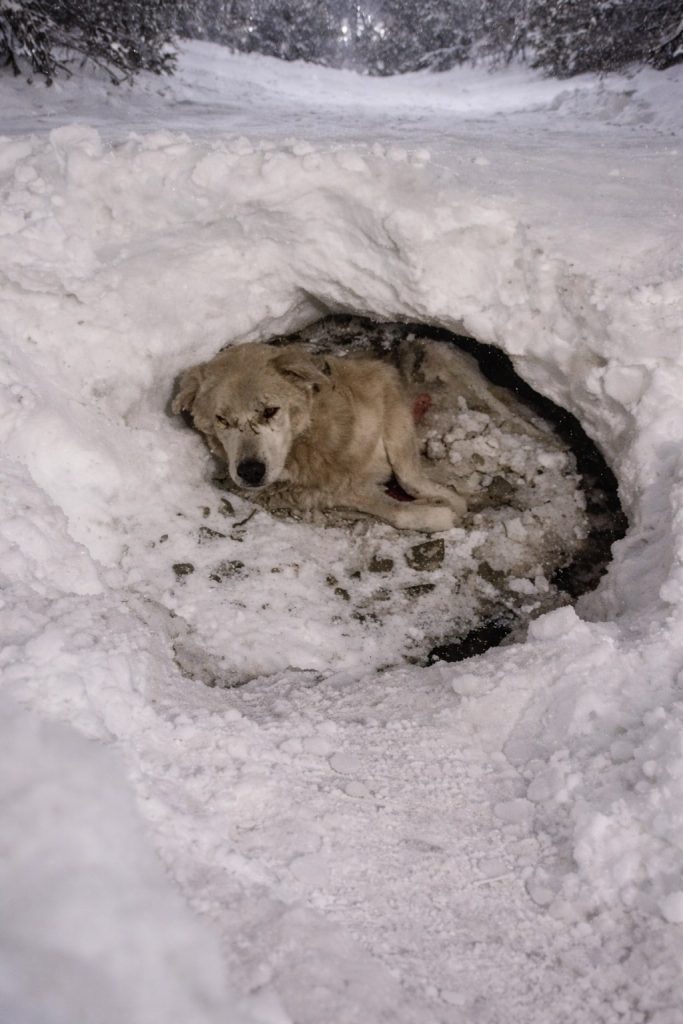
When help finally arrived, it was clear that Mishka had endured far more than anyone should. His hind legs were paralyzed, his body thin and exhausted, and his eyes carried a quiet sadness that spoke of long months spent alone. Once, he had known what it meant to belong to a family. At some point, that life disappeared, leaving him to face pain and fear on his own. Yet even in that fragile state, Mishka’s story was not over. In fact, it was only beginning.
The first moments after his rescue revealed just how much he had suffered. Mishka didn’t cry out or resist when he was gently lifted from the snow. He was too tired for that. His fur was tangled and dull, his body weakened by hunger and dehydration. He watched his rescuers with a cautious, uncertain gaze, as if unsure whether kindness was real or something he had imagined long ago. For months, he had survived in silence, enduring pain without comfort or care.
At the veterinary clinic, the full truth of Mishka’s condition came to light. His paralysis was not simply the result of age or cold weather. An old injury, caused by a bullet lodged in his spine, had taken away his ability to walk. Left untreated for far too long, the injury had slowly drained his strength and independence. Along with that trauma, Mishka was suffering from malnutrition and dehydration, his body pushed to its limits by neglect and isolation.
Video Mishka’s Journey: From Pain and Despair to Hope and Healing
Recovery did not happen overnight. Mishka required careful, consistent medical care to stabilize his condition. Veterinarians focused on rehydrating him, addressing his nutritional needs, and easing the discomfort that had become part of his daily existence. Every step was taken with patience, understanding that Mishka’s healing would be as much emotional as it was physical. Despite everything he had endured, he remained gentle and calm, accepting care with quiet gratitude.
As his strength slowly returned, Mishka began the next stage of his journey: physical therapy. The process was challenging, marked by small movements and incremental progress. Gentle exercises helped stimulate his muscles, while warm-water therapy supported his body and eased the strain on his joints. Each tiny improvement mattered. A slight twitch, a stronger response, or a moment of balance became reasons for celebration. Mishka wasn’t giving up, and neither were the people who believed in him.
One of the most transformative moments came when Mishka was introduced to a custom wheelchair. At first, the unfamiliar equipment made him hesitant. The sensation of standing upright again, supported by wheels and straps, was something he had not experienced in a long time. With reassurance and encouragement, Mishka began to understand that this device wasn’t a limitation—it was freedom. The first time he moved across the grass on his own, his tail wagged with genuine excitement. It was a powerful reminder that mobility is not just about walking, but about dignity and independence.
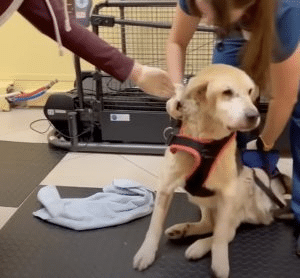
With each passing week, Mishka’s confidence grew. He explored his surroundings, interacted more with the people around him, and rediscovered simple joys that had once seemed out of reach. His personality emerged in gentle ways—soft curiosity, quiet affection, and a growing sense of trust. The dog who had once been found helpless in the snow was now actively participating in life again.
Mishka’s transformation caught the attention of a family who saw beyond his physical challenges. They didn’t see a broken dog or focus on what he couldn’t do. Instead, they saw resilience, kindness, and a spirit that refused to be defeated. When they welcomed Mishka into their home, they offered him what he had been missing for so long: safety, consistency, and unconditional love.
In his new environment, Mishka thrived. Surrounded by warmth and care, he settled into a routine filled with comfort. His days included gentle play, peaceful naps in the sunlight, and quiet moments of connection with the people who loved him. His wheelchair became just another part of his life, a symbol of how far he had come rather than what he had lost.
Today, Mishka’s life looks entirely different from the one he once knew. He moves through his world with confidence, enjoys time outdoors, and greets each day with a calm happiness that reflects how secure he feels. The pain and despair of his past no longer define him. Instead, his story stands as a reminder that healing is possible, even after long periods of suffering.
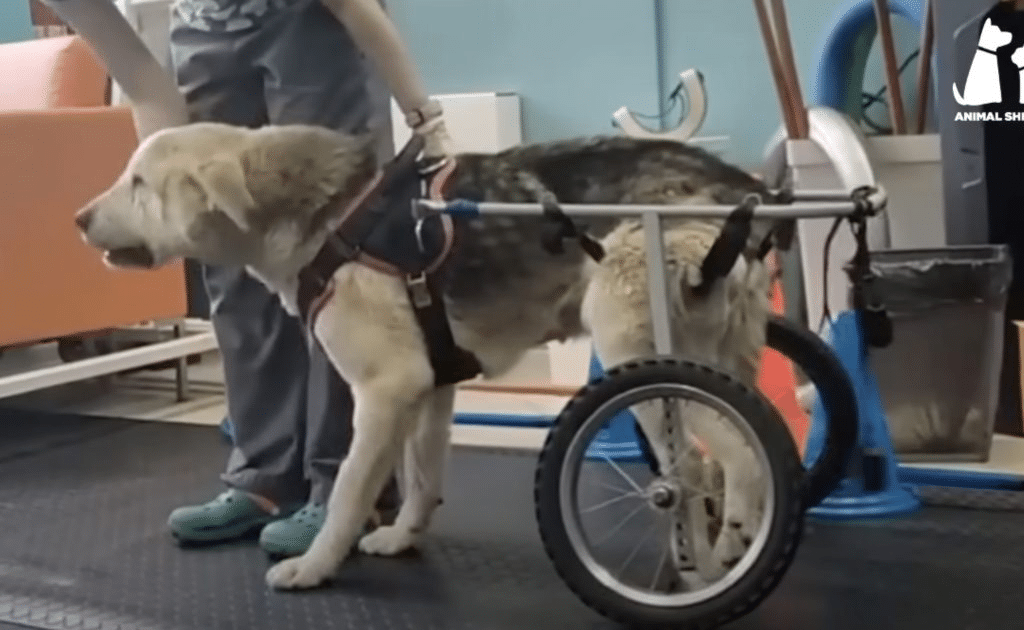
Mishka’s journey is about more than rescue. It is a powerful example of how compassion, patience, and commitment can restore hope. His resilience shows that no living being is beyond saving, and that even the smallest acts of kindness can lead to profound change. From a silent figure in the snow to a cherished member of a loving family, Mishka’s transformation proves that second chances can rewrite even the most painful beginnings.
His tail now wags with confidence, his eyes shine with trust, and his spirit reflects the joy of a life reclaimed. Mishka’s story reminds us all that when love meets perseverance, healing follows—and hope always finds a way forward.