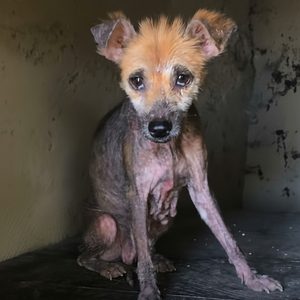
Aurora was discovered on the side of a quiet dirt road, lying so still she almost blended into the dust beneath her. Her body rested flat against the ground, as if movement was no longer an option she expected from life. Only her eyes told a story. They followed every step, every sound, filled with a question that felt heavier than words. She showed no visible wounds, no blood, no signs of recent trauma. Yet she couldn’t rise. She couldn’t shift. She couldn’t do anything except watch the world move without her.
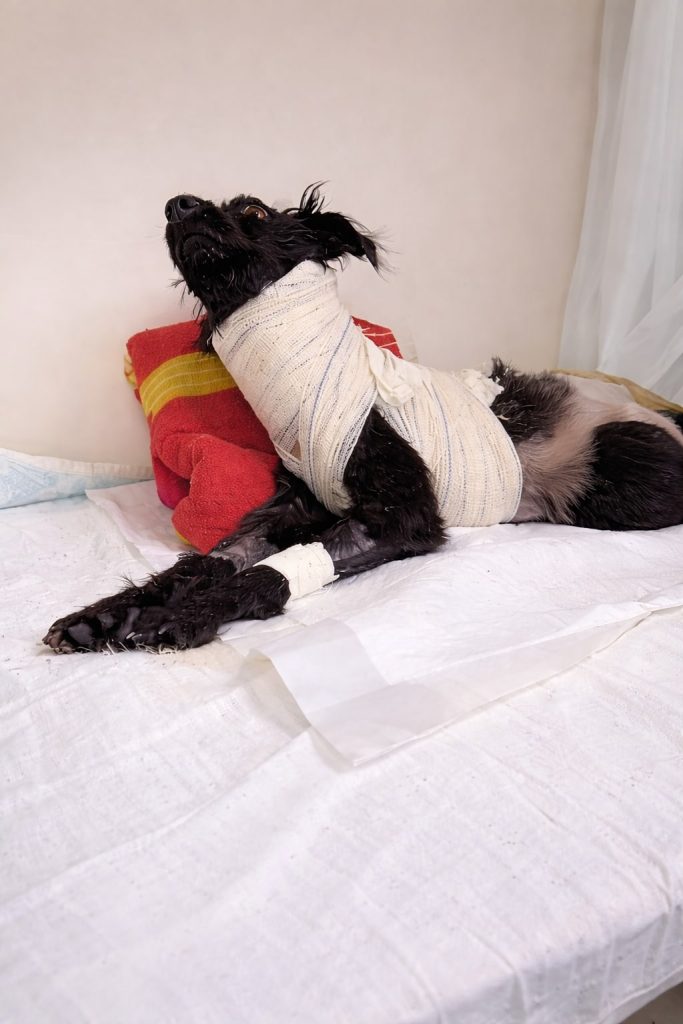
At first glance, nothing explained why she was there. Aurora appeared clean and well-kept. She wasn’t thin. Her coat held a quiet softness, untouched by neglect. But when rescuers gently tried to help her stand, the truth revealed itself. Her legs did not respond at all. All four remained limp, uncooperative, disconnected. Only her head moved. Her eyes blinked. Her tongue shifted slightly, as if she were reminding herself she was still alive.
Veterinary teams immediately stepped in, determined to find answers. X-rays were taken from every angle. Her spine showed no fractures. There were no breaks, no obvious nerve damage, nothing that should have left her completely immobile. Test after test followed, each one raising more questions than answers. When her legs were touched, there was a faint reaction. Sensation existed, but control did not. Her brain knew what to do. Her body simply wouldn’t listen.
As days passed, concern deepened. Without a clear diagnosis, the uncertainty became heavy. Some professionals began to speak carefully, weighing options through the lens of long-term quality of life. With no movement and no explanation, they wondered aloud if continuing treatment was fair to her. Difficult words surfaced. Conversations turned quiet. To some, stopping felt like the most practical choice.
Video She Looked at Me With Eyes That Asked, “Why Bother Saving Me?”—Until I Promised I Wouldn’t Walk Away
But those who cared for Aurora couldn’t accept that conclusion. They saw things charts couldn’t capture. Aurora was alert. Her eyes followed people with focus. She reacted to voices, leaned into gentle touch, and responded to comfort. There was awareness in her gaze, a quiet determination that didn’t belong to a soul ready to fade. Walking away would have been easier, but compassion rarely follows the simplest route.
Their refusal to give up led them to a neurologist experienced with complex, unexplained cases. He reviewed her history carefully, starting from the beginning instead of the end. His examination was slow and deliberate. After thoughtful consideration, he offered a different possibility. The issue might not be in Aurora’s spine at all. It could be in her brain—pressure or interference preventing signals from reaching her body.
That single theory changed everything. It opened a door to an option no one had previously considered: brain surgery. The risks were real. There were no promises of recovery, no guarantees of movement. The procedure could help, change nothing, or cause further complications. But it offered something Aurora hadn’t had since the day she was found—a genuine chance. Not a cure, but relief. Not certainty, but hope.
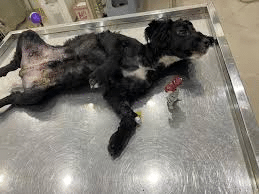
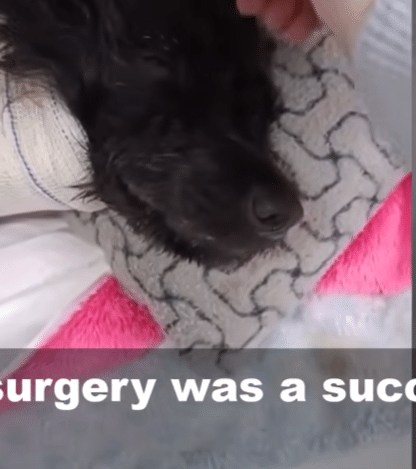
The surgery was performed with care and precision. When Aurora woke up, the difference was subtle but undeniable. She wasn’t restless. She wasn’t quietly whimpering like before. Her body appeared calmer, more settled. The pain that had silently weighed on her seemed to ease. Her legs still did not move, but the constant discomfort that once filled her days was gone. It wasn’t a miracle. It was something better—a turning point.
Recovery became a slow, intentional process. Gentle physical therapy sessions were introduced to keep her muscles engaged and prevent stiffness. Her caregivers spoke to her throughout the day, offering reassurance, encouragement, and steady presence. Progress wasn’t measured in steps or dramatic changes. It was found in small details: the strength in her neck, the way her eyes lingered longer on familiar faces, her growing awareness of the world around her.
Then, one day, something extraordinary happened. One of her hind legs twitched. It was barely noticeable, easy to overlook, but it meant everything. That tiny movement was proof her nervous system was still trying to communicate. Her body hadn’t forgotten itself. From that moment on, every small sign became a victory worth celebrating.
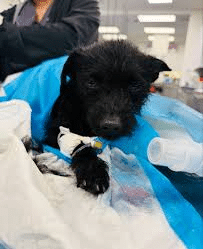
Aurora’s journey didn’t transform overnight, but her spirit did. She became more alert, more connected, more engaged with life. She responded to touch with trust instead of fear. Her tail began to move faintly. Her eyes softened. She was no longer defined by her limitations. She was defined by her resilience and her quiet will to keep going.
Most importantly, Aurora was no longer alone. She was surrounded by people who believed her life mattered, regardless of how uncertain the future might be. They didn’t measure her worth by mobility or independence. They measured it by the trust she showed and the strength she displayed simply by staying present.
Aurora’s story is a reminder that not every victory is loud or immediate. Some happen slowly, through patience, dedication, and unwavering compassion. She represents countless animals whose paths are harder to understand and easier to overlook. Her life proves that hope doesn’t need guarantees—it only needs someone willing to stay.
Today, Aurora is safe. She is cared for. She is loved. Her future continues to unfold one gentle moment at a time. And while no one knows exactly where her journey will lead, one truth remains unshaken: she will never again be left behind, wondering if she was worth saving.
Sometimes, the most powerful rescues aren’t about fixing everything. They’re about choosing not to walk away when walking away would be easier. And in that choice, lives like Aurora’s are given something far more meaningful than a cure—they’re given a chance.