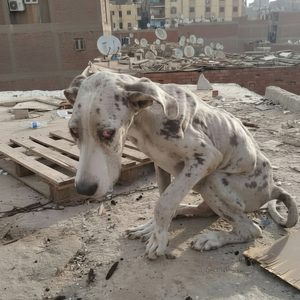
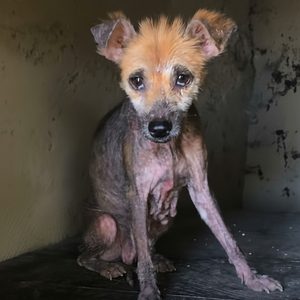
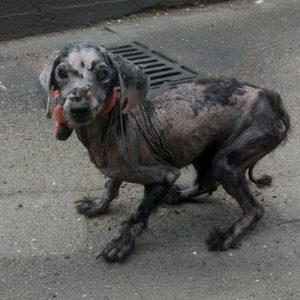
It was close to midnight when a quiet plea surfaced online, the kind that often blends into the endless scroll of daily posts. Around 11 p.m., someone shared a short message in a local community group about a homeless dog lying weakly on the street. The wording was simple, almost understated, but the image it painted was troubling enough to catch attention.
Reactions poured in quickly. People commented on how heartbreaking it was. Others expressed sympathy, adding sad emojis or brief notes of concern. The post gathered likes and shares, and for a while, it seemed as though many people were emotionally invested. Yet as the minutes turned into hours, one thing remained unchanged. The dog was still there, alone on the pavement, growing weaker by the minute.
Online sympathy can feel comforting, but it does nothing to protect an animal whose body is already failing. That realization weighed heavily on our minds. Knowing that time was not on his side, we made the decision that truly mattered. Instead of waiting and hoping someone else would step in, we got up and went to find him ourselves, carrying the quiet fear that we might already be too late.
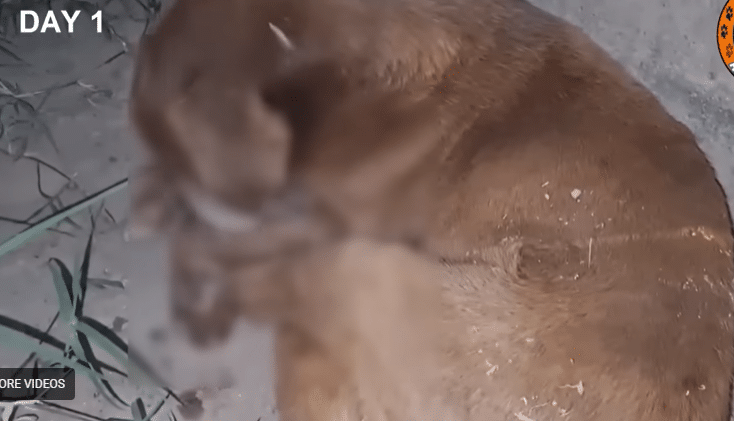
When we arrived, the street was eerily calm. Most homes were dark, windows shut, the neighborhood wrapped in the stillness of night. Near a wall, exactly where the post had described, lay the dog. He was easy to miss at first glance, his body blending into the shadows, motionless except for the faint rise and fall of his chest.
Up close, the reality was heartbreaking. He was painfully thin, his body stretched out as if he no longer had the strength to curl into himself. When we approached, he barely reacted. His breathing was shallow, and his eyes followed our movements slowly, not with fear or panic, but with a tired acceptance. This was not a dog asking for help. This was a dog who had been waiting, perhaps too long, for someone to care.
Video He Was Dying on the Streets—Many Looked, Many Felt Sorry, But Only One Choice Changed Everything
There was no hesitation. We gently lifted him and hurried to the nearest veterinary clinic. Every second felt urgent. In the car, he remained unusually calm, almost unnervingly so. It was as if he had already made peace with whatever came next. Yet even in that fragile state, there was something dignified about him, something that quietly demanded respect.
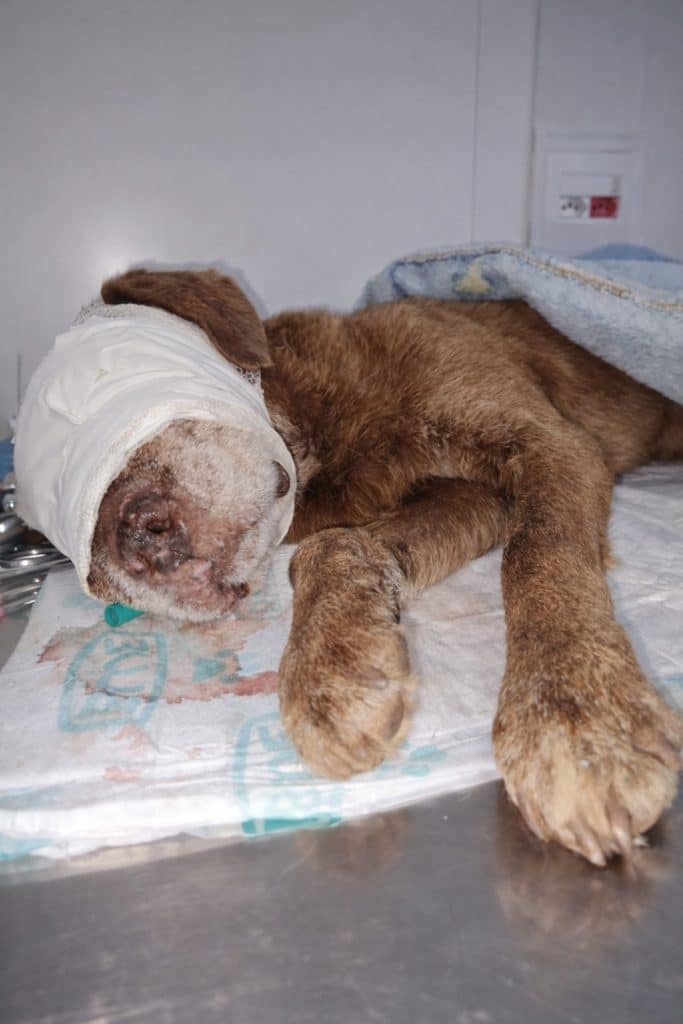
At the clinic, the veterinary team acted without delay. He was placed under close observation and began receiving immediate care. His condition was serious, the result of prolonged neglect and exhaustion, but it was not beyond hope. What stood out to everyone was his temperament. Despite discomfort and unfamiliar surroundings, he showed remarkable gentleness. There was no resistance, no fear-driven reactions. Just trust.
It was there that he was given a name: Ze Colmeia. Naming him was more than a formality. It marked a turning point. He was no longer just a sad image on a screen or “that dog on the street.” He was an individual, a life that mattered enough to fight for.
The days that followed were filled with cautious optimism. Recovery did not come quickly. His body had been deprived for too long, and healing required patience, consistency, and careful attention. Medication, proper meals, and rest became part of his daily routine. At first, he ate slowly, hesitantly, as though unsure whether the food would keep coming. Over time, his confidence grew. Meals were finished. His strength began to return.
The veterinary staff celebrated small milestones. He stood for longer periods. He lifted his head when someone entered the room. He responded to voices with quiet interest. Gradually, his weight increased, and with it came renewed energy. The dog who had once lain still against a wall was beginning to reclaim his presence.
What surprised everyone most was his spirit. There was no sign of resentment or withdrawal. As his health improved, so did his personality. He greeted caregivers with gentle enthusiasm. His tail wagged again, first cautiously, then freely. His eyes, once dull and distant, became alert and curious, reflecting a growing sense of security.
After more than two weeks at the clinic, the moment finally arrived for him to step outside again. The first time he felt fresh air, he paused. He seemed to take in everything at once—the breeze, the sounds, the openness. Then he moved forward, slowly at first, and then with increasing confidence. Watching him experience that simple freedom was deeply moving. It was a quiet reminder of how far he had come.
From that point on, his transformation was undeniable. Ze Colmeia became active and joyful. He walked with purpose, explored his surroundings, and rested peacefully afterward. His exhaustion was no longer the result of struggling to survive, but the natural tiredness that follows a full, safe day. The loneliness that once defined his existence faded, replaced by routine, care, and stability.
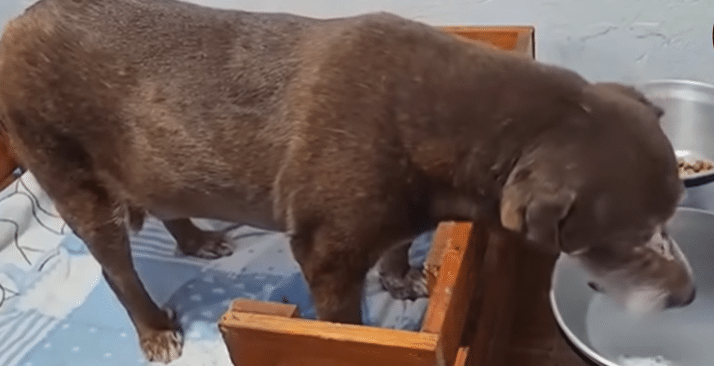
Today, his life bears no resemblance to that night on the street. He eats well and regularly. He sleeps without fear. He wakes up in a place where kindness is consistent, not temporary. He is safe, he is cared for, and perhaps most importantly, he is no longer invisible.
Ze Colmeia’s journey is not just a rescue story. It is a reminder of the difference between feeling sympathy and taking responsibility. Many people saw him. Many felt sorry. But compassion only became meaningful when someone chose to act.
Animals living on the streets do not survive on kind words alone. They need someone willing to step forward, even late at night, even when it is inconvenient, even when others have already scrolled past. Ze Colmeia is alive today because one decision broke through the silence.
His peaceful life now stands as proof that action, even a single choice made at the right moment, can change an ending that once seemed unavoidable. Sometimes, saving a life begins when we decide not to walk away.