Some rescues don’t begin with urgency or noise.
They begin with a post—quietly shared, quietly acknowledged, quietly ignored.
It was already late when a message appeared in a local community group, close to 11 p.m. Someone had seen a homeless dog lying on the street and asked for help. The comments filled quickly. People expressed sadness. Others added crying emojis or wrote how pitiful he looked.
The post was shared.
It was reacted to.
It was talked about.
But the dog remained exactly where he was.
We couldn’t stop thinking about that. Sympathy alone doesn’t keep a dog alive—especially one already hanging on by a thread. So we decided to go find him ourselves, hoping the night hadn’t already taken too much.
When we arrived, the street was still.
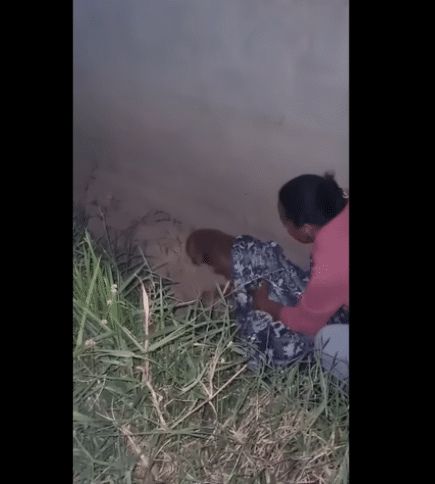
Residential buildings stood dark and quiet, windows closed, the weight of the night settling over everything. Near a wall, barely noticeable at first, lay the dog from the post.
He was worse than we imagined.
His body was frail, stretched out as if even curling up required strength he no longer had. He barely moved when we approached. His breathing was shallow. His eyes followed us—not with fear, but with resignation. This wasn’t a dog asking for help.
VIDEO: He Was Dying on the Streets—Many Looked, Many Felt Sorry, But Only One Choice Changed Everything
This was a dog who had waited too long.
We didn’t hesitate.
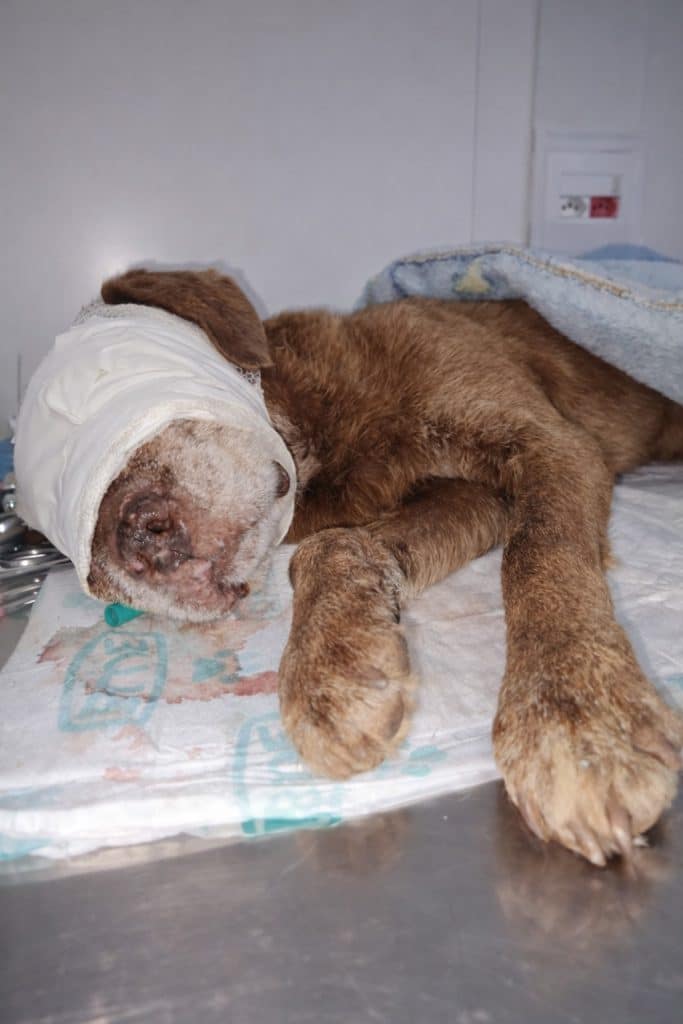
We lifted him carefully and rushed straight to a veterinary clinic. Every minute felt heavy. In the car, he remained unnervingly calm, as though resistance and worry were no longer options. Yet even in that fragile state, there was a quiet dignity about him.
At the clinic, the veterinary team moved quickly. He was placed under close monitoring and began receiving immediate care. His condition was serious, but there was still hope. What stood out to everyone was how gentle he remained. No panic. No aggression. Just trust.
It was there that he was given a name.
Ze Colmeia.
Naming him mattered. It meant he was no longer just “that dog from the post.” He was someone. A life worth fighting for.
The days that followed required patience. Healing didn’t come overnight. His body had been depleted for too long. Medication, proper nutrition, and rest became his routine. At first, he ate cautiously, as if unsure the food would continue to appear. Slowly, his appetite improved. Each meal stayed down. Each day, he grew a little stronger.
The veterinary staff watched closely, celebrating small victories—standing longer, lifting his head with interest, responding to voices. His weight began to increase, and with it, his energy. The dog who had once lay motionless by a wall was starting to return.
eia carried no bitterness. As his strength returned, so did his personality. He greeted caregivers with gentle enthusiasm. His tail wagged again. His eyes, once distant and dull, became bright with curiosity.
After more than two weeks at the clinic, the day finally came when Colmeia could step outside.
The first time he felt fresh air again, he paused. The breeze. The sounds. The open space. Then he moved forward—slowly at first, then with growing confidence. Watching him enjoy that simple moment felt powerful. It was proof of how far he had come.
From that point on, the transformation was unmistakable.
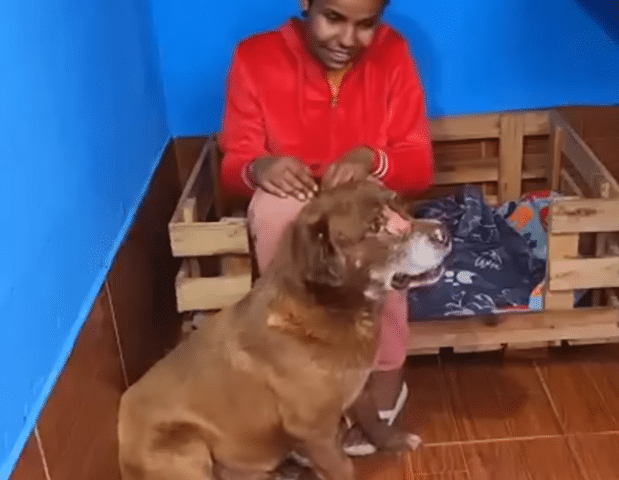
Colmeia became active and joyful. He walked with purpose. He explored his surroundings. He rested peacefully afterward—not exhausted from survival, but pleasantly tired from living. The loneliness that once defined him faded, replaced by consistency, care, and safety.
Today, Colmeia’s life looks nothing like it did that night.
He eats well.
He sleeps without fear.
He wakes up where kindness is steady—not temporary.
He is safe. He is loved. And he is no longer invisible.
Colmeia’s story is not just about rescue. It’s about the difference between feeling sorry and taking responsibility. Many people saw him. Many felt sadness. But compassion became real only when someone chose to act.
Animals on the street don’t need sympathy alone. They need someone willing to step forward—late at night, when it’s inconvenient, when others have already looked away.
Ze Colmeia survived because one choice broke the silence.
And today, as he enjoys a peaceful life filled with warmth and care, he stands as living proof that action—no matter how small it may seem—can rewrite an ending that once felt inevitable.
Sometimes, saving a life begins the moment we decide not to walk away.